

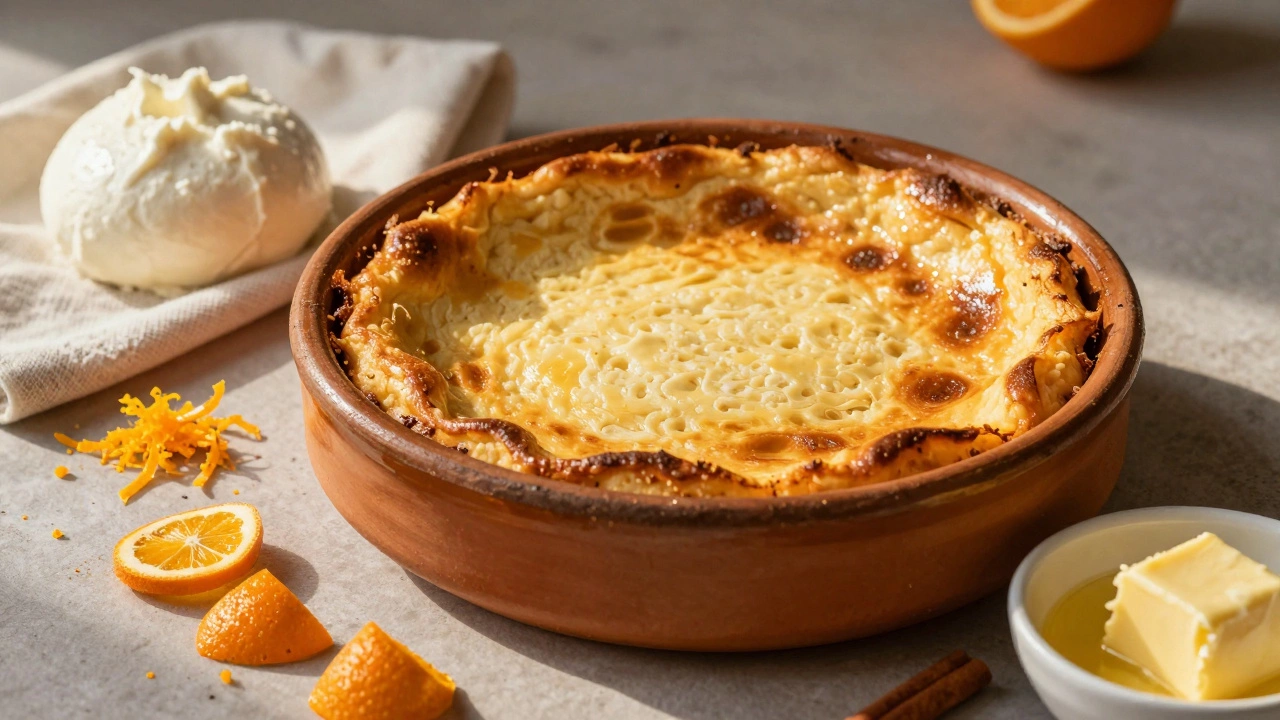
Sicilian Cheesecake Ricotta Drainage Calculator
Proper drainage is critical for authentic Sicilian cheesecake. This tool calculates the optimal draining time based on your ricotta type and desired texture. Enter your details below and get customized recommendations.
Why drainage matters: The article explains that "using wet ricotta makes the cake soggy." Drainage removes excess whey to achieve the signature grainy texture and prevent a watery cake.
Recommended Drainage Time
Enter your details to see results
Tips will appear here...
Warning: Using wet ricotta will make your Sicilian cheesecake soggy. Proper drainage is essential for the authentic texture.
Sicilian cheesecake isn’t like the creamy, New York-style kind you might be used to. It’s denser, grainier, and packed with bright, citrusy flavor. If you’ve ever tasted one and wondered what makes it so different, the answer lies in its simple, regional ingredients - none of which are fancy, but all of which are essential.
Core Ingredient: Ricotta Cheese
The heart of Sicilian cheesecake is ricotta, but not just any ricotta. It has to be sheep’s milk ricotta, drained well and aged a day or two to cut down on moisture. This is what gives the cake its grainy texture and rich, slightly tangy taste. Cow’s milk ricotta won’t give you the same depth. In Sicily, cheesemakers let the whey drain slowly overnight, leaving behind a thick, creamy curd that holds its shape when baked. You’ll find this in specialty Italian shops or make it yourself by hanging whole-milk ricotta in a cheesecloth for 12 hours.
Sweetener: Sugar and Citrus Zest
Sugar is used, but sparingly. A cup of granulated white sugar is typical for a 9-inch cake. What sets it apart is the addition of citrus zest - usually from oranges or lemons grown in Sicily’s warm climate. The zest isn’t just for aroma; it’s a flavor anchor. The oils in the peel cut through the richness of the cheese and add a refreshing lift. Some bakers also add a splash of orange blossom water, which smells like springtime in Palermo.
Flavor Enhancers: Candied Citrus and Cinnamon
Many traditional recipes include chopped candied citrus peel, often from cedro (a type of citron) or bitter orange. These are boiled in sugar syrup until translucent and then diced fine. They add chewy bursts of sweet-tart flavor and a glossy sheen to each bite. A pinch of ground cinnamon - not enough to taste spicy, but enough to warm the whole cake - is stirred in with the ricotta. It’s subtle, but without it, the cake feels flat.
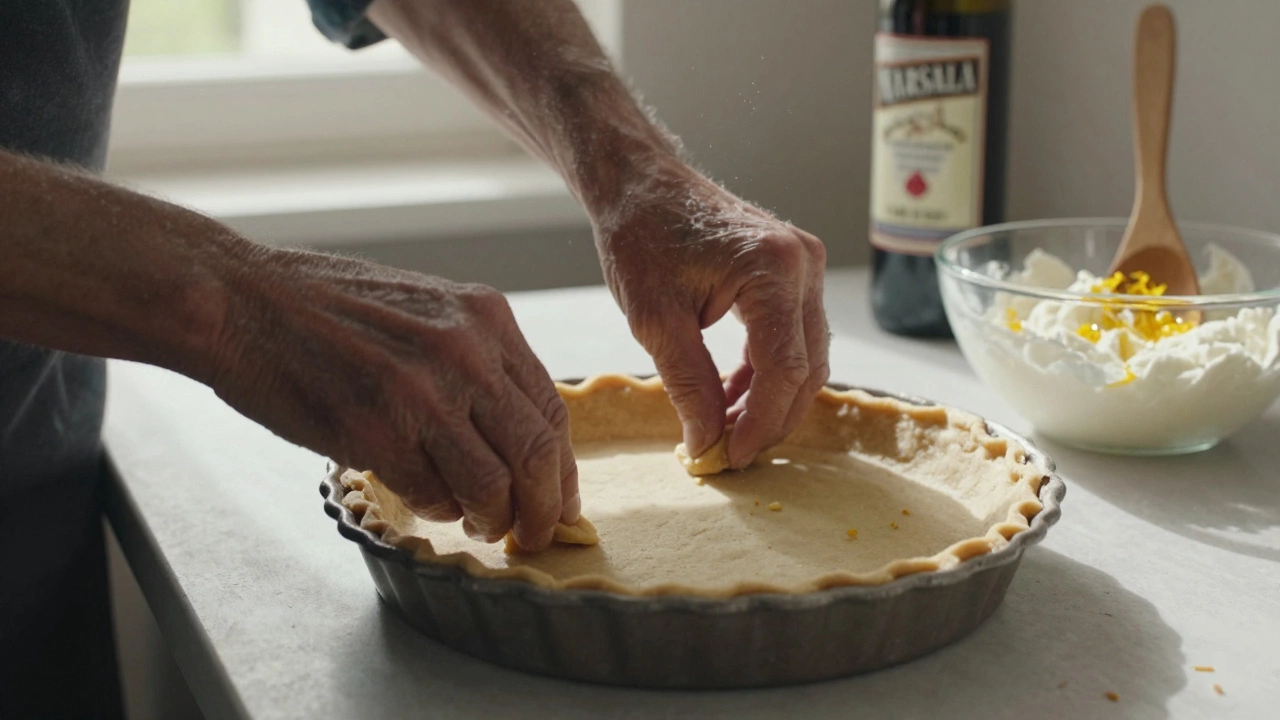
The Crust: Simple and Butter-Based
Unlike graham cracker crusts in American cheesecakes, Sicilian versions use a thin, shortbread-like base made from flour, butter, sugar, and an egg yolk. Some families skip the crust entirely and bake the filling in a buttered pan, but the crust helps soak up excess moisture and gives structure. It’s pressed into the pan and pre-baked until lightly golden, then poured over with the ricotta mixture. No need to blind bake it fully - just enough to set.
What’s Not in It
Here’s what you won’t find in a true Sicilian cheesecake: cream cheese, sour cream, heavy cream, vanilla extract, or eggs as a binder. Yes, you read that right - no eggs. The ricotta’s natural thickening properties, along with a little flour or semolina, are enough to hold it together. That’s why it bakes into a dense, almost pudding-like texture rather than a smooth, wobbly one.
Why This Recipe Has Stood the Test of Time
This dessert was born out of necessity. In rural Sicily, ricotta was made from leftover whey after cheese production. It was cheap, abundant, and didn’t spoil quickly. Families would bake it with whatever citrus they had, sugar from cane fields, and a bit of spice from local markets. It was served during Easter and harvest festivals, not as a fancy treat but as a humble, satisfying end to a meal.
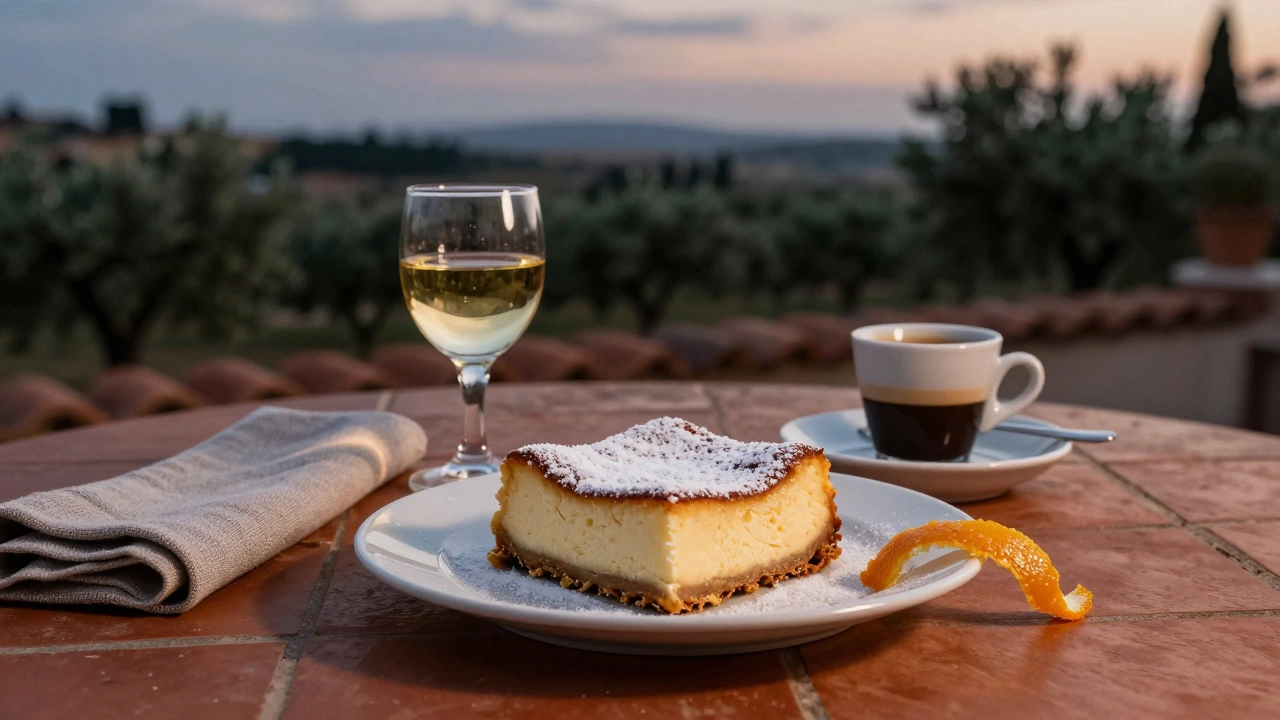
Today, you’ll still find it in bakeries in Catania and Syracuse, often dusted with powdered sugar and served with a shot of sweet dessert wine. It doesn’t need toppings. It doesn’t need whipped cream. It’s meant to be eaten warm, still slightly soft in the center, with a crisp edge.
How to Get the Right Ricotta
If you’re outside Italy, finding authentic sheep’s milk ricotta can be tricky. Look for brands labeled “Ricotta Siciliana” or “Ricotta di Pecora.” In New Zealand, stores like Italian Grocer in Ponsonway or specialty cheese counters at Farmers Market in Parnell carry it. If you can’t find it, drain regular whole-milk ricotta overnight in the fridge - it’s not perfect, but it’s close.
Common Mistakes to Avoid
- Using wet ricotta - it makes the cake soggy. Always drain it.
- Overmixing - stir just until combined. Overbeating makes it rubbery.
- Skipping the zest - it’s not optional. The flavor falls flat without it.
- Baking too long - the center should still jiggle slightly when you take it out. It firms up as it cools.
How It’s Served
Traditionally, Sicilian cheesecake is served at room temperature, cut into squares, and eaten with bare hands. It’s often paired with a glass of Marsala wine or a bitter espresso. Some people sprinkle a little sea salt on top right before serving - just a pinch - to bring out the sweetness.
If you’ve never tried it, don’t expect something smooth. Expect something real. Something that tastes like sun-drenched orchards and stone ovens. It’s not a dessert you forget.
What’s the difference between Sicilian cheesecake and New York cheesecake?
Sicilian cheesecake uses ricotta cheese and no cream cheese, no eggs, and no crust (or a very thin one). It’s grainy, dense, and flavored with citrus and cinnamon. New York cheesecake is made with cream cheese, heavy cream, and eggs, giving it a smooth, airy texture. It’s usually on a graham cracker crust and tastes rich and creamy, not bright or spiced.
Can I use cow’s milk ricotta instead of sheep’s milk?
Yes, but it won’t be the same. Sheep’s milk ricotta has more fat and a deeper, earthier flavor. Cow’s milk ricotta is milder and wetter. To compensate, drain it for at least 12 hours in the fridge using cheesecloth. You might also add a tablespoon of mascarpone to boost richness.
Why is there no egg in Sicilian cheesecake?
Eggs aren’t needed because ricotta naturally thickens when baked. The flour or semolina mixed in helps bind it, and the moisture is controlled by draining the cheese first. Adding eggs would make it too custardy and lose its signature texture. This is a cheese cake, not a custard cake.
Can I make Sicilian cheesecake ahead of time?
Yes, and it actually tastes better the next day. Bake it, let it cool completely, then cover and refrigerate. Bring it to room temperature before serving. The flavors meld over time, and the texture becomes even more cohesive.
Is Sicilian cheesecake gluten-free?
Not if you use flour in the crust. But you can make it gluten-free by using almond flour or rice flour for the base. The filling itself is naturally gluten-free since it’s just ricotta, sugar, zest, and spices. Just check that your candied citrus isn’t dusted with wheat flour.


Write a comment