

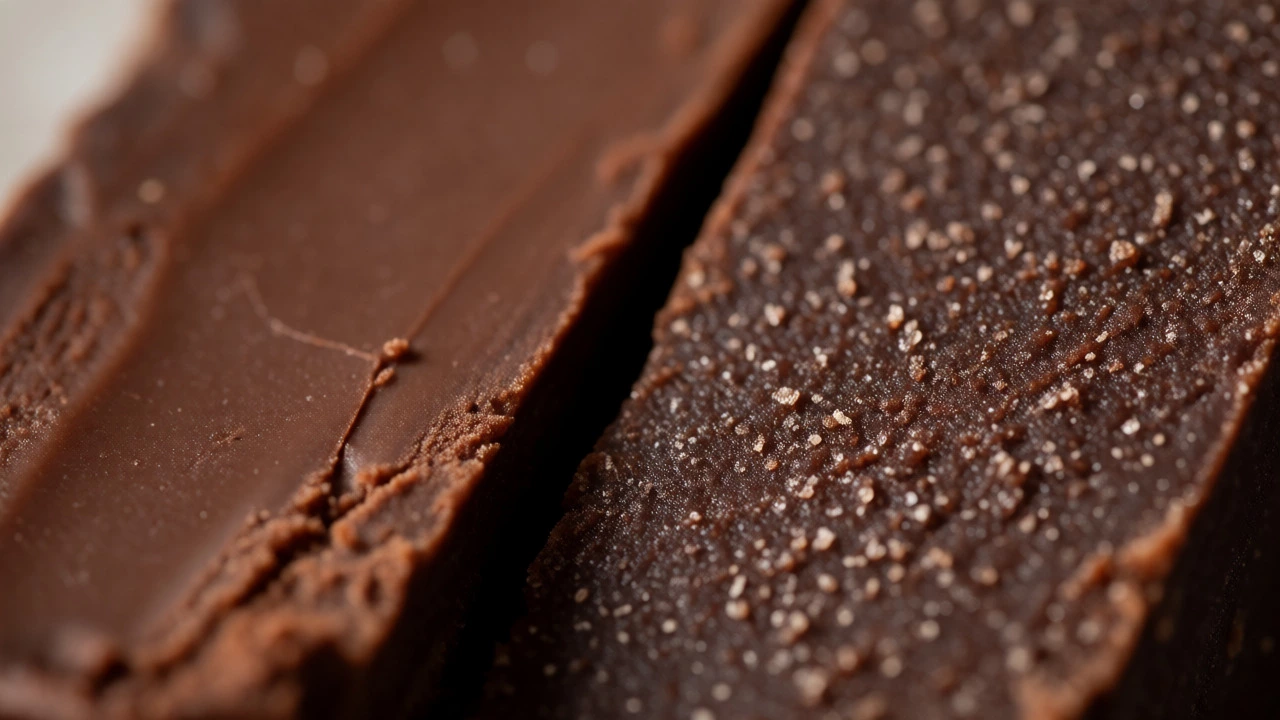
Fudge Texture Simulator & Troubleshooter
Diagnose why your fudge turned out grainy or adjust your cooking technique using our interactive simulator below.
Drag the slider to see how temperature affects texture. Target Zone: 234°F - 240°F
Too much water remains. The fudge will not set properly.
You spent two hours stirring a pot of boiling sugar, milk, and butter. You poured it into the pan, waited for it to set, and cut a slice. Instead of that melt-in-your-mouth creaminess you were dreaming about, you got something that felt like eating wet sand. It’s frustrating, but here is the truth: grainy fudge isn’t usually a recipe failure. It’s a chemistry lesson you didn’t know you were taking.
Fudge is essentially a sugar crystal suspension in a syrup matrix. When those crystals are tiny (under 10 microns), your tongue can’t detect them, so it tastes smooth. When they grow too large, your tongue feels every single one. That grit? Those are big crystals. The goal of every good fudge maker is to keep those crystals small and numerous, not few and huge.
The Core Problem: Why Sugar Crystals Grow Too Big
Sugar behaves differently depending on temperature and agitation. In hot water, sugar dissolves completely. As it cools, the solution becomes supersaturated-it holds more sugar than it normally could at that temperature. This state is unstable. If left alone, the excess sugar wants to crash out of the solution and form crystals. If this happens slowly and uncontrollably, you get large, jagged crystals. If you control the process, you encourage thousands of tiny nuclei to form simultaneously, resulting in smooth fudge.
The enemy is uncontrolled nucleation. You want many seeds starting at once, not one giant snowball rolling down a hill. Most people make three mistakes that trigger this chain reaction: they stir too early, they don't reach the right temperature, or they introduce stray crystals from the side of the pot.
Tool Check: Do You Actually Need a Candy Thermometer?
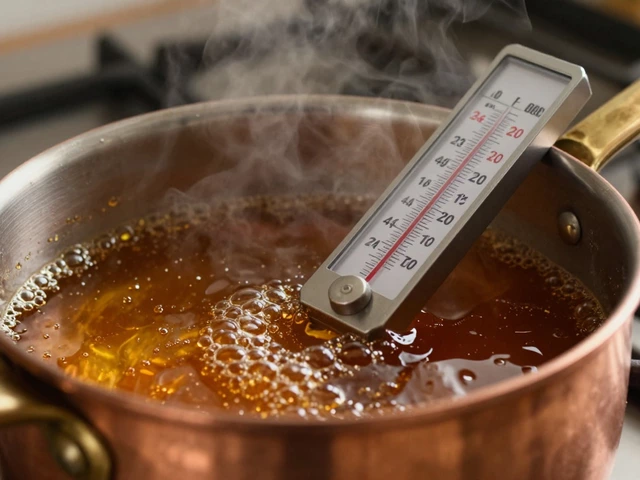
Some purists swear by the "cold water test," where you drop a bit of syrup into ice water to see if it forms a soft ball. While traditional, it’s imprecise for beginners. A digital Candy Thermometer removes the guesswork. For standard chocolate fudge, you need to hit 234°F to 240°F (112°C to 116°C). This is known as the "soft-ball stage." If you stop at 220°F, there’s too much water left, and the fudge will be sticky and soft. If you go past 250°F, you’re entering the firm-ball stage, and your fudge will turn hard and chewy rather than creamy.
If you don’t have a thermometer, you can use an infrared laser thermometer, but ensure it’s calibrated. Stick-on thermometers often lag behind actual temperatures. Precision matters because a difference of just 5 degrees can change the texture from luxurious to rocky.
Technique 1: The Wash-Down Method
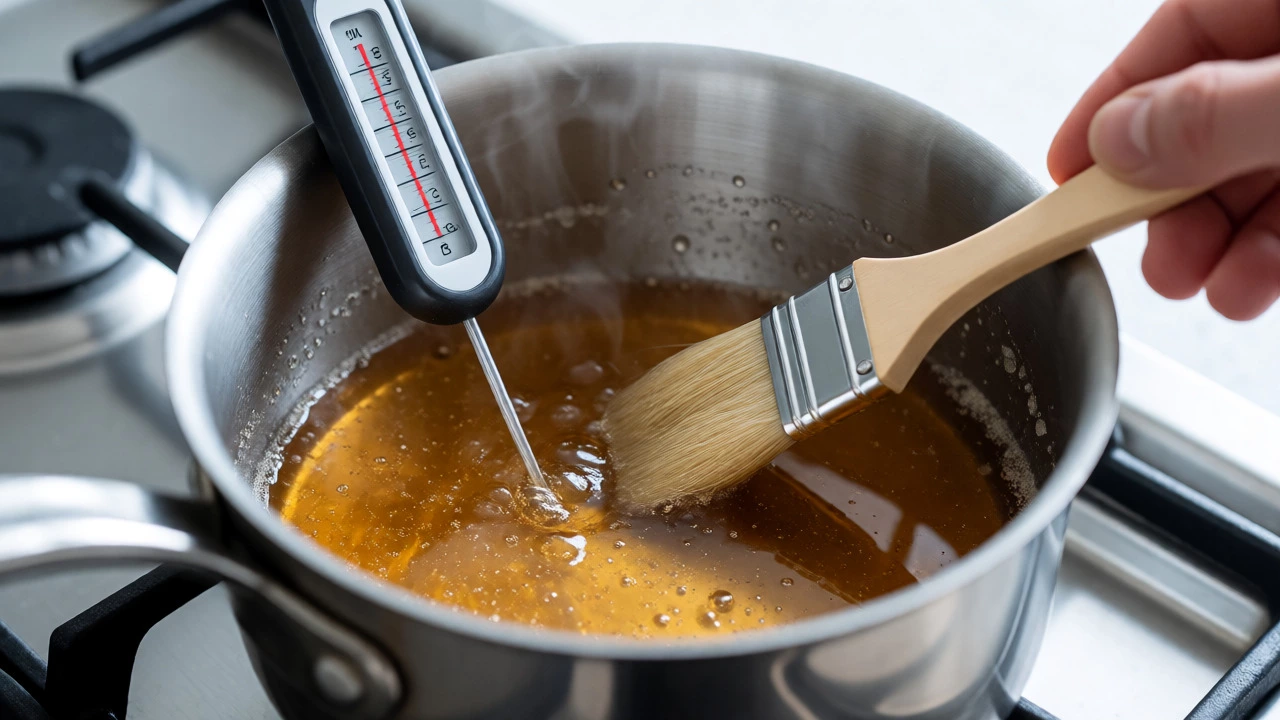
This is the most common reason for grainy fudge in home kitchens. When you boil sugar syrup, droplets splash onto the sides of the pot above the liquid line. These droplets contain concentrated sugar. As the water evaporates from these splashes, dry sugar crystals remain stuck to the metal. If one of these crystals falls back into the boiling syrup, it acts as a seed. The entire batch rushes to build onto that single crystal, creating massive grains throughout the pot.
To fix this, keep a pastry brush dipped in cold water nearby. Every few minutes during the initial boil (before you start beating), run the wet brush around the inside walls of the pot. This dissolves any stray crystals before they can fall in. Alternatively, cover the pot with a lid for the first 3-5 minutes of boiling. The steam condenses on the lid and drips down the sides, washing away the crystals automatically. Just remember to remove the lid once the mixture reaches a full boil, as trapped steam can alter the cooking time.
Technique 2: Agitation Timing Matters
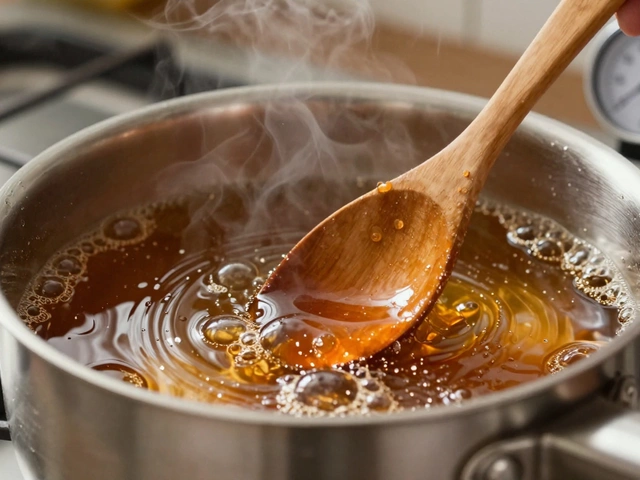
Stirring is tricky. You must stir while the ingredients combine and dissolve initially. But once the mixture hits a rolling boil, stop stirring. Stirring introduces air bubbles and encourages premature crystallization. You want the syrup to cook undisturbed until it hits the target temperature.
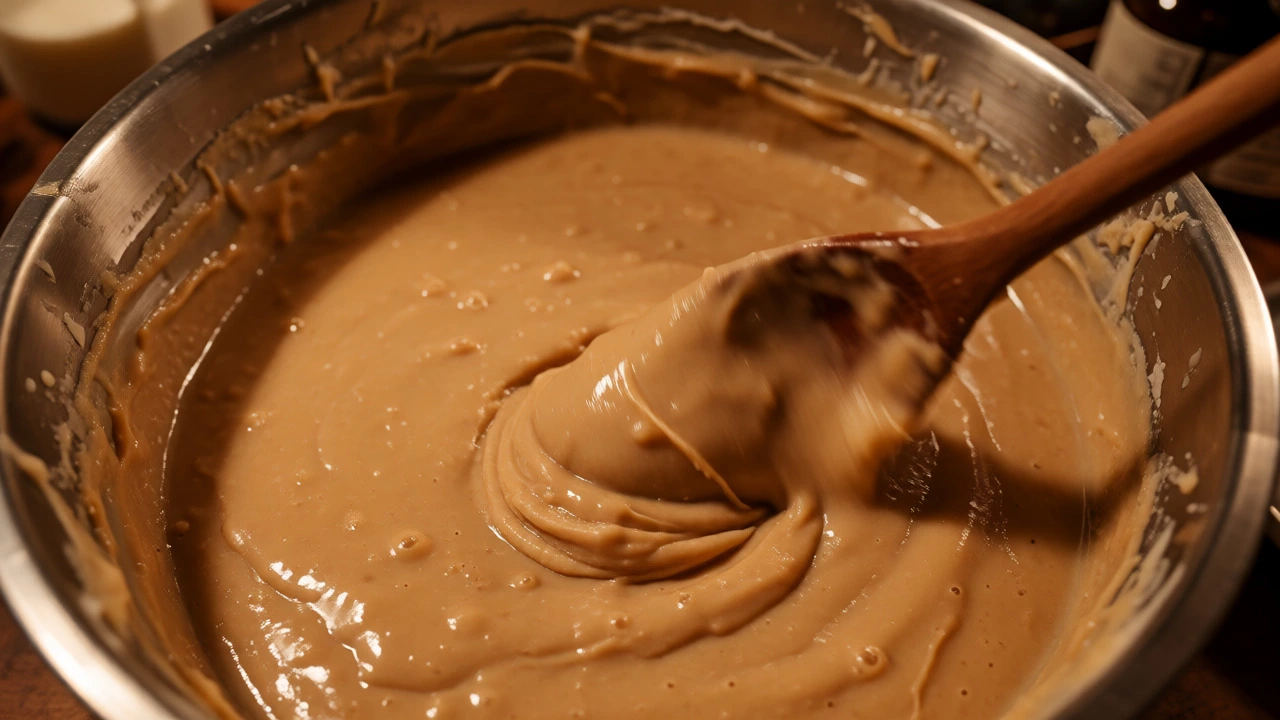
Once you pull the pot off the heat, let it cool slightly. This is the counter-intuitive part. Do not beat it immediately. Let the temperature drop to around 110°F (43°C) or until the bottom of the pan is warm to the touch but not hot. Then, and only then, begin beating vigorously. Beating incorporates air and creates shear force, which breaks up forming crystals and encourages new ones to start everywhere at once. This rapid formation of many tiny crystals is what gives fudge its creamy mouthfeel. If you beat it while it’s still 180°F, the crystals will grow too fast and become coarse.
Technique 3: Interfering Agents
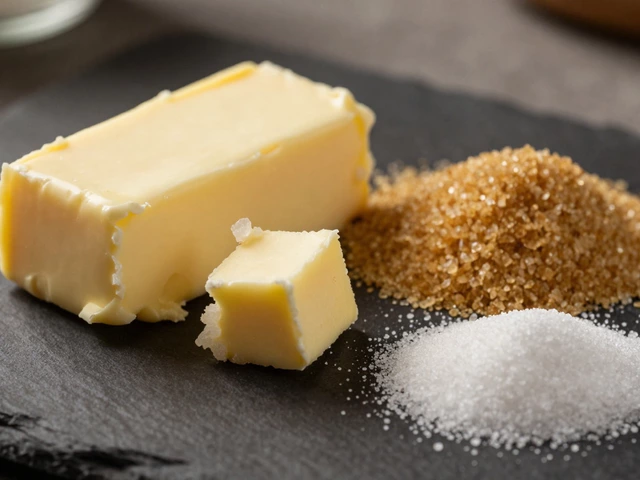
Not all sugars behave the same way. White granulated sugar (sucrose) loves to crystallize. To stop it from becoming grainy, you need an "interfering agent"-an ingredient that gets in the way of sucrose molecules linking up.
- Corn Syrup: Contains glucose and maltose, which physically block sucrose crystals from growing together. Replacing 1-2 tablespoons of sugar with light corn syrup is a classic trick.
- Honey or Maple Syrup: These contain fructose and other impurities that also inhibit crystallization. They add flavor but change the color slightly.
- Chocolate: Cocoa solids and cocoa butter interfere with sugar crystal formation. Chocolate fudge is naturally less prone to graininess than vanilla or peanut butter fudge because of this interference.
- Cream: The fat and proteins in heavy cream coat sugar molecules, slowing down their ability to bond. Always use full-fat dairy; low-fat versions lack sufficient fat to protect the texture.
| Problem | Cause | Fix |
|---|---|---|
| Gritty texture | Stray crystals from pot sides | Wash down sides with wet brush or use steam method |
| Rough/chewy | Overcooked (too high temp) | Use accurate thermometer; pull at 234-240°F |
| Soft/syrupy | Undercooked (too low temp) | Cook longer; ensure reaching soft-ball stage |
| Crystallized immediately | Beaten too early/hot | Let cool to 110°F before beating |
What If Your Fudge Is Already Grainy?
Can you save a batch? Sometimes. If it’s only slightly gritty, try reheating it gently with a tablespoon of heavy cream or milk. Bring it back to a simmer, ensuring it doesn’t burn, then re-beat it as it cools. The added liquid might help redissolve some larger crystals, and the fresh beating might create smaller ones. However, if the fudge is rock-hard and sandy, it’s likely overcooked beyond repair. Don’t throw it away-crumble it over ice cream or blend it into coffee. The flavor is still perfect; the texture just missed the mark.
Another rescue option: make "fondant" style. If the crystals are large, you can sometimes grind the fudge in a food processor with a little extra cream to create a smoother spreadable consistency, though it won’t regain the original bite.
Final Checklist for Perfectly Smooth Fudge
Before you start your next batch, run through this mental checklist:
- Calibrate your thermometer: Boil water and check if it reads 212°F (100°C). Adjust accordingly.
- Prep your tools: Have a clean pastry brush and bowl of cold water ready for washing down the pot.
- Don’t skip the interfering agent: Add a teaspoon of corn syrup or ensure you have enough cream/fat in the mix.
- Patience during cooling: Resist the urge to beat the mixture while it’s steaming hot. Wait for it to cool to lukewarm.
- Beat thoroughly: Once cooled, beat until the mixture loses its shine and turns matte and thick. This indicates crystallization has occurred correctly.
Making fudge is equal parts science and patience. You aren’t failing; you’re just learning how sugar behaves under pressure. With a thermometer and a steady hand, you’ll never have to eat sandy sweets again.
Why did my fudge set instantly instead of staying pourable?
This usually happens if you stirred the mixture while it was still too hot, triggering premature crystallization. Another cause is introducing a seed crystal from the side of the pot. To prevent this, avoid stirring after the mixture begins to boil and wash down the pot sides frequently.
Can I use brown sugar instead of white sugar to avoid graininess?
Brown sugar contains molasses, which adds moisture and interferes with crystallization, potentially making the fudge softer. However, it also changes the flavor profile significantly to a caramel/toffee note. It may result in a darker, moister fudge that is less likely to be dry-grainy but might be stickier.
Does humidity affect fudge texture?
Yes. High humidity can prevent fudge from setting properly because the sugar absorbs moisture from the air. On humid days, cook the fudge to the higher end of the temperature range (e.g., 240°F instead of 234°F) to compensate for the ambient moisture.
Is it safe to eat grainy fudge?
Absolutely. Graininess is purely a textural defect caused by large sugar crystals. The taste remains sweet and delicious, and it is perfectly safe to consume. Many people actually enjoy the crunch of well-made rock candy or pralines, which are intentionally crystalline.
How long should I beat the fudge after it cools?
Beat it until the glossy sheen disappears and the mixture looks dull and thickens noticeably. This typically takes 5 to 10 minutes of vigorous stirring by hand. If you use a stand mixer with a paddle attachment, it may take less time, but watch closely to avoid incorporating too much air, which can lead to a foamy texture.


Write a comment