

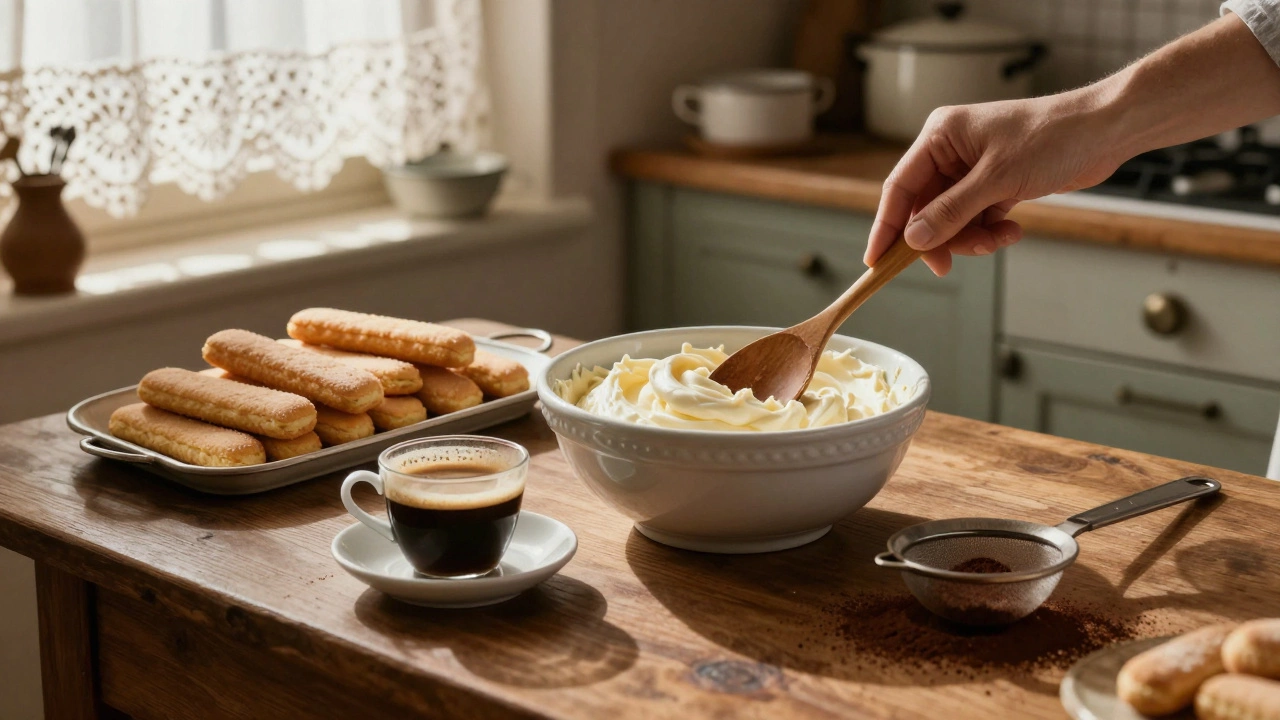
Tiramisu Recipe Calculator
Why This Matters
Tiramisu requires precise ratios to achieve the perfect texture. Too much coffee makes it soggy, too little marsala (if used) lacks depth, and improper egg preparation risks food safety. This calculator uses authentic Italian recipes to ensure your dessert meets the standards of Treviso and Friuli's original creations.
Your Authentic Tiramisu Ingredients
Core Ingredients
Important Preparation Tips
Dip ladyfingers in coffee for less than 1 second per side to prevent sogginess
Use full-fat Italian mascarpone (not cream cheese)
Chill for at least 6 hours (overnight is ideal)
For raw egg safety, use pasteurized eggs or cook yolks to 160°F (71°C)
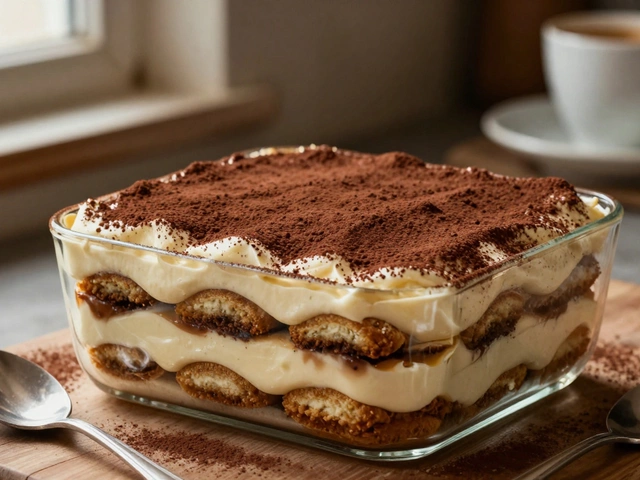
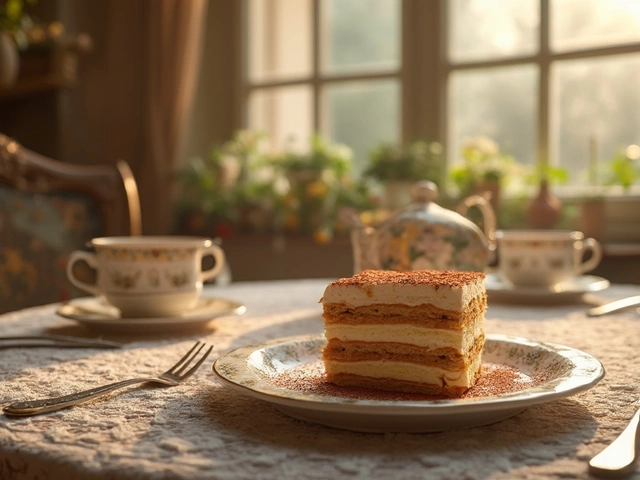
Ask anyone who’s tasted tiramisu and they’ll tell you it’s magic - layers of coffee-soaked ladyfingers, creamy mascarpone, and a dusting of cocoa that lingers like a memory. But who actually created it? The answer isn’t as simple as you might think. Tiramisu didn’t spring fully formed from a single chef’s mind in a Tuscan villa. Its origins are messy, regional, and hotly debated - with claims from Veneto, Friuli, and even Trentino. What we do know is this: tiramisu, as we know it today, emerged in Italy’s northeast in the late 1900s, and its rise to global fame was anything but official.
The Name That Tells a Story
The word tiramisù comes from the Venetian dialect, meaning ‘pick me up’ or ‘cheer me up’. It’s not just a cute nickname - it’s a clue. The dessert was designed to deliver energy: espresso for a caffeine jolt, eggs and sugar for quick carbs, and mascarpone for rich, slow-burning fat. This wasn’t a fancy party dessert. It was the kind of thing you’d make after a long shift, or bring to a family gathering when you needed to lift spirits. That’s why it stuck.
Two Main Claimants: Le Beccherie and Da Vittorio
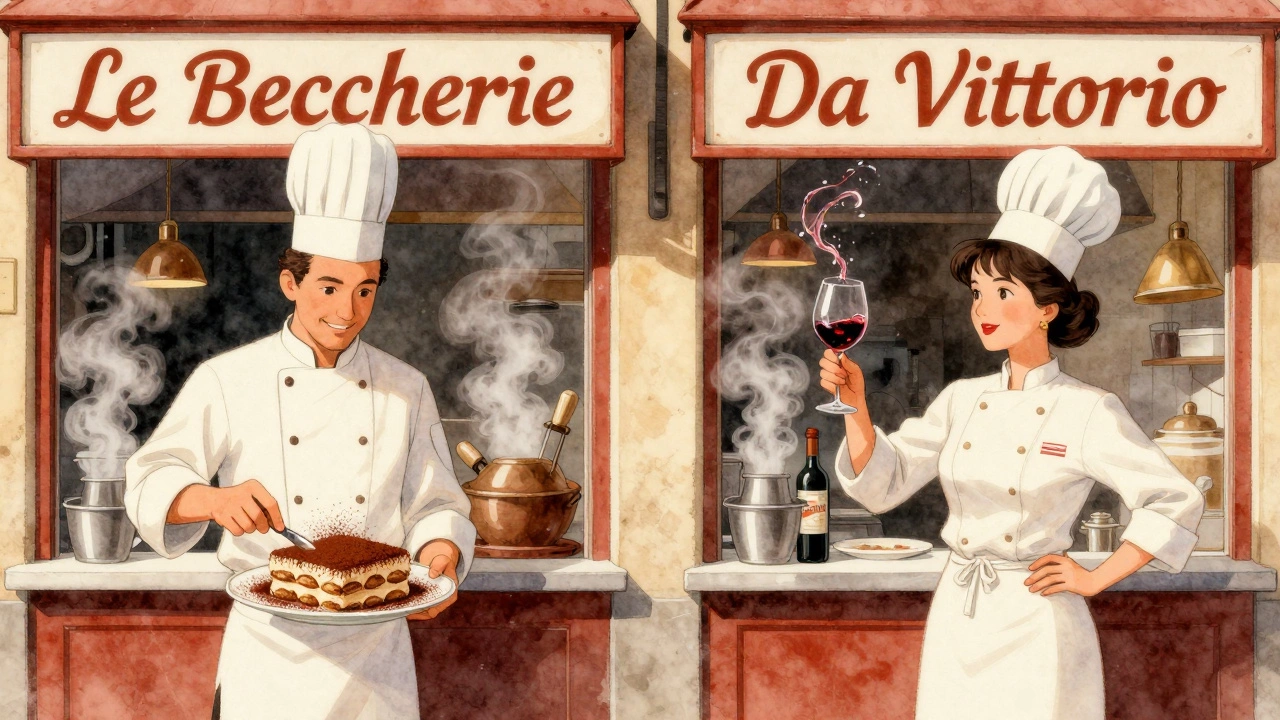
Most historians point to two restaurants as the birthplace of modern tiramisu. The first is Le Beccherie in Treviso, Veneto. In the late 1960s, pastry chef Ado Campeol and his wife Alba di Pillo started serving a dessert they called ‘tiramisù’ - a twist on an older local dish called zuppa inglese, which used soaked sponge cake and custard. Campeol’s version swapped custard for mascarpone, added coffee, and topped it with cocoa. His staff, including a young pastry assistant named Roberto Linguanotto, helped refine the recipe. By the early 1970s, it was on the menu, and customers started asking for it by name.
At the same time, in nearby Friuli-Venezia Giulia, a restaurant called Da Vittorio in the town of Susegana was serving a nearly identical dessert. Their version, created by chef Adelina Bortolozzi, used the same layers but added a splash of Marsala wine. Locals called it ‘tiramesù’ - a name that caught on in the region. The timing lines up: both places were serving the dessert between 1969 and 1972.
There’s no paper trail - no patent, no recipe book from that time - so it’s impossible to say who did it first. But both places had the same ingredients, the same technique, and the same cultural moment: post-war Italy, rising prosperity, and a new appetite for desserts that felt indulgent but not fussy.
Why Mascarpone? The Ingredient That Changed Everything
Before tiramisu, Italian desserts relied on ricotta, custard, or cream. Mascarpone was rare outside Lombardy and mostly used in savory dishes or as a spread. It was thick, mild, and didn’t need cooking - perfect for a no-bake dessert. The shift to mascarpone was the real innovation. It gave tiramisu its signature texture: silky, light, and rich without being heavy. That texture is what made it stand out from other layered desserts.
And here’s something most people don’t realize: authentic tiramisu doesn’t use whipped cream. Ever. The creaminess comes from a mix of egg yolks, sugar, and mascarpone - gently folded together. Some modern versions use whipped cream to save time, but that’s not traditional. The original recipe called for raw eggs, which is why many recipes today use pasteurized eggs or cook the yolks gently over a double boiler. Safety first, but tradition matters too.
The Spread: From Local Treat to Global Obsession
Tiramisu didn’t go global because of a marketing campaign. It spread because Italian immigrants took it with them. In the 1980s, Italian restaurants in New York, London, and Sydney started listing it on menus. Travelers who tasted it in Venice or Treviso brought the recipe home. Food magazines picked it up. By 1990, Food & Wine ran a feature on it, calling it ‘the most popular Italian dessert in America’. It wasn’t just trendy - it was accessible. No oven needed. No fancy tools. Just a bowl, a whisk, and good coffee.
By the 2000s, tiramisu had become a blank canvas. You could find it in cheesecake form, as a cake roll, even as ice cream. But the original version - layered, not baked, coffee-kissed, cocoa-dusted - remained the gold standard. And it still is.
What Makes a True Tiramisu?
If you want to make tiramisu the way it was meant to be, here’s what matters:
- Coffee: Strong, brewed espresso. Instant won’t cut it - it needs depth. Let it cool completely.
- Ladyfingers: Savoiardi. They should be dry, not soft. Dip them quickly - one second per side - or they’ll turn to mush.
- Mascarpone: Full-fat, Italian-made. If it’s too runny, chill it first. Don’t substitute cream cheese - it’s too tangy.
- Eggs: Use fresh, pasteurized yolks. Separate them. Beat yolks with sugar until pale and thick. Fold in mascarpone gently.
- Cocoa: Unsweetened, Dutch-processed if you can find it. Dust it lightly over the top - just enough to see the pattern beneath.
And here’s the rule no one talks about: chill it for at least six hours. Overnight is better. The flavors need time to marry. Rushing it ruins the texture.

Myths and Misconceptions
There are a lot of stories floating around. One says tiramisu was invented as a dessert for courtesans in Venice - a myth with zero historical basis. Another claims it was created by a nun in a monastery. Nope. The earliest written record of the name tiramisù in a recipe book is from 1981, in a Veneto cookbook called ‘La cucina del Veneto’.
Another myth: it’s a centuries-old dessert. It’s not. Before the 1970s, there was no such thing as tiramisu. The ingredients existed - coffee, mascarpone, eggs - but never combined this way. It’s a modern invention, born from postwar Italian kitchens, not medieval convents.
Why the Debate Still Matters
The fight over who invented tiramisu isn’t just about pride. It’s about identity. Treviso claims it as their own because the dessert became a symbol of their region’s culinary revival. Friuli says it was theirs because they used wine - a local staple. Both are right, in a way. Tiramisu didn’t have one inventor. It had many hands. A chef here, a cook there, a home baker who tweaked the recipe until it clicked.
That’s the beauty of it. Tiramisu is a dessert that evolved through use, not design. It’s the kind of food that grows when people love it enough to make it their own. And that’s why, no matter where you taste it - in a trattoria in Treviso, a café in Auckland, or your own kitchen - it still feels like a little piece of Italy, alive and changing.
Is tiramisu originally from Venice?
No, tiramisu isn’t originally from Venice. It was created in the Veneto region, specifically in Treviso, which is about 30 minutes from Venice. While Venice is often associated with Italian desserts, tiramisu was developed in a restaurant in Treviso in the late 1960s or early 1970s. The confusion comes from Venice’s fame as a tourist destination - but the dessert’s roots are in Treviso’s kitchens, not Venetian palaces.
Can I make tiramisu without alcohol?
Yes, absolutely. Traditional tiramisu doesn’t require alcohol. Some versions use Marsala wine or rum to deepen the flavor, but it’s optional. You can replace it with extra coffee or a splash of vanilla extract. The core of tiramisu - coffee, mascarpone, ladyfingers, and cocoa - doesn’t need alcohol to work. Many Italian families make it without any spirits at all.
Why is my tiramisu watery?
Watery tiramisu usually comes from one of three things: over-dipping the ladyfingers, using low-fat mascarpone, or not chilling it long enough. Ladyfingers absorb liquid fast - dip them for less than a second. Use full-fat mascarpone (at least 60% fat). And don’t skip the chill time. At least six hours, preferably overnight. The dessert needs time to set properly.
Can I use store-bought ladyfingers?
Yes, but not all store-bought ones are equal. Look for Savoiardi - they’re dry, crisp, and made with egg whites and sugar. Avoid soft, cakey versions meant for trifles. The best ones come in clear plastic bags labeled ‘Savoiardi’ or ‘Ladyfingers’ and feel light and crunchy. If they’re too soft, toast them lightly in the oven for 5 minutes to dry them out before dipping.
Is raw egg in tiramisu safe?
Traditional tiramisu uses raw egg yolks, which carry a small risk of salmonella. To reduce that risk, use pasteurized eggs - available in most supermarkets. Or, make a custard by gently heating the egg yolks and sugar over a double boiler until they reach 160°F (71°C), then cool before mixing with mascarpone. This kills bacteria without turning it into pudding.
What to Try Next
If you’ve mastered the classic, try variations that honor its roots: add a layer of dark chocolate shavings, use matcha powder instead of cocoa for a Japanese twist, or make mini tiramisus in glasses for parties. But always come back to the original - the one that started it all. Because sometimes, the best recipes aren’t the oldest. They’re the ones that just… work.





Write a comment