

Macaron Cost Calculator
How Much Will Your Macarons Cost?
Calculate your costs based on the article's data. Enter how many macarons you want to make and whether you've already bought the tools.
Cost Breakdown
Ever stared at a $4 macaron at a bakery and wondered-could I make these for less? The answer is yes. But not as cheaply as you might think. Making macarons at home isn’t like baking cookies. It’s a precise, finicky process that demands the right tools and ingredients. And if you skip the basics, you’ll end up with flat, cracked, or hollow shells that taste like sweet disappointment.
What You Actually Need to Buy
You can’t make macarons with just flour, sugar, and eggs. The core ingredients are almond flour, powdered sugar, granulated sugar, egg whites, and food coloring. That’s it. But here’s the catch: you can’t substitute any of them. Almond flour isn’t ground almonds. Powdered sugar isn’t regular sugar blended in a food processor. Egg whites must be aged and separated perfectly. And food coloring? Gel only. Liquid turns the batter watery and ruins the texture.
Let’s break down the cost of a single batch (about 25-30 shells):
- Almond flour (1 cup / 100g): $6-$8. This isn’t supermarket bulk flour. You need superfine, blanched almond flour. Brands like Bob’s Red Mill or King Arthur are reliable. Cheaper brands often contain oils or fillers that make shells oily or uneven.
- Powdered sugar (1.5 cups / 180g): $1.50. You can buy this in bulk, but make sure it’s pure icing sugar with no cornstarch added. Some brands mix in anti-caking agents that affect texture.
- Granulated sugar (1/2 cup / 100g): $0.30. Standard white sugar. No need to buy organic here.
- Egg whites (about 75g / 2.5 large eggs): $0.50. You need aged egg whites-left at room temperature for 24 hours. That means you’ll waste the yolks unless you use them elsewhere.
- Food coloring (gel): $5-$10. One small tube lasts for 10+ batches. But if you’re buying for the first time, you’ll need at least one tube. Avoid liquid colors.
- Flavoring (vanilla, almond, or extract): $2-$4. Pure extracts only. Imitation flavors taste artificial and overpower the delicate shell.
That’s about $15-$20 for ingredients per batch. But you’re not done yet.
The Hidden Costs: Tools You Can’t Skip
Macarons don’t care how good your oven is. They care about precision. And precision needs tools.
- Stand mixer (or hand mixer): $50-$300. You need to whip egg whites to stiff peaks. A hand mixer works, but it takes 10-15 minutes of arm fatigue. A stand mixer is worth it if you bake often.
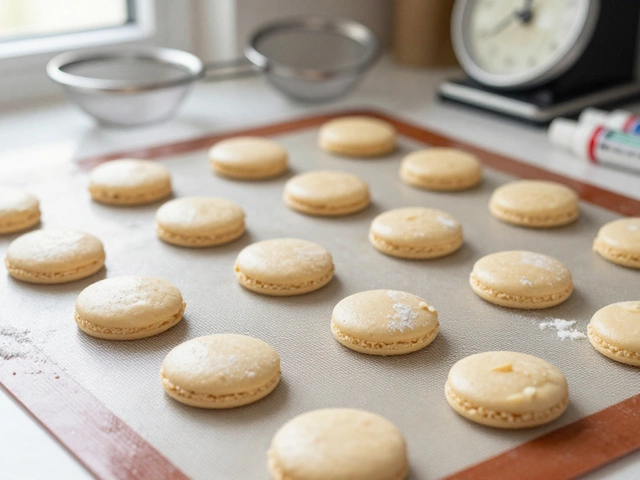
- Silicone baking mats or parchment paper: $5-$10. Silicone mats are reusable and help with even baking. Parchment paper works, but shells stick more easily.
- Macaron template: $2-$5. A printable circle template under the parchment paper ensures uniform size. No one wants mismatched shells.
- Finely meshed sifter: $8-$15. You must sift almond flour and powdered sugar together-twice. If you skip this, you get lumpy shells that crack.
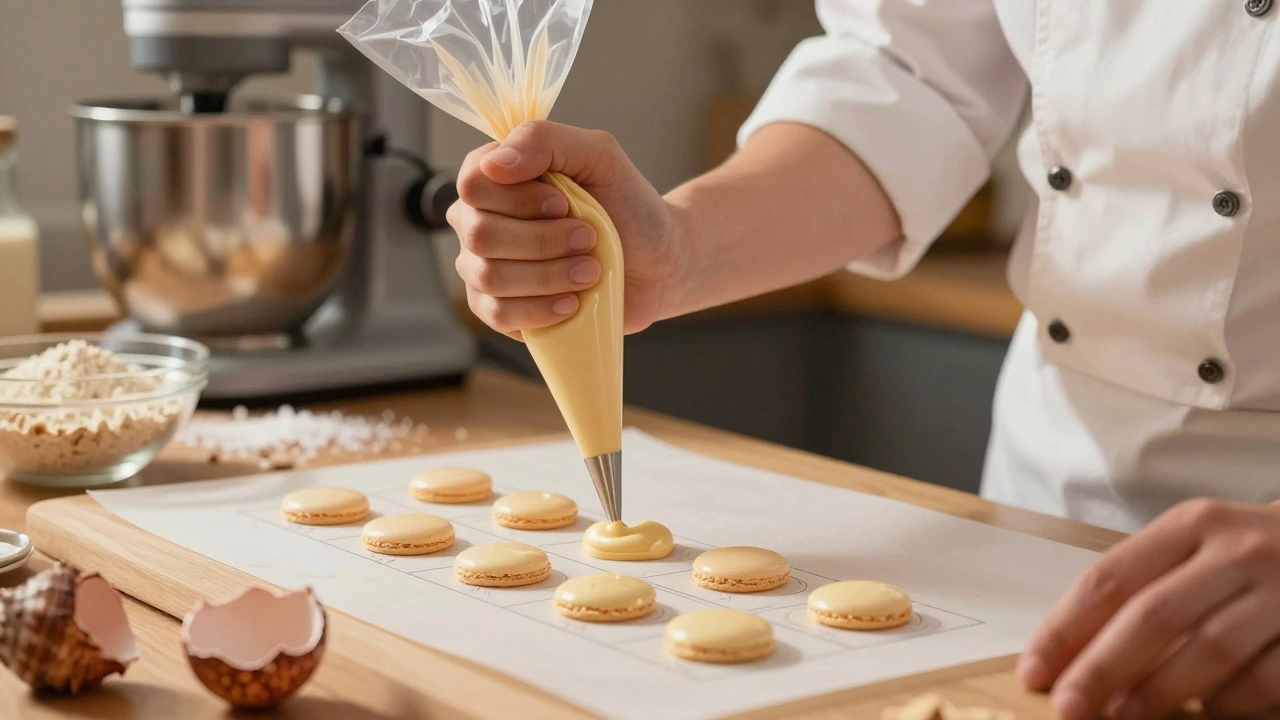
- Pastry bag and round tip (size 8-10): $5-$10. You can use a ziplock bag with a corner cut, but it’s messy and inconsistent. A proper pastry bag gives you control.
- Kitchen scale: $15-$25. Weighing ingredients in grams is non-negotiable. Volume measurements (cups) are too inaccurate for macarons.
So if you’re starting from scratch, you’re looking at $100-$200 in tools. That’s steep. But here’s the thing: most of these tools are reusable. Once you buy them, each batch costs you less than $3 in ingredients.
What You Can Skip (And What You Can’t)
There are a lot of “macaron hacks” online. Some work. Most don’t.
Don’t skip:
- Aging egg whites (24 hours at room temp)
- Sifting dry ingredients (twice)
- Using a kitchen scale
- Resting shells before baking (30-60 minutes)
You can skip:
- Using a fan to dry shells (air drying works fine)
- Buying expensive food coloring (basic gel colors from Walmart work)
- Specialty piping nozzles (a round tip is enough)
- Macaron baking pans with ridges (a flat tray with parchment is fine)
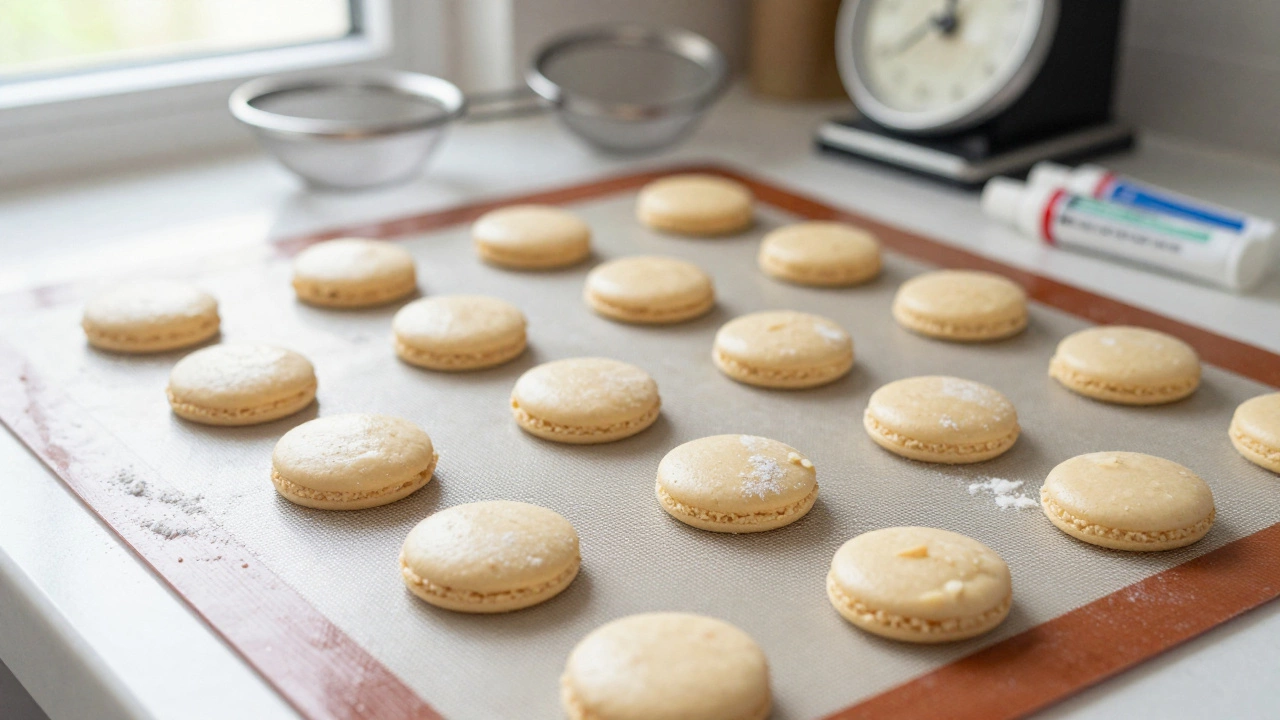
One common myth: you need a convection oven. You don’t. A standard home oven works if you bake one tray at a time and rotate it halfway through. The key is temperature control. Most macarons bake at 300°F (150°C) for 15-18 minutes. Too hot? They crack. Too low? They don’t form feet.
Cost Per Macaron: The Real Math
Let’s say you’ve already bought the tools. You’re now just paying for ingredients. One batch makes 30 shells. That’s 15 filled macarons (two shells per one).
Ingredient cost per batch: $15
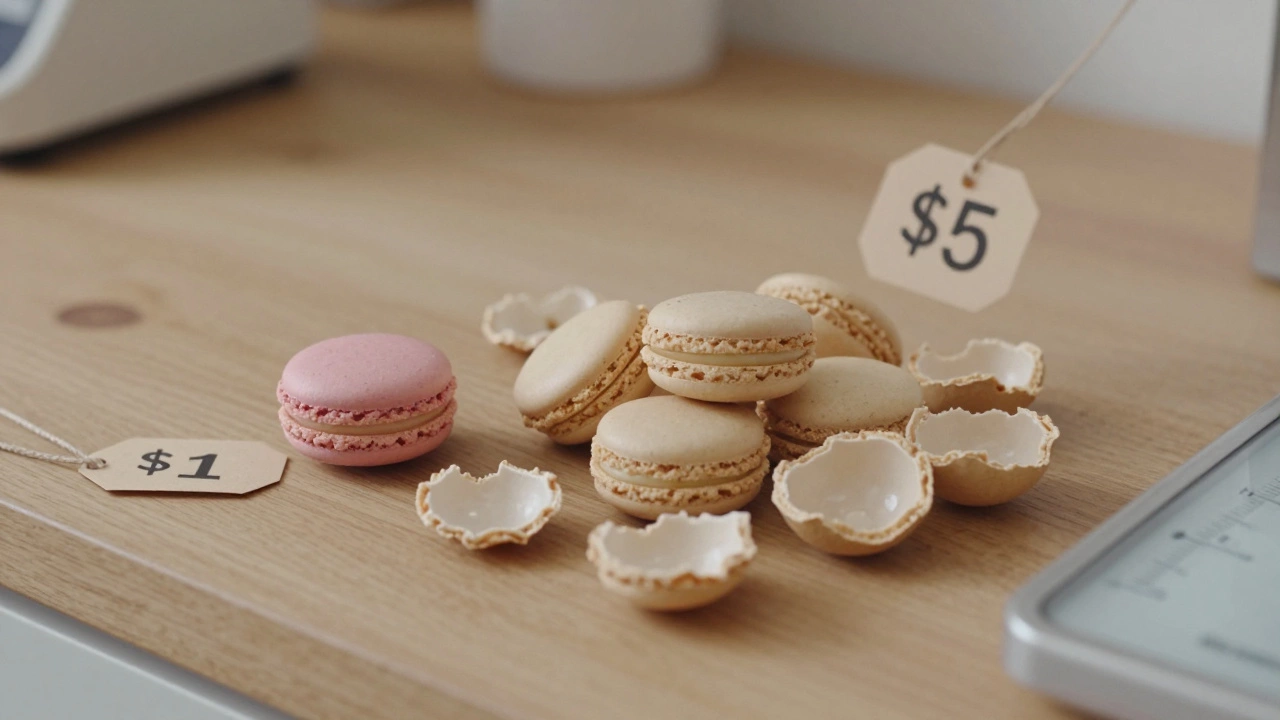
Cost per macaron: $15 ÷ 15 = $1
Compare that to a bakery where one macaron costs $3.50 to $5. You’re saving $2.50-$4 per piece. And you get to choose your fillings-chocolate ganache, lemon buttercream, raspberry jam, salted caramel. You can make gourmet flavors for less than $0.50 extra per filling.
And here’s the kicker: your first few batches will fail. That’s normal. The first time I made macarons, I ruined $25 worth of ingredients in one afternoon. Cracked shells. No feet. Sticky bottoms. I thought I’d never get it right.
But the third batch? Perfect. The fourth? Better. By the sixth, I was giving them away as gifts. It’s not about money. It’s about patience and repetition.
Where to Buy Ingredients (Without Getting Ripped Off)
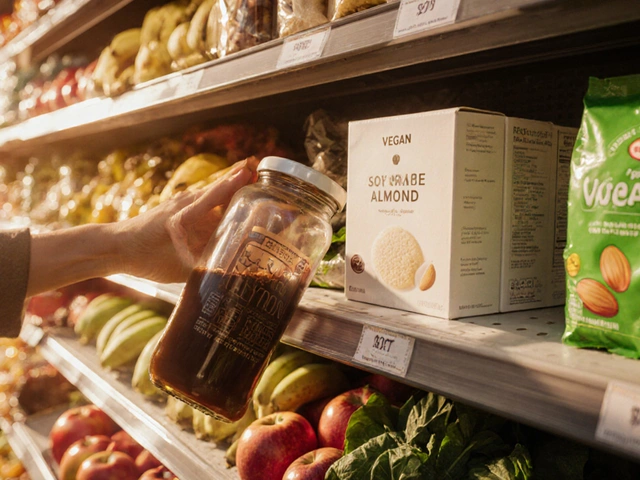
Don’t buy almond flour at a convenience store. It’s overpriced and often stale. Here’s where to shop smart:
- Online bulk retailers like Amazon or Bulk Barn (Canada) or Winco (US) sell almond flour in 2-5 lb bags for under $5 per pound.
- Asian grocery stores often carry blanched almond flour at half the price of health food stores.
- Local baking supply shops may sell food coloring gel in bulk or offer discounts for repeat customers.
- Buy egg whites in cartons (like Egg Beaters) if you don’t want to waste yolks. They work fine for macarons.
One tip: store almond flour in the fridge or freezer. It goes rancid fast because of its oil content. A bag lasts 6 months if sealed properly.
Is It Worth It?
Yes-if you like baking, enjoy the process, and don’t mind a few failures. Macarons aren’t a quick dessert. They’re a project. But the satisfaction of biting into a crisp shell, a soft interior, and a creamy filling you made yourself? That’s priceless.
If you’re only looking to save money, you’re better off buying them. But if you want to learn a skill, impress friends, or just enjoy the quiet focus of piping perfect circles, then yes-it’s worth every dollar.
Start small. Buy one bag of almond flour, a box of powdered sugar, and a tube of gel coloring. Use your existing mixer and a kitchen scale you already own. Make one batch. If it fails, try again. If it works? You’ve just made something most people pay $4 for-and you made it for under $1.
Can I use ground almonds instead of almond flour?
No. Ground almonds are coarser and contain more oil than blanched almond flour. They’ll make your macaron shells greasy, uneven, and likely crack. Almond flour is finely ground and blanched (skin removed) for a smooth texture. Stick to the real thing.
Why do my macarons have no feet?
No feet usually means the batter was undermixed or the shells weren’t rested long enough. After piping, let them sit at room temperature for 30-60 minutes until a skin forms on top. You should be able to lightly touch the surface without the batter sticking to your finger. Also, check your oven temperature-it might be too low.
Can I make macarons without a stand mixer?
Yes, but it’s harder. You’ll need a hand mixer and patience. Whip the egg whites for at least 10-15 minutes until stiff peaks form. If your arms get tired, take breaks. The key is getting the meringue to the right consistency-shiny, firm, and holding its shape.
How long do homemade macarons last?
Stored in an airtight container in the fridge, they last 5-7 days. Let them come to room temperature before eating. The filling softens the shells slightly, which is how they’re meant to be. You can also freeze them for up to 2 months.
Are macarons gluten-free?
Yes, traditional macarons are naturally gluten-free since they’re made with almond flour and no wheat. But check your powdered sugar-some brands add cornstarch, which is gluten-free too. Just avoid any flavorings or fillings with hidden gluten, like certain extracts or cookie crumbs.
Next Steps: Your First Batch
Here’s your simple checklist before you start:
- Buy blanched almond flour and powdered sugar (sift them together twice).
- Separate 2-3 egg whites and leave them out for 24 hours.
- Use a kitchen scale and weigh everything in grams.
- Preheat your oven to 300°F (150°C).
- Use a silicone mat or parchment paper on a flat baking tray.
- Pipe 1.25-inch circles with a round tip.
- Let them rest until a skin forms (30-60 minutes).
- Bake one tray at a time for 15-18 minutes.
- Let them cool completely before removing from the mat.
- Fill with buttercream or ganache and refrigerate for 24 hours.
Don’t expect perfection on the first try. But if you follow this, your second batch will be better. And your third? You’ll be proud to share them.

Write a comment