


Fudge Storage Calculator
How Long Will Your Fudge Last?
Enter your fudge type and storage method to see how long it will stay fresh.
Homemade fudge is one of those treats that feels like a warm hug in sweet form. Rich, creamy, and packed with chocolate or caramel goodness, it’s the kind of dessert people ask for again and again. But once you’ve made a batch, you’re left wondering: how long will homemade fudge last? And more importantly, how do you keep it from turning grainy, sticky, or stale?
The short answer? Properly stored, homemade fudge lasts 1 to 2 weeks at room temperature, up to 4 weeks in the fridge, and 3 to 6 months in the freezer. But that’s only if you handle it right. Get the storage wrong, and you could end up with a chalky, crumbly mess that tastes like regret.
Why Homemade Fudge Goes Bad Faster Than Store-Bought
Store-bought fudge often contains preservatives, stabilizers, and hardened fats that extend its shelf life. Homemade fudge? It’s made with just sugar, butter, milk or cream, and chocolate-or maybe some nuts, vanilla, or sea salt. No additives. That means it’s more alive, more sensitive, and more prone to moisture loss or absorption.
There are three main ways fudge goes bad:
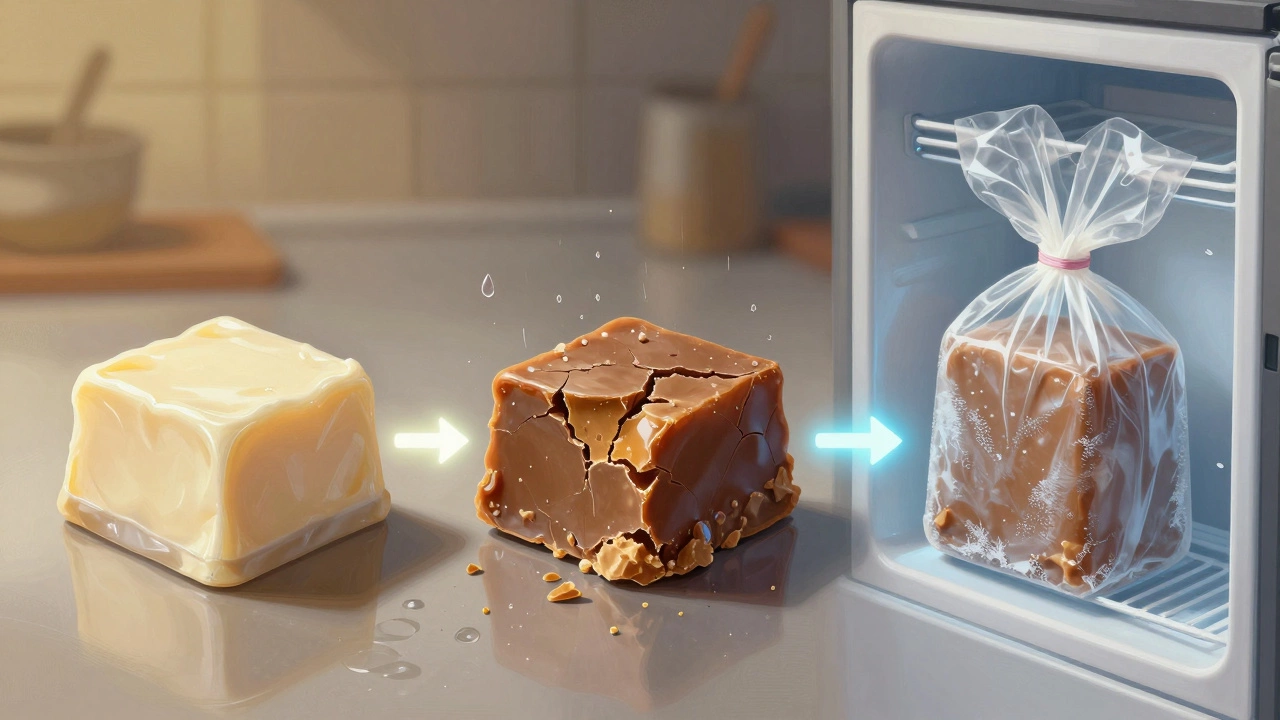
- Drying out → becomes crumbly and chalky
- Absorbing moisture → turns sticky or grainy
- Oil separation → butter or chocolate separates, leaving greasy spots
None of these are dangerous-but they’re definitely disappointing. You don’t want to gift someone a box of fudge only to find it’s lost its melt-in-your-mouth texture.
How to Store Homemade Fudge at Room Temperature
If you plan to eat your fudge within a week, keeping it at room temperature is fine-especially if you live in a cool, dry place like Auckland in winter. But humidity is your enemy.
Here’s how to do it right:
- Let the fudge cool completely after cutting. Warm fudge traps steam, which turns to moisture and ruins the texture.
- Place pieces in a single layer in an airtight container. Don’t stack them unless you’re using parchment paper between each layer.
- Line the bottom and top of the container with parchment or wax paper. This prevents sticking and absorbs tiny bits of moisture.
- Keep it in a cool, dark cupboard away from sunlight, stoves, or ovens. A pantry is perfect.
- Avoid refrigerators unless you’re storing it long-term. The cold air pulls moisture out of fudge faster than you think.
Under these conditions, your fudge will stay soft and smooth for 10 to 14 days. After that, it starts to dry out. If it’s been sitting for two weeks and feels a little firm, you can revive it by placing a slice of apple in the container overnight. The apple releases moisture, and the fudge will soften up.
Refrigerating Fudge: When and How
Do you live in a warm climate? Did you make a huge batch for a holiday gift? Is your kitchen always above 22°C? Then refrigeration is your friend.
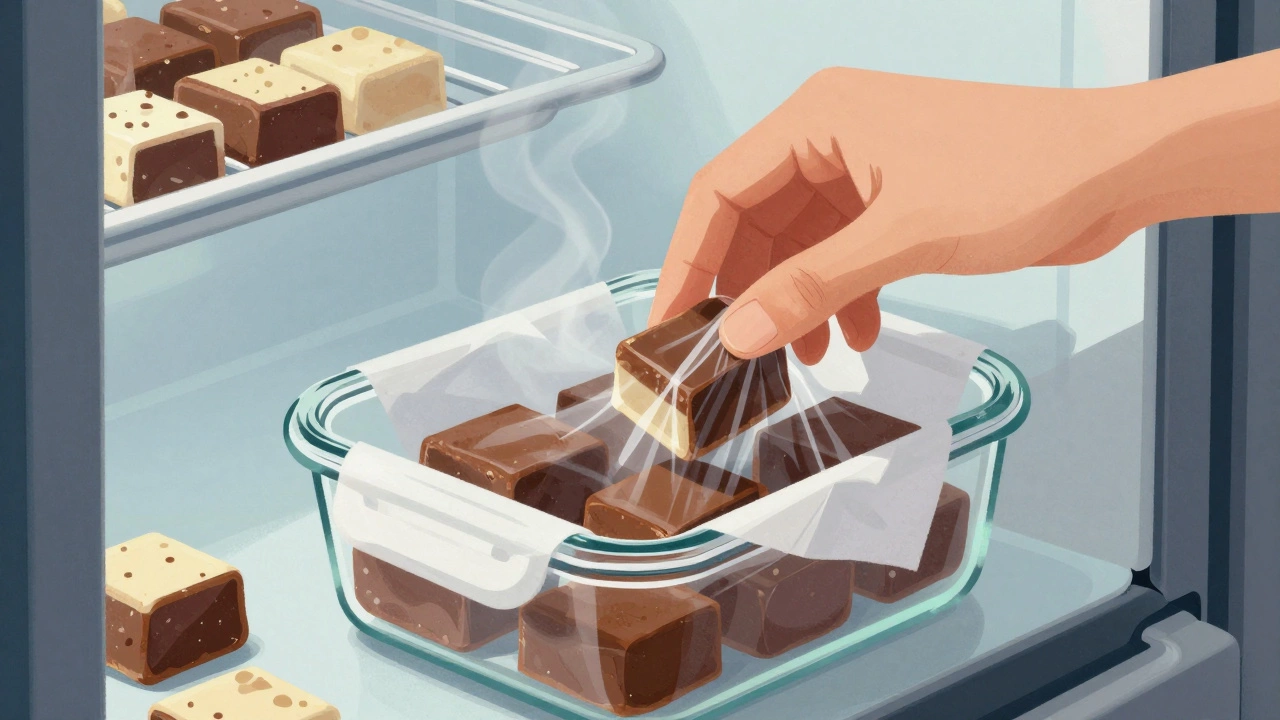
But refrigerating fudge the wrong way turns it into a sugary brick. Here’s the correct method:
- Wrap each piece individually in plastic wrap. This creates a moisture barrier.
- Place the wrapped pieces in a rigid, airtight container. Glass or thick plastic works best.
- Label the container with the date. Fudge lasts up to 4 weeks in the fridge.
- Let it sit at room temperature for 30 minutes before eating. Cold fudge is hard and flavorless. Letting it warm up restores its creamy texture.
Don’t skip the wrapping step. Fridge air is dry and full of odors. Unwrapped fudge will absorb smells from leftover pizza or pickles-and lose its smoothness fast.
Freezing Fudge: The Long-Term Solution
Want to make fudge in bulk for Christmas, weddings, or just because you love it? Freezing is the best way to preserve flavor and texture for months.
Freezing works because the low temperature stops moisture migration and bacterial growth. Fudge freezes exceptionally well because it’s low in water and high in sugar, which acts as a natural antifreeze.
Here’s how to freeze it properly:
- Cut the fudge into portions. It’s easier to thaw small pieces than a whole slab.
- Wrap each piece tightly in plastic wrap, then place it in a heavy-duty freezer bag. Squeeze out as much air as possible.
- For extra protection, put the bagged pieces in a rigid container. This prevents crushing.
- Label with the date and type (e.g., “Peanut Butter Fudge - Jan 15, 2026”).
- Store in the coldest part of the freezer-usually the back, not the door.
Properly frozen fudge keeps its texture and flavor for up to 6 months. After that, it may start to develop freezer burn or lose its richness. Don’t expect it to taste exactly like fresh, but it’ll still be delicious.
To thaw: Move the container to the fridge and let it sit overnight. Then let it come to room temperature for 20-30 minutes before eating. Never microwave frozen fudge-it’ll melt unevenly and turn greasy.
Signs Your Fudge Has Gone Bad
Fudge rarely spoils in the way bread or meat does. It won’t grow mold unless it’s exposed to moisture for too long. But here’s what to watch for:
- Grainy texture → sugar crystals have formed. This happens when moisture is lost and then reabsorbed unevenly. It’s not unsafe, but it won’t taste right.
- Sticky or slimy surface → likely absorbed too much humidity. If it’s also discolored or smells off, toss it.
- Odd odor → if it smells rancid (like old butter or crayons), the fat has gone bad. This is rare but possible with nut-heavy fudge.
- Mold → green, white, or fuzzy spots. This means water got in. Discard immediately.
If your fudge looks and smells normal but just feels a little dry? You can still use it. Crumble it over ice cream, blend it into milkshakes, or melt it down to make chocolate sauce.
How Different Fudge Types Affect Shelf Life
Not all fudge is the same. Add-ins change how long it lasts:
| Fudge Type | Room Temp | Refrigerated | Freezer |
|---|---|---|---|
| Classic Chocolate | 10-14 days | 3-4 weeks | 4-6 months |
| Peanut Butter | 7-10 days | 3 weeks | 3-5 months |
| White Chocolate | 7-10 days | 3 weeks | 3-4 months |
| Marshmallow Fluff | 5-7 days | 2-3 weeks | 2-3 months |
| Coconut or Fruit-Infused | 5-7 days | 2-3 weeks | 2-4 months |
Nut-based fudge spoils faster because nuts contain oils that turn rancid. White chocolate is more sensitive to heat and moisture than dark chocolate. Marshmallow or fruit additions introduce water, which invites crystallization.
Pro Tips for Fudge That Lasts
- Use high-quality chocolate. Cheap chocolate has more stabilizers and doesn’t set as well, leading to faster breakdown.
- Don’t cut fudge until it’s completely cooled. Warm fudge tears and exposes more surface area to air.
- Use a sharp knife dipped in hot water for clean cuts. Wipe the knife between slices.
- If you’re gifting fudge, include a note: “Best eaten within 10 days. Keep refrigerated if not consumed quickly.”
- Never store fudge next to strong-smelling foods like onions, garlic, or cheese-even in the fridge.
One last trick: if you make fudge often, buy a small vacuum sealer. It’s not expensive, and it makes a huge difference in keeping fudge fresh for weeks longer than traditional methods.
What to Do With Leftover Fudge
Even if your fudge isn’t perfect anymore, don’t throw it out.
- Crush it and mix into brownie batter for extra fudgy layers.
- Melt it with a splash of cream to make hot chocolate sauce.
- Use it as a topping for pancakes or waffles.
- Blend it into a milkshake with vanilla ice cream and a dash of espresso.
- Roll it into balls and coat with crushed nuts or sprinkles for no-bake truffles.
There’s almost always a way to rescue fudge-even if it’s past its prime. The key is not to treat it like a fragile artifact. Treat it like the sweet, forgiving treat it is.
How long does homemade fudge last at room temperature?
Homemade fudge lasts 1 to 2 weeks at room temperature if stored properly in an airtight container with parchment paper between layers. Keep it in a cool, dry place away from sunlight and humidity. After two weeks, it starts to dry out and lose its creamy texture.
Can you freeze homemade fudge?
Yes, freezing is the best way to store fudge long-term. Wrap each piece tightly in plastic wrap, then place in a freezer-safe bag with the air squeezed out. Frozen fudge stays fresh for 3 to 6 months. Thaw in the fridge overnight, then let it sit at room temperature for 30 minutes before eating.
Why does my fudge get grainy?
Grainy fudge happens when sugar crystals form due to moisture loss or improper cooling. Stirring the mixture too much while it’s cooling, or exposing it to humidity, can cause this. Once it’s grainy, you can’t fix the texture-but you can melt it down and use it as sauce or in baking.
Should I refrigerate fudge?
Only if you live in a warm climate or need to store it longer than two weeks. Refrigeration can dry out fudge if it’s not wrapped properly. Always wrap pieces individually in plastic wrap and store in an airtight container. Let it warm up for 30 minutes before eating to restore its creaminess.
Does fudge with nuts last longer or shorter?
Fudge with nuts lasts a shorter time because nuts contain oils that can turn rancid. Peanut butter or almond fudge typically lasts 7-10 days at room temperature and 3 weeks in the fridge. Store nut-based fudge in the fridge or freezer if you’re not eating it within a week.
Can I leave fudge out overnight?
Yes, fudge can safely sit out overnight as long as it’s covered and kept in a cool, dry place. Avoid leaving it in direct sunlight or near a heat source. If your kitchen is humid or above 24°C, it’s better to refrigerate it after a few hours.








Write a comment