

Fudge Texture Troubleshooter
The Candy LabDescribe your fudge's current state to find the cause and the solution.
The Science & Solution
The heartbreak of soft fudge
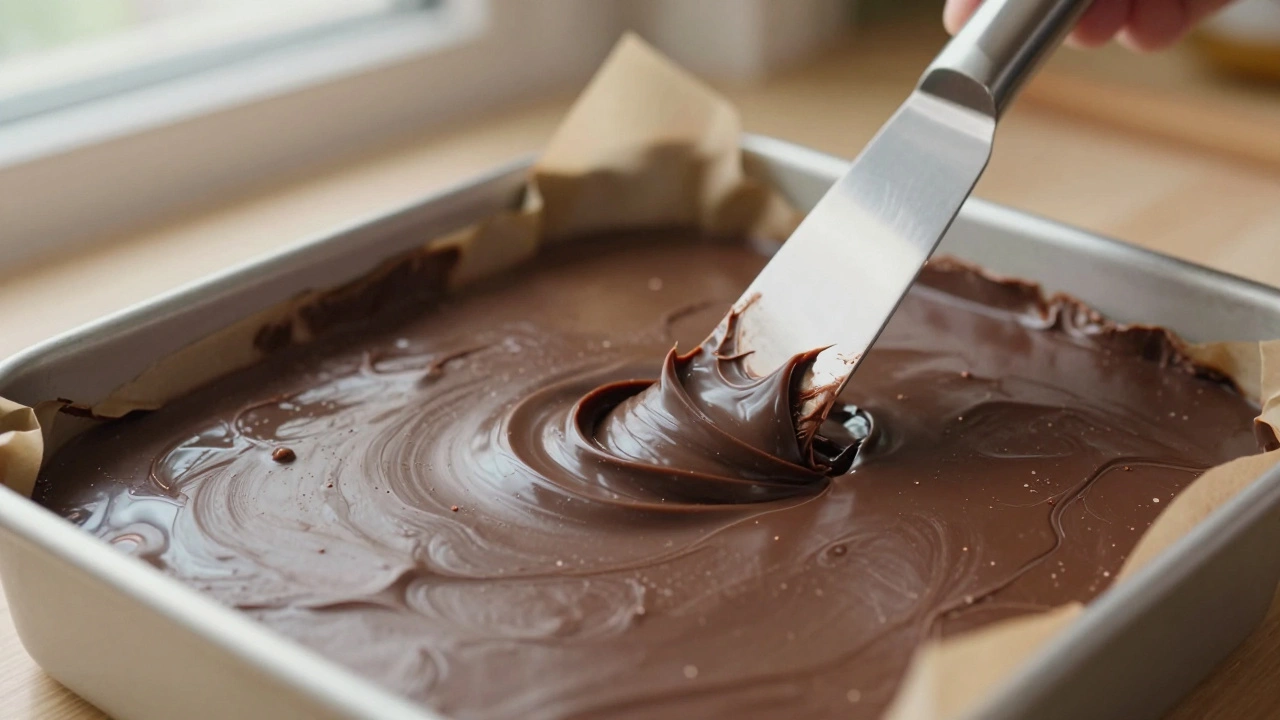
You've spent an hour stirring, the kitchen smells like a chocolate factory, and you've finally poured your creation into the pan. But after three hours in the fridge, you go to slice it and-instead of a clean cut-your knife sinks into a gooey, sticky mess. It's frustrating, but here's the truth: fudge is essentially a controlled chemical reaction. When that reaction goes sideways, you end up with a sauce instead of a candy. The good news is that fudge not setting is almost always caused by one of three things: temperature, agitation, or ingredients.
The Golden Rule: Temperature is Everything
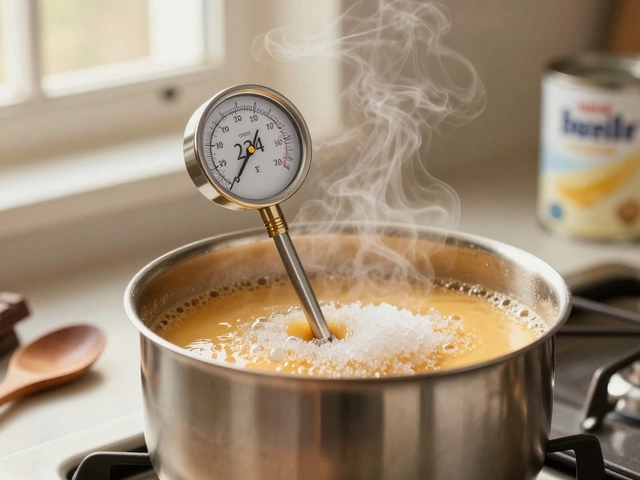
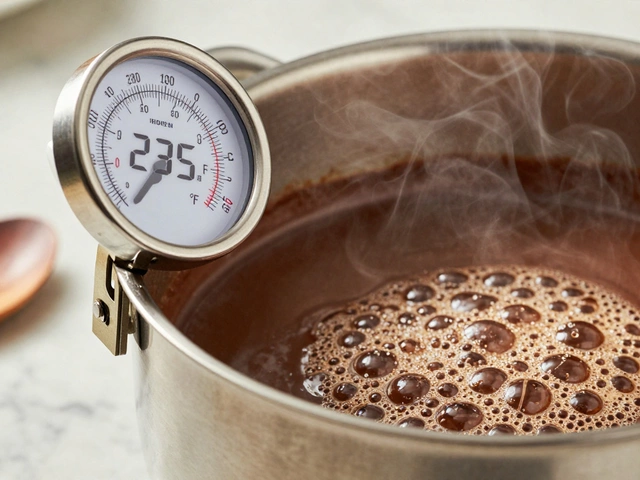
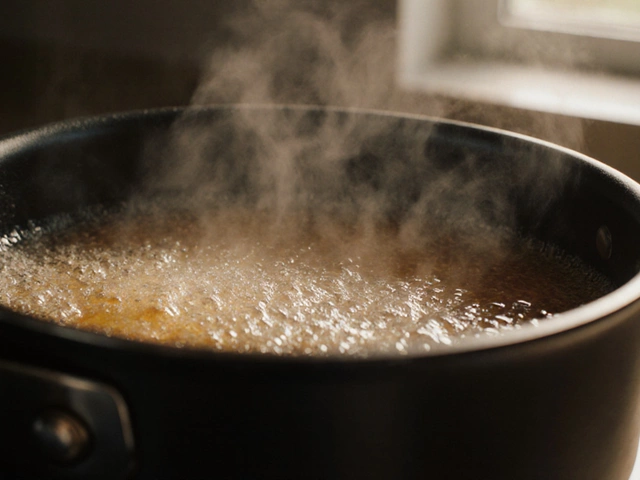
If you didn't use a thermometer, this is likely your culprit. Fudge requires a very specific temperature to trigger the transition from a liquid syrup to a solid candy. Most traditional recipes call for the "soft ball stage," which usually sits between 235°F and 240°F (112°C to 115°C). If you pull the pot off the heat at 230°F, the sugar hasn't concentrated enough. The result? Your fudge will stay soft or slightly runny because there isn't enough sugar density to support a structure.
Using a Candy Thermometer is the only way to be sure. Relying on "bubbles" or "the look of the syrup" is a gamble. Even a 2-degree difference can be the gap between a perfect square and a sticky puddle. If you're using a digital probe, make sure the tip isn't touching the bottom of the pan, as the metal base is often hotter than the actual syrup, giving you a false high reading.
| Stage | Temperature Range | Typical Result |
|---|---|---|
| Soft Ball | 235°F - 240°F | Creamy, stable fudge |
| Hard Ball | 250°F - 265°F | Chewier, harder candy |
| Under-cooked | Below 230°F | Syrupy or soft consistency |
The Danger of Over-Stirring
It feels natural to stir your fudge constantly, but doing it too early can ruin the batch. When you're boiling the mixture, you want the sugar to dissolve and the water to evaporate. If you stir too vigorously during the boiling phase, you can cause premature crystallization. This leads to "grainy" fudge, but in some cases, if you stir too much during the cooling phase before the temperature drops enough, you can actually prevent the structure from bonding correctly, leaving you with a softer, less stable texture.
The trick is to wait. Most recipes tell you to let the fudge cool to about 110°F before you start beating it. If you start stirring while it's still at 150°F, you're essentially fighting the cooling process. You want the mixture to reach a point where the crystals can form slowly and evenly, rather than being forced into a chaotic state by your spatula.
Ingredient Interference: The Role of Fats and Acids
Not all butter is created equal. If you've substituted a high-fat European butter or added extra cream for "richness," you might have added too much fat to the equation. Butter and cream act as interferents; they get in the way of the sugar crystals. Too much fat prevents the crystals from locking together, which results in a fudge that never fully hardens.
Similarly, if you're using a recipe with Corn Syrup or Invert Sugar, these are used specifically to prevent crystallization (which stops the fudge from getting grainy). However, if you add too much of these "interfering agents," you'll stop the crystallization process entirely. You'll get a smooth texture, but the fudge will behave more like a thick caramel than a solid candy.
The Humidity Trap
Ever notice how your candy behaves differently on a rainy day? Sugar is hygroscopic, meaning it sucks moisture right out of the air. If you're making fudge in a kitchen with high humidity, the candy will absorb water from the atmosphere as it cools. This extra moisture softens the sugar structure. If the air is thick with moisture, your fudge might set initially but then "sweat" and turn soft and sticky within an hour.
To fight this, try to keep the kitchen cool and dry. Using a dehumidifier or running the AC can actually make a difference in the final set of your candy. If you live in a tropical climate, avoid making fudge on days when the humidity is above 60%, or be prepared to store it in an airtight container immediately after it sets.
Can You Save Soft Fudge?
If you've already poured your fudge and discovered it's too soft, don't throw it away. You can actually fix it. The process is called "re-cooking." Pour the soft fudge back into your saucepan and heat it slowly over medium heat. You'll need to bring it back up to the correct soft-ball temperature (235°F-240°F) to evaporate the excess moisture and reset the sugar bonds.
Once it reaches the target temperature again, remove it from the heat and follow the cooling and stirring instructions exactly. This second round often produces an even better result because you're now working with a concentrated syrup. Just be careful not to overcook it this time, or you'll move from "too soft" to "rock hard" very quickly.
The Shortcut Method: Powdered Sugar Fudge
If the science of temperature is too stressful, you might prefer Confectionery Sugar (powdered sugar) recipes. These are often called "cheater's fudge." Because the sugar is already finely ground and processed, you don't need to boil it to a specific stage. You're essentially melting ingredients together into a thick paste.
While this version is much harder to mess up, it has a different mouthfeel. It's often denser and slightly more "sugary" than the traditional cooked method. However, if you're tired of fighting with thermometers, this is the most reliable path to a square of fudge that actually holds its shape.
Why is my fudge grainy but still soft?
Graininess comes from sugar crystals that grew too large, usually because the mixture was stirred while boiling. The softness is due to the temperature not reaching the soft-ball stage. You have two separate problems: improper agitation and under-cooking.
Does the type of pan matter for fudge setting?
The pan doesn't change the chemistry, but a heavy-bottomed pot is crucial for even heating. Thin pots create "hot spots" where sugar can burn or overheat, leading to uneven temperatures and an inconsistent set.
Can I use a microwave to fix soft fudge?
It's not recommended. Microwaves heat unevenly, and sugar can go from 230°F to 250°F in seconds, which can burn your fudge or make it too hard. Use a stovetop for the re-cooking process.
How long should I actually let fudge cool before stirring?
You should let it cool until it reaches approximately 110°F to 120°F. If you don't have a thermometer for this stage, the mixture should feel lukewarm to the touch, not hot, but still fluid enough to move.
Will putting fudge in the freezer make it set?
The freezer will make it feel hard, but once it reaches room temperature, it will melt back into a gooey mess. Freezing is a temporary mask; it doesn't fix the underlying structural failure of the sugar crystals.
Next Steps for Your Next Batch
If you're diving back into the kitchen, start by auditing your tools. If your thermometer is old, calibrate it in boiling water (which should be 212°F at sea level). If you're making a recipe with a lot of butter, consider using a small amount of lemon juice or cream of tartar; these acids help break down sucrose into glucose and fructose, which prevents those giant, grainy crystals from forming.
For those who consistently struggle with the stove, try the powdered sugar method first to build confidence. Once you've mastered the texture, move back to the traditional boiled method. Just remember: trust the thermometer, not your eyes, and be patient with the cooling process. Your patience is what turns a syrup into a treat.


Write a comment