

Fudge Temperature Calculator
Altitude Adjustment Calculator
Find the correct cooking temperature for your fudge based on your altitude. This accounts for atmospheric pressure changes that affect sugar crystallization.
Result
Ideal Fudge Temperature Range:
234-240°F (112-116°C)
Adjusted Target Temperature:
Enter your altitude to see calculation
Enter your altitude to see adjustment
Nothing kills the mood like pulling a batch of fudge out of the fridge only to find it’s still runny. You followed the recipe. You used condensed milk. You even stirred it for the full 10 minutes. So why isn’t your fudge setting? The answer isn’t magic-it’s science. And it’s usually one of five simple things you missed.
Your sugar didn’t reach the right temperature
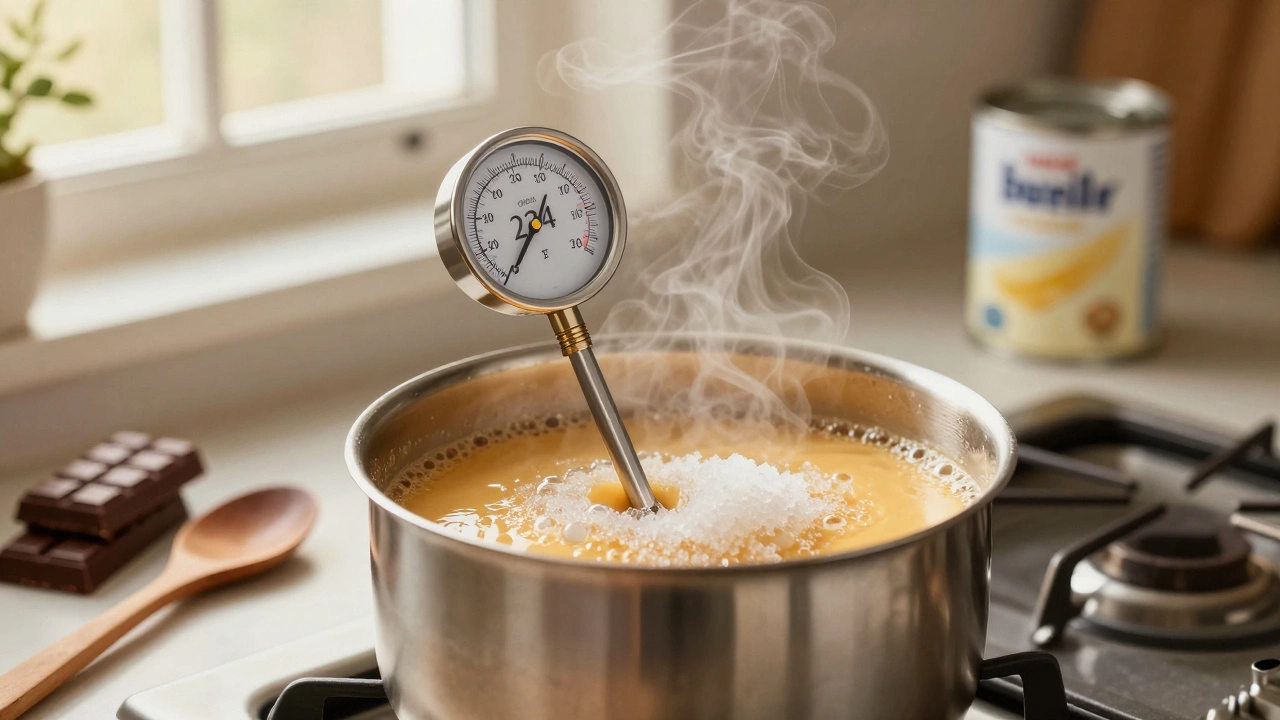
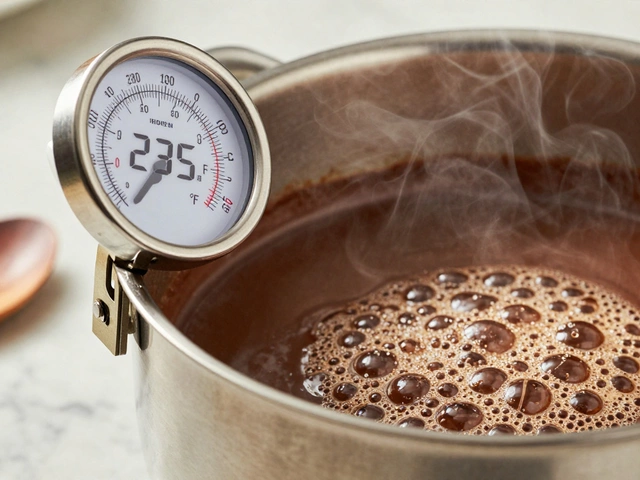
Fudge isn’t just melted chocolate and sweetened milk. It’s a candy made by cooking sugar to a specific stage: the soft-ball stage. That’s 234-240°F (112-116°C). If your mixture never hit that range, the sugar didn’t crystallize properly. And without that crystallization, your fudge stays sticky and soft.
Most fudge recipes say "cook until thickened" or "until it starts to pull away from the pan." That’s not enough. You need a candy thermometer. Don’t guess. Don’t rely on visual cues alone. If you don’t have one, a cheap one from any supermarket will save your batch. Bring the mixture to a full boil, then set your timer. Let it cook at a steady bubble for exactly 5 minutes after it hits 234°F. Skip that timer, and you’re gambling with your fudge.
You stirred too early
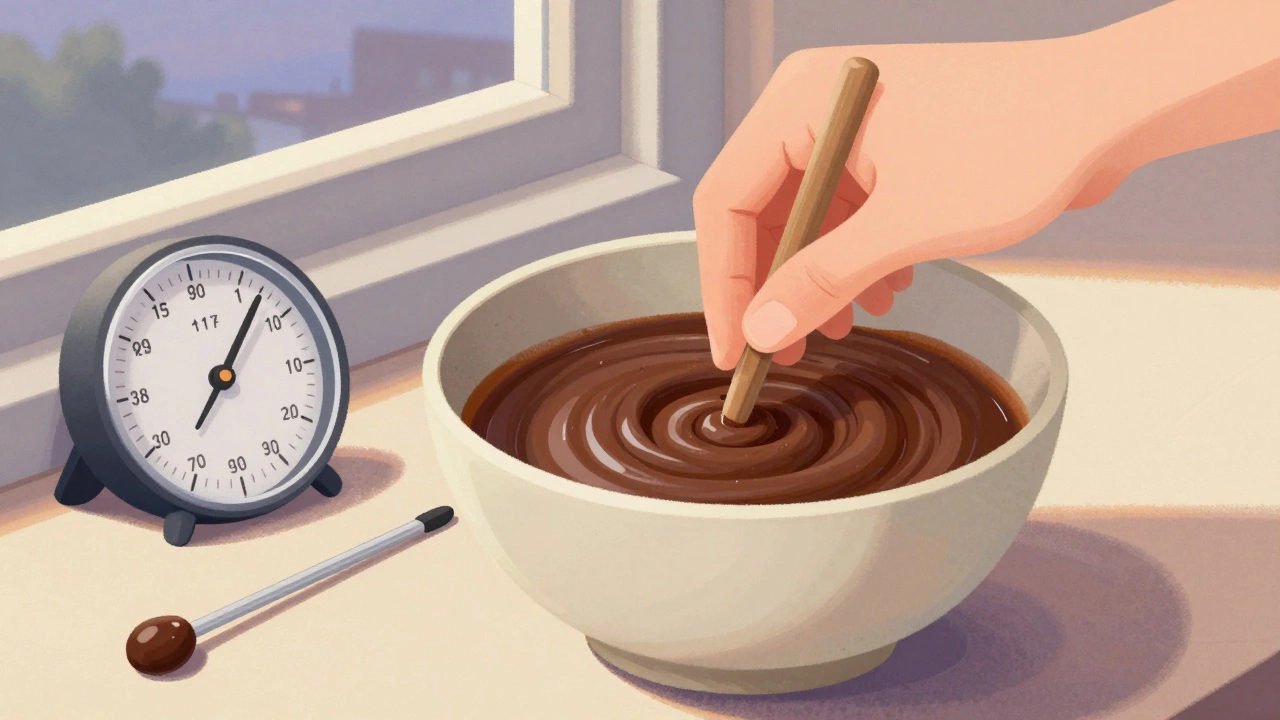
Here’s the biggest mistake most people make: they start stirring while the mixture is still hot. Once you take the pot off the heat, you need to let it cool-no stirring-until it drops to about 110°F (43°C). That’s when you start beating it. If you beat it while it’s still hot, you’re forcing sugar crystals to form too soon, and they won’t set evenly. The result? Grainy texture or, worse, no structure at all.
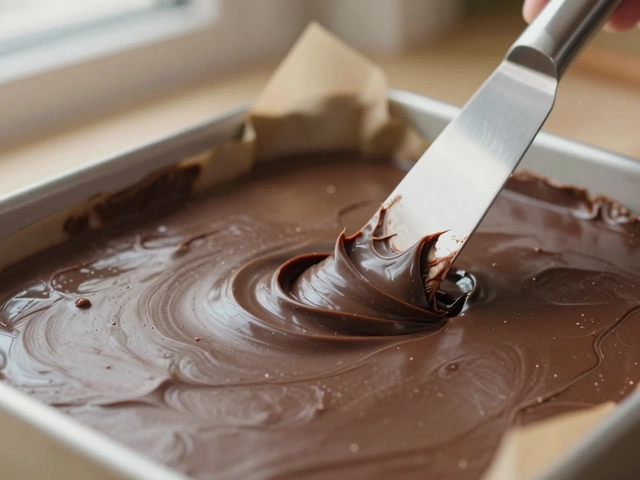
Think of it like whipping cream. You don’t start whipping warm milk. Same logic. Let the mixture sit untouched for 15-20 minutes. You’ll see it lose its shine and get slightly matte. That’s your signal. Then, beat it hard for 3-5 minutes until it thickens and loses its gloss. That’s when the magic happens.
The condensed milk was too watery
Not all condensed milk is created equal. Some brands add extra water or use cheaper thickening agents. If your fudge is consistently runny, check the label. Look for "sweetened condensed milk" with just two ingredients: milk and sugar. If it says "evaporated milk" or "light condensed milk," that’s your problem. Evaporated milk is unsweetened and has less sugar and more water. It won’t work.
In New Zealand, Anchor or Golden Crown are reliable. In the US, Eagle Brand is the gold standard. If you’re using a store brand, try switching. A 14-ounce can should be thick, glossy, and pour slowly. If it looks watery or pours like regular milk, toss it. You can’t fix bad ingredients.
You didn’t use enough chocolate
Condensed milk alone doesn’t set fudge. It needs chocolate to bind it. Most recipes call for 12-16 ounces of semi-sweet or dark chocolate. If you cut that back to save money or go low-sugar, you’re removing the structure. Chocolate contains cocoa butter, which solidifies at room temperature. Without enough of it, your fudge stays soft like pudding.
Don’t substitute chocolate chips unless they’re labeled for baking. Snacking chips have stabilizers that resist melting. They won’t blend smoothly. Use chopped baking chocolate or high-quality chocolate bars. If you’re using 70% dark chocolate, that’s fine-it sets firmer than milk chocolate. Just make sure you’re not skimping. Two bars, not one.
Your kitchen is too warm
Fudge sets because it cools. If your kitchen is above 75°F (24°C), it won’t harden properly-even if everything else is perfect. I’ve seen batches fail in Auckland during summer because people left them on the counter. The fridge helps, but not if you put it in too soon.
Let the fudge cool at room temperature for at least 2 hours before refrigerating. Then, leave it in the fridge for another 3-4 hours. Don’t rush it. If you’re in a hurry, put it in the freezer for 45 minutes, but only if you’re confident the temperature was right to begin with. And always cover it with parchment paper, not plastic wrap. Plastic traps moisture and makes the top sticky.
Quick fix checklist
If your fudge is still soft after 24 hours, here’s what to do:
- Put it back in a saucepan with 1/4 cup of heavy cream or whole milk.
- Heat gently until it melts, stirring constantly.
- Cook again to 238°F (114°C) using a thermometer.
- Let it cool to 110°F without stirring.
- Beat until thick, then pour into a fresh pan.
This rescue method works 9 out of 10 times. You’re not wasting it-you’re restarting the process with better control.
What not to do
Don’t add more condensed milk. Don’t microwave it. Don’t throw in extra chocolate without reheating. These are common panic moves that make things worse. Fudge is delicate. It needs time, temperature, and patience. No shortcuts.
Pro tip: Test your thermometer
Candy thermometers can be off by 10°F or more. Test yours before you start. Bring a pot of water to a rolling boil. At sea level, it should read 212°F (100°C). If it reads 205°F or 220°F, adjust your recipe temperature up or down by that difference. In Auckland, we’re at sea level, so no altitude adjustment needed. But if you’re up in the hills, you’ll need to lower your target by 1-2°F per 1,000 feet.
Final note: It’s not broken. You just need to listen to the science.
Fudge isn’t complicated. It’s just chemistry. Sugar + heat + time + chocolate + cooling = perfect fudge. Mess up one step, and it fails. Get all five right, and you’ve got rich, sliceable, melt-in-your-mouth fudge that lasts for weeks. No magic. No guesswork. Just a thermometer, a timer, and a little patience.
Why does my fudge stay sticky even after refrigerating?
Sticky fudge usually means the sugar didn’t reach the soft-ball stage (234-240°F). It could also be because you stirred too early or used a watery condensed milk. Always use a candy thermometer and wait until the mixture cools to 110°F before beating.
Can I use evaporated milk instead of condensed milk?
No. Evaporated milk is unsweetened and has less sugar and more water. It won’t provide the structure or sweetness fudge needs. Only use sweetened condensed milk with two ingredients: milk and sugar.
Why does my fudge turn grainy?
Grainy fudge happens when sugar crystals form too early-usually because you stirred while the mixture was still hot. Let it cool to 110°F without touching it, then beat vigorously until it thickens. That’s the key to smooth texture.
How long should I let fudge cool before cutting?
Wait at least 4 hours after pouring. If you cut it too soon, it will tear or stick. For best results, chill it in the fridge for 3-4 hours, then let it sit at room temperature for 10 minutes before slicing. This makes clean cuts easier.
Can I fix fudge that never set?
Yes. Reheat it with 1/4 cup of cream or milk, bring it back to 238°F, cool to 110°F, then beat until thick. This resets the sugar crystals and usually fixes the problem. Don’t throw it out.




Write a comment