

Vegan Chocolate Checker
Check Your Chocolate
Enter a chocolate brand or product name to see if it's likely vegan-friendly
Most people think chocolate is naturally vegan. After all, it comes from cacao beans, right? But if you’re trying to eat plant-based, you might be shocked to find that chocolate isn’t always vegan. Even dark chocolate labeled as "70% cacao" can contain milk powder, butterfat, or other animal-derived ingredients. And it’s not always obvious on the label.
What Makes Chocolate Non-Vegan?
The biggest culprit is milk. Many chocolate bars-even those that look dark and intense-contain dried milk powder, condensed milk, or whey. These aren’t added for flavor alone; they’re used to make the chocolate smoother, creamier, and cheaper to produce. In fact, some brands add as little as 5% milk solids and still call it "dark chocolate." In New Zealand and the EU, chocolate only needs to contain 20% cocoa to be labeled as dark, and milk can legally be included without being front-and-center on the packaging.
Look at the back of a bar you assume is vegan. You might see ingredients like "milk fat," "lactose," or "whey protein." These are all dairy derivatives. Even if the front says "no milk," the fine print tells a different story. One popular brand in Auckland markets a "dark chocolate" bar that contains skimmed milk powder-something even many vegans miss until they have a reaction.
Hidden Animal Ingredients Beyond Milk
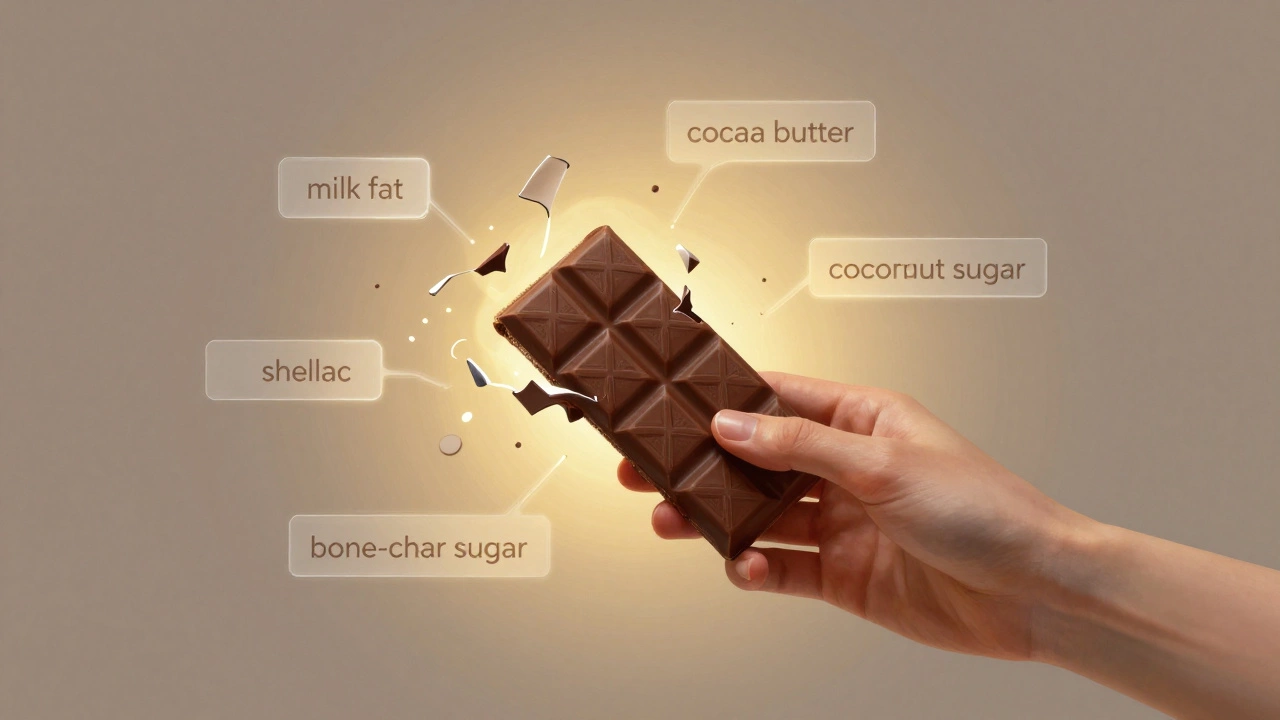
Milk isn’t the only problem. Some chocolate uses animal-based processing aids that don’t show up on ingredient lists. For example, bone char is sometimes used to filter and refine sugar. While the sugar itself doesn’t contain bone particles, the refining process involves animal bones, which makes it non-vegan in the eyes of strict vegans. Not all sugar is processed this way-beet sugar and organic cane sugar are usually fine-but it’s rarely labeled.
Another sneaky one is shellac. It’s a resin secreted by insects, and it’s sometimes used to give chocolate a glossy finish. You’ll find it on chocolate-covered almonds or candies. It’s listed as "confectioner’s glaze" or just "shellac" on the ingredients panel. If you’re buying chocolate from a supermarket shelf, there’s a good chance it’s been coated with this insect-based wax.
Then there’s glycerin. It can come from either plant or animal sources. Without clear labeling, you can’t know which one was used. Some vegan chocolate makers explicitly state "vegetable glycerin," but many don’t. If you’re trying to be 100% plant-based, this uncertainty becomes a real hurdle.
How Chocolate Is Made (And Where Animals Sneak In)
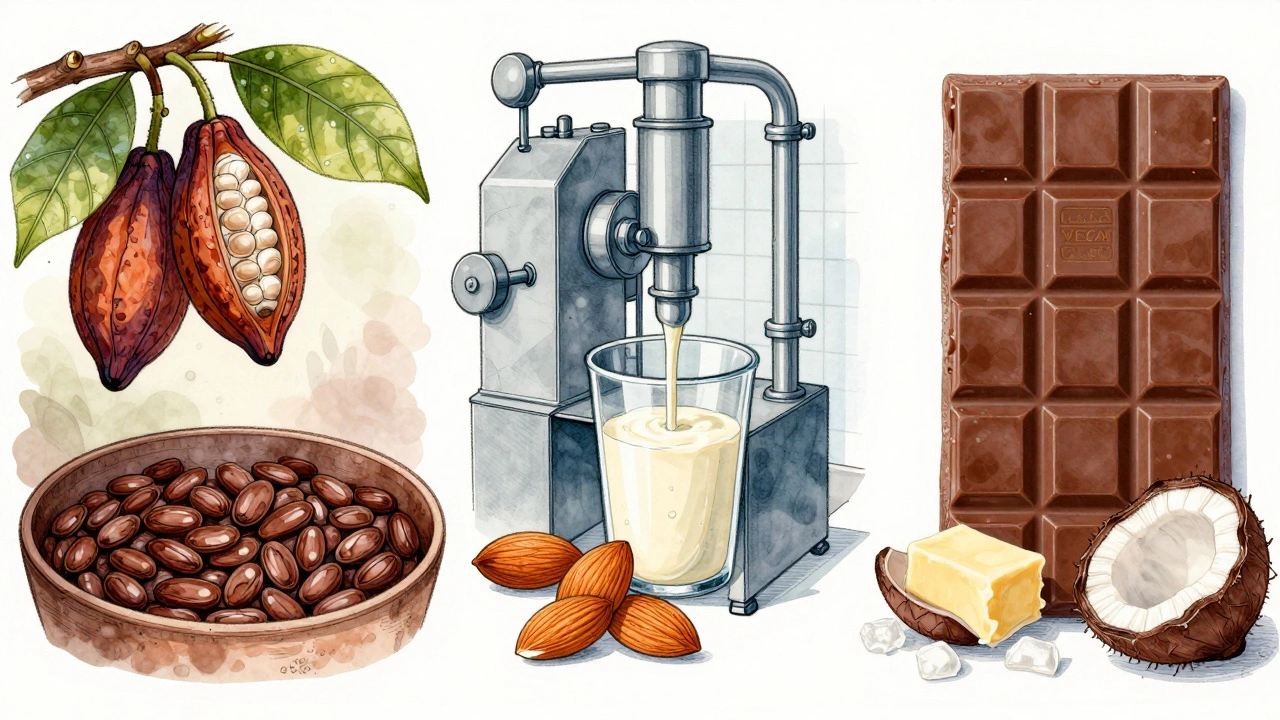
Let’s trace the journey of a typical chocolate bar. Cacao beans are harvested, fermented, dried, roasted, and ground into cocoa mass. So far, so plant-based. But then things change. To make chocolate smooth and easy to mold, manufacturers add fat. That’s where cocoa butter comes in-perfectly vegan. But many companies replace part of the cocoa butter with cheaper milk fat. It’s cheaper, it extends shelf life, and it makes the chocolate melt faster in your mouth.
Then there’s the emulsifier. Most chocolate uses soy lecithin, which is vegan. But some brands use egg lecithin instead. It’s rarer, but it happens. And in artisanal or small-batch chocolates, especially those made in Europe, egg yolks are sometimes added to create a richer texture. You won’t find that on the front label.
Even the packaging can be an issue. Some chocolate wrappers are sealed with animal-based glue, and the ink on the box might contain shellac or other non-vegan components. It’s not something you eat, but for strict vegans, it’s part of the ethical picture.
What to Look for on the Label
If you want vegan chocolate, you need to become a label detective. Here’s what to check:
- Look for a certified vegan logo (like Vegan Society or Vegan Action)
- Check for dairy derivatives: milk, lactose, whey, casein, milk fat, milk solids
- Avoid "confectioner’s glaze," "shellac," or "glycerin" unless it says "vegetable"
- Watch out for "natural flavors"-they can be animal-derived
- Choose organic or fair-trade chocolate-these often avoid non-vegan processing aids
- Stick to brands that explicitly say "vegan" on the front
Brands like Lindt is a Swiss chocolate company that offers some vegan dark chocolate bars, but not all of their dark varieties are vegan and Green & Black’s is a UK brand that produces organic dark chocolate, but some of their dark varieties contain milk have vegan lines-but you still need to check each bar. Their 85% dark chocolate might be vegan, but their 70% might not be.
Top Vegan Chocolate Brands You Can Trust
Not all chocolate is out to trick you. Here are some reliable brands that consistently make vegan chocolate:
- Endangered Species - Their dark chocolate bars are all vegan, non-GMO, and fair trade. No milk, no shellac, no guesswork.
- Alter Eco - Uses organic cacao and coconut sugar. Their blackout bar is 85% cacao and completely free of animal products.
- Enjoy Life - Made in a dedicated allergen-free facility. Perfect for anyone with dietary restrictions.
- Hu Kitchen - Uses simple ingredients: cacao, coconut sugar, cocoa butter. No emulsifiers, no milk, no soy.
- Vego - A New Zealand-made brand that’s widely available in supermarkets here. Their almond butter chocolate bar is a local favorite.
These brands don’t just avoid dairy-they also avoid cross-contamination. Many of them are made in facilities that never handle animal products. That’s a big deal if you’re allergic or strictly vegan.
Can You Make Vegan Chocolate at Home?
Yes. And it’s easier than you think. All you need is cocoa powder, coconut oil, maple syrup or agave, and a pinch of salt. Melt the coconut oil, mix in the cocoa powder and sweetener, pour into molds, and chill. You can add nuts, sea salt, or dried fruit. No dairy, no mystery ingredients, no processing aids. You control every step.
Some people use cacao butter instead of coconut oil for a more authentic chocolate texture. Cacao butter is the fat naturally found in cacao beans. It’s expensive, but it melts just like real chocolate. You can buy it online or at health food stores.
Homemade vegan chocolate also lets you avoid refined sugar. You can use dates, monk fruit, or stevia instead. And since you’re not relying on industrial processing, you don’t have to worry about bone-char-filtered sugar.
Why This Matters for Vegan Desserts
If you’re making vegan brownies, cakes, or truffles, using non-vegan chocolate ruins the whole thing. Even a small amount of dairy can make a dessert unsuitable for vegans. That’s why many vegan bakers in Auckland now buy their chocolate from dedicated vegan suppliers. Some even import from the U.S. or Europe because local supermarket options are limited.
It’s not just about ethics-it’s about trust. When you serve dessert to someone who’s vegan for health, environmental, or animal rights reasons, you owe it to them to get it right. A chocolate cake with milk chocolate might taste fine, but it’s not vegan. And that’s not just misleading-it’s disrespectful.
What About Raw Chocolate?
Raw chocolate is often marketed as the "purest" form. It’s made from unroasted cacao beans and usually contains no added sugar or dairy. But even raw chocolate can be processed with non-vegan ingredients. Some brands use honey as a sweetener, or animal-based gelatin in their truffles. Always check the label. Raw doesn’t mean vegan.
Final Tip: When in Doubt, Skip It
If you can’t find clear labeling, or if the brand doesn’t say "vegan" outright, don’t risk it. There are plenty of vegan options out there. You don’t need to guess. Stick to trusted brands, read the ingredients, and when you find one you love, buy in bulk. Your taste buds-and your values-will thank you.
Is all dark chocolate vegan?
No. Many dark chocolates contain milk powder, milk fat, or whey-even if they’re labeled as 70% or 85% cacao. Always check the ingredients list for dairy derivatives.
Can I eat chocolate if I’m lactose intolerant?
Maybe. Some chocolate has only trace amounts of milk, but even small amounts can trigger symptoms. If you’re severely lactose intolerant, stick to certified vegan chocolate to avoid cross-contamination.
Does vegan chocolate taste different?
Not necessarily. High-quality vegan chocolate made with cocoa butter and plant-based sweeteners tastes rich and smooth. Some people even prefer it because it’s less sweet and more intense than milk chocolate.
Is white chocolate ever vegan?
Traditional white chocolate is made with milk solids and cocoa butter, so it’s not vegan. But there are vegan white chocolate bars now made with coconut oil, oat milk, and vanilla. Brands like Vego and Enjoy Life make them.
Why don’t more chocolate brands label their products as vegan?
Many don’t want to limit their market. If they label something vegan, they might lose customers who assume it’s less indulgent. Also, certification costs money, and some brands just don’t bother unless there’s demand.
If you’re baking vegan desserts, start with a trusted vegan chocolate bar. It makes all the difference. No one has to know it’s dairy-free-just that it’s delicious.









Write a comment