

New York Cheesecake Ingredient Scaler
Recipe Proportion Tool
Adjust your quantities to maintain the essential New York density and structure.
| Ingredient | Calculated Amount |
|---|---|
| Full-Fat Cream Cheese | - |
| Granulated Sugar | - |
| Large Eggs | - |
| Sour Cream / Greek Yogurt | - |
| Graham Cracker Crumbs (Crust) | - |
| Melted Unsalted Butter | - |
The Core Components
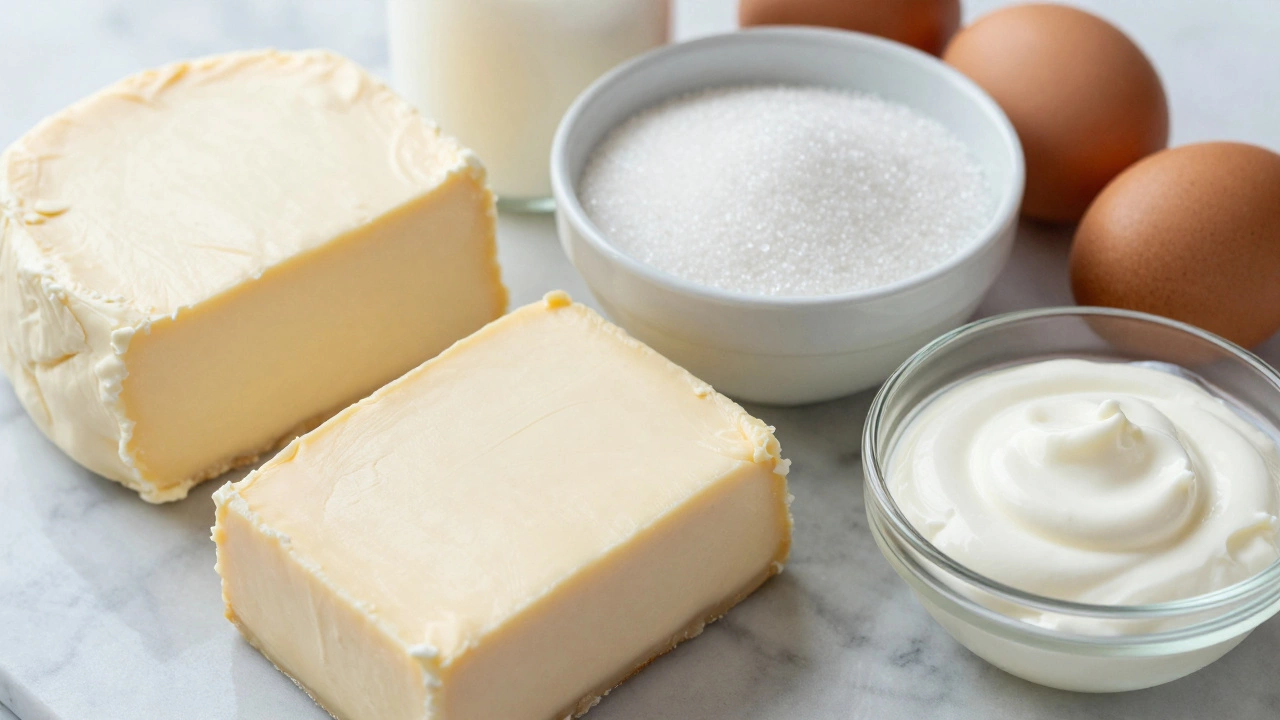
- The Cheese: This is the heart of the cake. A real New York style uses Cream Cheese-lots of it. We're talking about the full-fat, brick-style variety. Using low-fat or spreadable versions will ruin the structural integrity, leaving you with a runny mess.
- The Sweetener: Granulated sugar is the standard. It dissolves into the fat of the cheese, providing a clean sweetness that doesn't overshadow the tang.
- The Binder: Eggs act as the glue. In a New York cheesecake, the eggs are added one by one to create an emulsion. Too many eggs, and you have a quiche; too few, and the cake won't set.
- The Richness Boosters: Sour Cream or heavy cream is the secret weapon. Adding a dollop of sour cream introduces a slight acidity that cuts through the heavy fat, making the cake feel more balanced.
- The Flavor Profile: Pure vanilla extract and a pinch of salt. Salt doesn't make it salty; it wakes up the vanilla and the cheese.
The Foundation: The Crust
You can't have a masterpiece without a solid base. While some fancy places experiment, the gold standard is the Graham Cracker crust.To get that perfect snap, you need three things: finely crushed crackers, melted unsalted butter, and a touch of brown sugar. The butter binds the crumbs, and the brown sugar adds a deep, caramelized note that contrasts with the pale filling. If you press the crust too lightly, it'll crumble; too hard, and it becomes a brick. The trick is using the bottom of a flat measuring cup to press it firmly into the pan.
| Feature | New York Style | Japanese Style | Italian Style (Ricotta) |
|---|---|---|---|
| Main Cheese | Full-fat Cream Cheese | Cream Cheese + Flour | Ricotta |
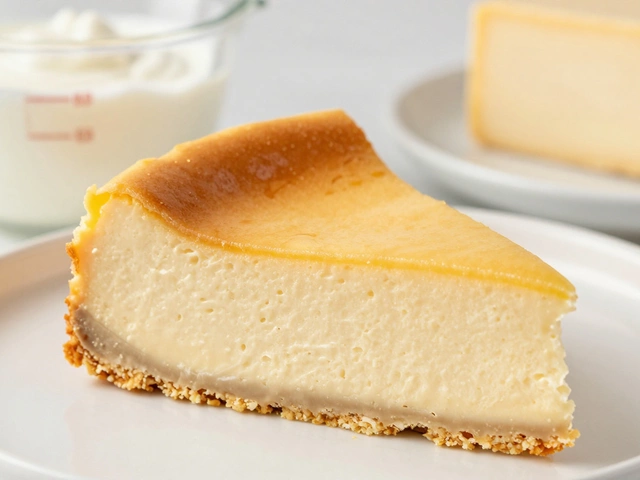
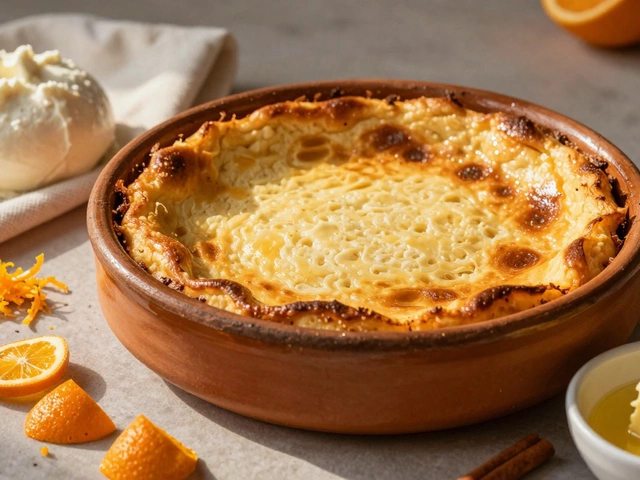
| Texture | Dense & Creamy | Sponge-like & Airy | Grainy & Lighter |
| Baking Method | Low & Slow / Water Bath | High Heat / Steam | Standard Bake |
| Crust | Graham Cracker | Usually Crustless | Often Crustless |
How the Ingredients Interact
Baking is science, and New York cheesecake ingredients interact in a very specific way. When you beat the cream cheese, you're breaking down the proteins to create a smooth paste. When you add sugar, those crystals attract water, which helps soften the cheese further.The most critical moment happens when you add the eggs. Eggs contain lecithin, a natural emulsifier. This allows the fat from the cheese and the water from the sour cream to stay bonded. If you overbeat the batter at this stage, you incorporate too much air. While air is great for a sponge cake, in a New York cheesecake, it's the enemy. Air bubbles lead to cracks on the surface and a texture that feels more like a mousse than a dense cake.
The Secret Technique: The Water Bath
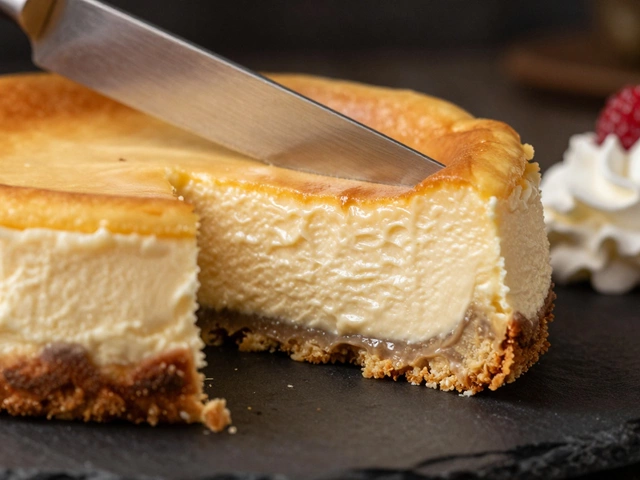
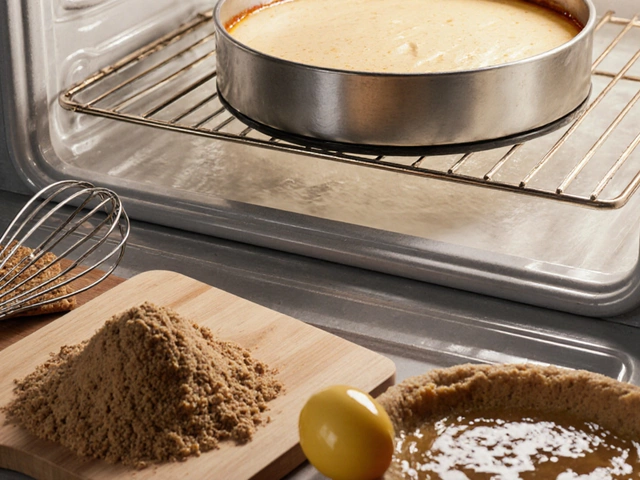
Ingredients are only half the battle; the environment is the other half. Professional bakers use a Bain-Marie, better known as a water bath.Why go through the trouble? Because the edges of a cake always cook faster than the center. By surrounding the pan with hot water, you insulate the cake, ensuring the temperature stays constant. This prevents the edges from overcooking and curdling while the center is still raw. It's the difference between a cake with a cracked, browned top and one that is perfectly flat and creamy from edge to edge.
Common Pitfalls and How to Fix Them
Even with the right ingredients, things can go sideways. Here are the most common mistakes and the logic behind the fixes:- The Cracked Top: This usually happens because of overmixing (too much air) or overbaking. To fix this, pull the cake out when the center still has a slight "jiggle"-like Jell-O. It will firm up as it cools.
- The Grainy Texture: This happens if your ingredients aren't at room temperature. Cold cream cheese doesn't emulsify; it clumps. Always let your cheese and eggs sit on the counter for at least an hour before starting.
- The Soggy Crust: If your crust is weeping, you likely didn't pre-bake it. A quick 10-minute toast in the oven sets the butter and prevents the filling from soaking into the crackers.
Variations on a Classic
While the traditional version is a purist's dream, a few additions can elevate the experience without destroying the New York identity. A splash of Lemon Juice added to the batter enhances the tang of the cream cheese. Some prefer a pinch of cinnamon in the crust to add warmth. However, avoid adding heavy mix-ins like chunks of fruit or chocolate chips directly into the batter, as these can disrupt the emulsion and cause the cake to sink or separate.Can I use Greek yogurt instead of sour cream?
Yes, you can. Greek yogurt has a similar acidity and fat content to sour cream. It will provide that same tang and creamy consistency, though the flavor will be slightly more "sharp" than the mellow taste of sour cream.
Why do I need to cool the cake in the fridge for so long?
A New York cheesecake needs at least 6 to 12 hours in the fridge because the fats need to recrystallize. If you cut into it warm, the center will be too soft and lose its structure. Chilling it sets the proteins and creates that signature "dense" mouthfeel.
Is it possible to make this without a springform pan?
It is possible but risky. You can use a regular cake pan lined with parchment paper that extends over the edges. However, since New York cheesecake is so dense, it's incredibly difficult to flip out of a standard pan without it breaking. A springform pan is highly recommended.
What is the best way to slice the cake for clean edges?
Use a sharp knife dipped in hot water. Wipe the knife clean with a towel after every single cut. The hot metal slices through the fat cleanly, and wiping prevents the residue from smudging the next slice.
Do I have to use full-fat cream cheese?
For a true New York style, yes. Low-fat versions contain more water and stabilizers, which change the chemical reaction during baking. You'll end up with a texture that is either too spongy or too liquid, lacking the luxurious density of the original.


Write a comment