

Brownie Baking Time Calculator
Calculate Your Perfect Brownies
Recommended Baking Time
Enter your inputs to see results
Note: Brownies continue cooking after removal from oven due to residual heat
Pro Tip
Always start checking at 20 minutes. For fudgy brownies, remove when a toothpick shows moist crumbs - not wet batter, but not completely clean.
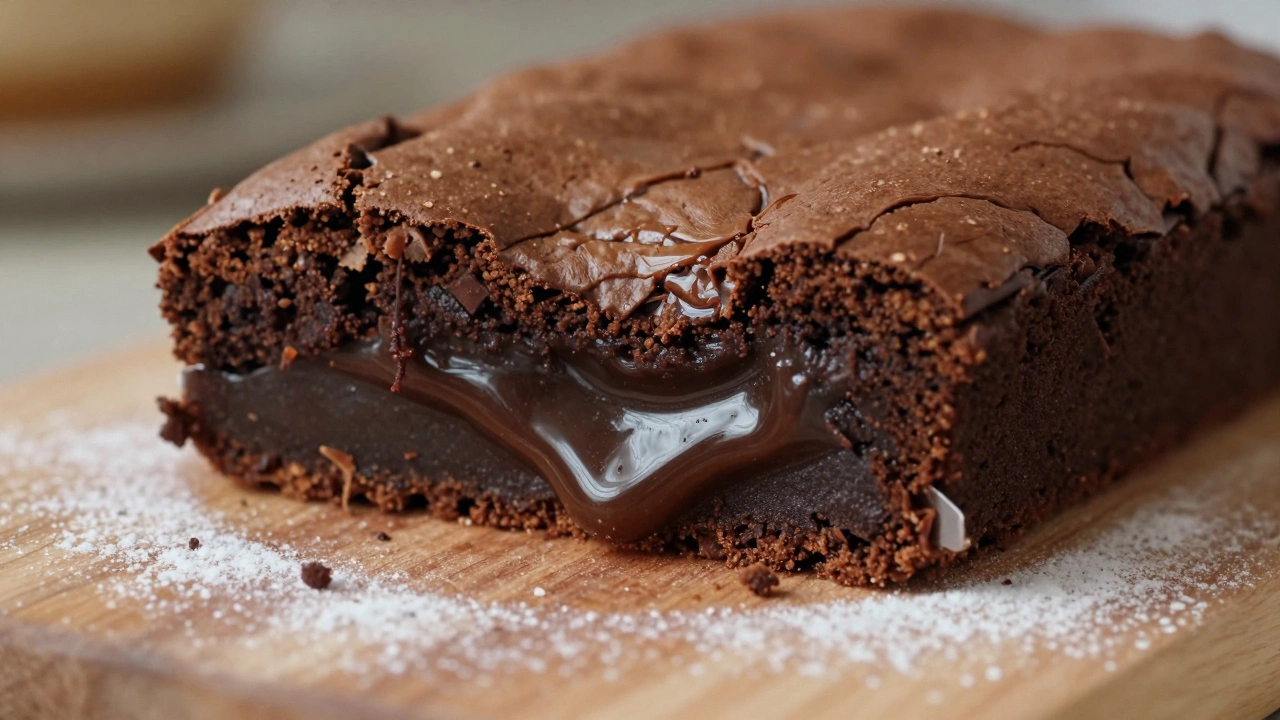
Nothing ruins a batch of brownies faster than dry, crumbly edges and a center that tastes like cardboard. You followed the recipe, measured everything perfectly, and still ended up with brownies that crack when you cut them. It’s frustrating - especially when you know they should be fudgy, rich, and melt-in-your-mouth soft. The good news? Keeping brownies moist isn’t luck. It’s science. And once you understand the key factors, you’ll never have dry brownies again.
Understand the Role of Fat and Sugar
Every brownie recipe has three core ingredients that control texture: butter, sugar, and eggs. Butter isn’t just for flavor - it’s your moisture anchor. When you cream butter with sugar, you trap air. That air expands in the oven, helping the brownie rise just enough without drying out. Too little butter? You get cakey, crumbly results. Too much? They fall apart.
Sugar does double duty. It doesn’t just sweeten - it holds onto water. Granulated sugar pulls moisture from the air and keeps it locked in the brownie after baking. Brown sugar works even better because it contains molasses, which adds extra moisture and a deeper flavor. If your recipe calls for only white sugar, swap half of it for light brown sugar. You’ll notice the difference in texture immediately.
Don’t Overmix the Batter
Overmixing is the silent killer of moist brownies. Once you add the flour, stop stirring as soon as no dry streaks remain. Every extra stir develops gluten in the flour, which turns soft brownies into tough, chewy blocks. Think of it like making bread - you want gluten for structure in bread, but in brownies, you want tenderness.
Use a spatula, not an electric mixer, when folding in flour. Gently fold just until combined. If you see a few tiny lumps of flour left behind, that’s okay. They’ll dissolve during baking. The goal isn’t perfection - it’s minimal handling.
Bake Less Than You Think
This is the biggest mistake most home bakers make. Recipes say to bake for 25-30 minutes. But that’s a range, not a rule. Ovens vary. Pans vary. Even the altitude in Auckland affects baking time.
Instead of timing it, test for doneness with a toothpick or skewer. Insert it into the center. If it comes out with a few moist crumbs clinging to it - not wet batter, but not clean either - take the brownies out. That’s the sweet spot. If the toothpick comes out clean, you’ve overbaked them. Brownies continue to cook from residual heat after they leave the oven. Pulling them out early means they finish cooking gently, staying soft.
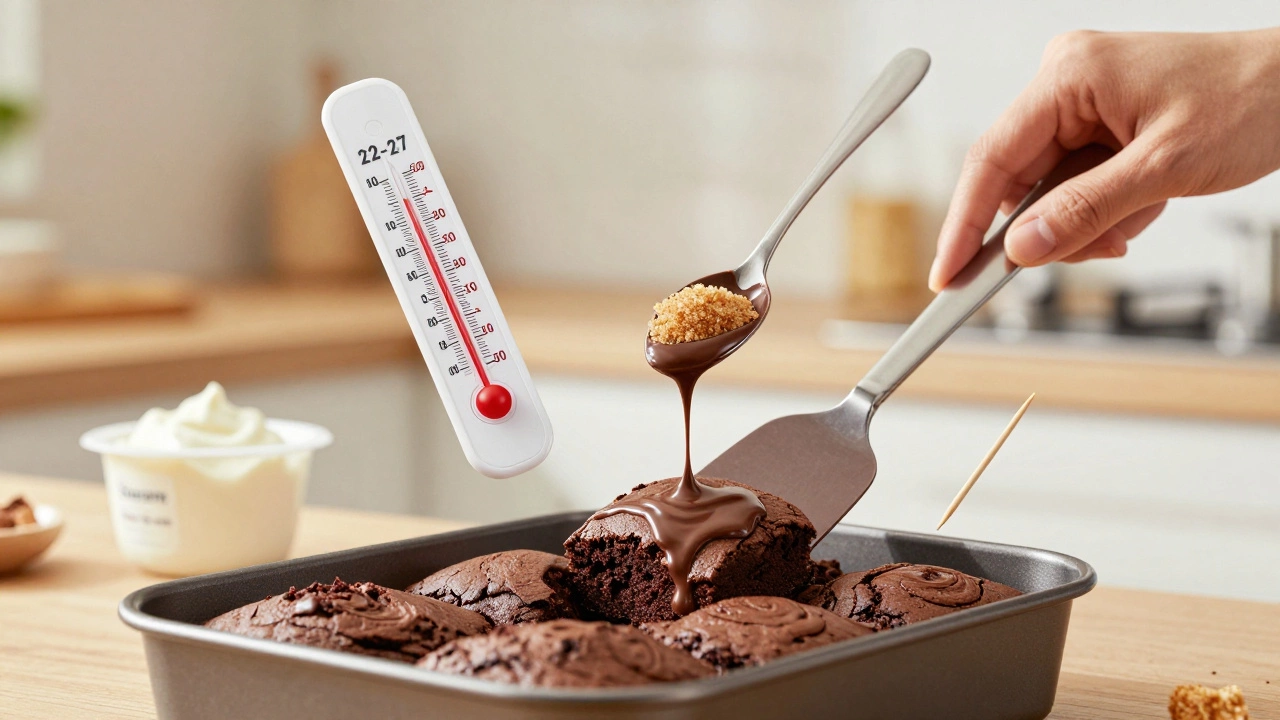
Pro tip: Start checking at 20 minutes. Most brownies are done between 22-27 minutes. If your oven runs hot, even 20 minutes might be enough.
Use the Right Pan
Not all baking pans are created equal. Dark metal pans absorb heat faster and bake brownies more aggressively on the edges. That’s why your corners always burn while the center stays underdone. Use a light-colored aluminum pan instead. It reflects heat evenly, giving you uniform texture from edge to center.
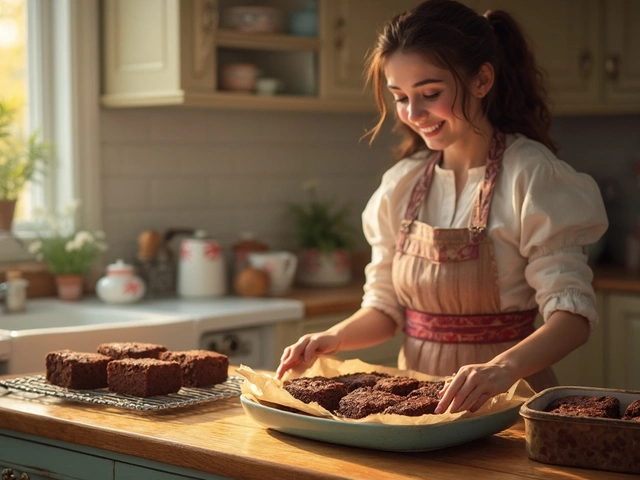
If you only have a dark pan, lower your oven temperature by 25°F (about 15°C) and check 5 minutes earlier. You can also line the pan with parchment paper and leave overhangs on two sides. That lets you lift the whole batch out after cooling, making it easier to cut without crushing the edges.
Let Them Cool Completely - Then Wait Longer
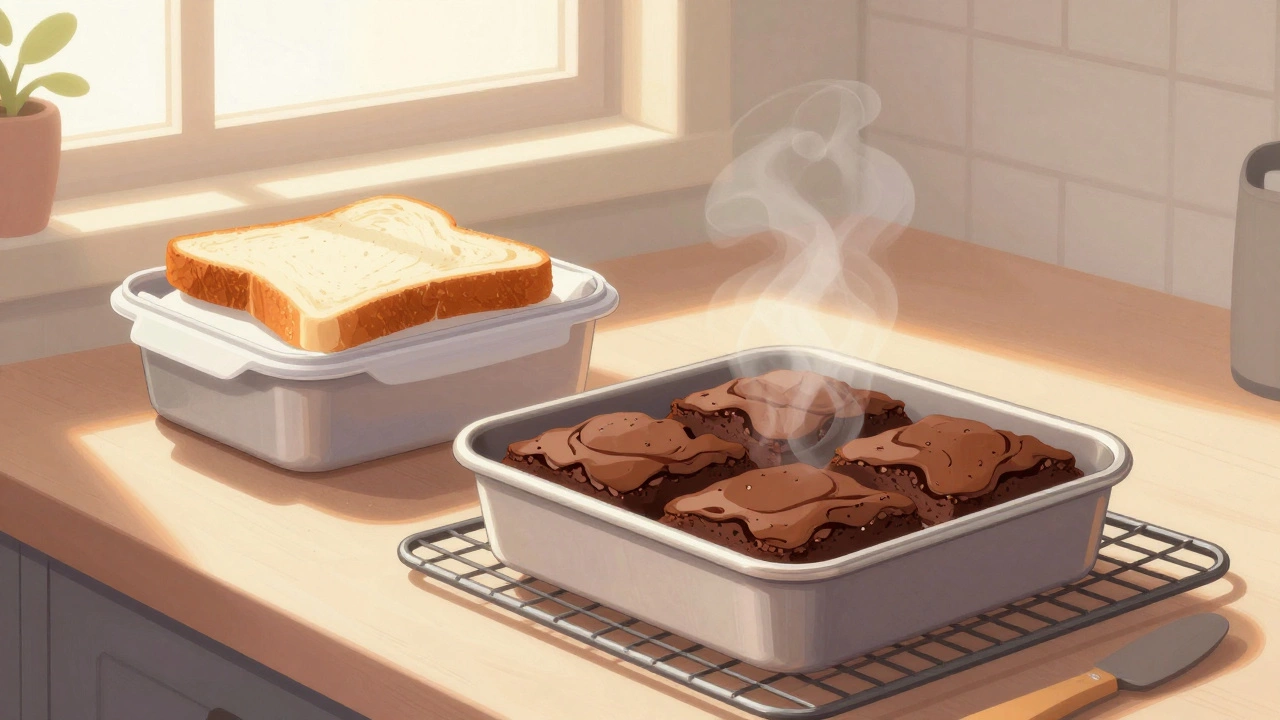
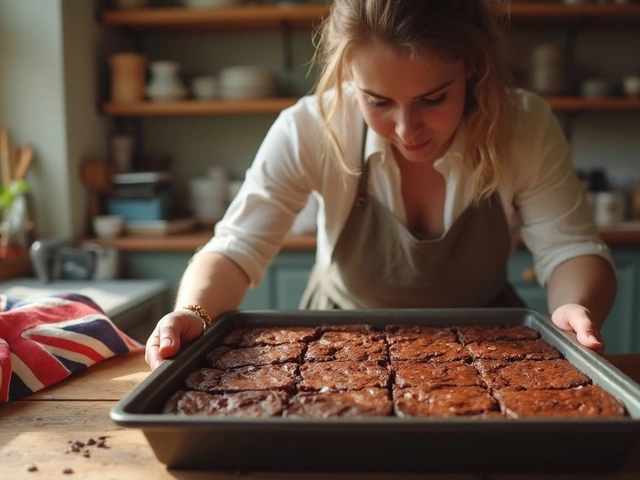
Resist the urge to cut into warm brownies. They’re still cooking internally. Cutting too soon releases steam and moisture that should stay trapped inside. Let them cool in the pan for at least two hours. For the best texture, wait overnight.
Here’s why: The starches and proteins in the brownie need time to set properly. Rushing this step is like slicing into a cake before it’s chilled - it falls apart. Wait, and you’ll get clean, fudgy slices that hold their shape without crumbling.
Store Them Right
Once cooled, storage makes or breaks your brownies. Never leave them uncovered. Air dries them out fast. Wrap the whole pan tightly in plastic wrap, or store individual pieces in an airtight container. Add a slice of white bread on top of the brownies before sealing. The bread releases moisture slowly, keeping the brownies soft for days. Replace the bread slice every day if you’re keeping them longer than three days.
If you’re freezing them, wrap each brownie individually in plastic wrap, then place them in a freezer bag. They’ll stay soft for up to three months. Thaw at room temperature - no microwave needed.
Try These Pro Tweaks
- Add 1-2 tablespoons of sour cream or Greek yogurt to the batter. It adds moisture without changing flavor.
- Use melted chocolate instead of cocoa powder for deeper richness and better moisture retention.
- Don’t reduce the sugar. Sugar isn’t optional here - it’s a texture ingredient.
- Use room temperature eggs. Cold eggs can cause the batter to seize slightly, leading to uneven texture.
- Brush the top of the cooled brownies with a light syrup made of equal parts water and corn syrup. It adds a glossy finish and locks in moisture.
What to Avoid
- Don’t substitute oil for butter unless you’re making a vegan version. Butter has milk solids that help retain moisture.
- Avoid using almond flour or coconut flour unless you’re following a tested gluten-free recipe. These flours absorb way more liquid and will dry out your brownies.
- Never bake on the top rack. Heat rises, and the top of your brownies will dry out before the center sets.
- Don’t open the oven door during the first 20 minutes. Temperature drops cause uneven baking and cracking.
Why Your Brownies Still Dry Out
If you’ve tried everything and still get dry brownies, check your ingredients. Old baking powder? Doesn’t matter - brownies don’t rely on it. But old chocolate? That can make a difference. Chocolate loses its fat content over time, especially if it’s been stored in warm places. Use chocolate with a high cocoa butter percentage (at least 60%) and store it in a cool, dark cupboard.
Also, consider your altitude. In Auckland, you’re at sea level, so standard recipes work fine. But if you’ve moved from a higher elevation, you might need to adjust. Higher altitudes cause faster evaporation. Add 1-2 tablespoons of extra liquid (milk, water, or even coffee) to the batter if you’re above 3,000 feet.
Final Tip: Taste as You Go
Every oven lies. Every batch is different. The best way to get perfect brownies isn’t to follow the clock - it’s to trust your senses. Look for a slight crust on top, a glossy surface, and a subtle jiggle in the center when you shake the pan. That’s your cue. Pull them out. Let them rest. Cut them tomorrow. And enjoy the fudgy, chewy, melt-on-your-tongue texture you’ve been chasing.
Why are my brownies dry on the edges but raw in the middle?
This usually happens when you use a dark metal pan or bake at too high a temperature. Dark pans absorb heat and cook the edges faster. Lower the oven temperature by 25°F and use a light-colored aluminum pan. Also, make sure your oven is calibrated - many home ovens run hotter than they display.
Can I use oil instead of butter in brownies?
Yes, but the texture changes. Oil makes brownies more cake-like and less fudgy. Butter gives you that rich, dense, chewy quality because of its milk solids and water content. If you’re using oil, add an extra tablespoon of sour cream or yogurt to help retain moisture.
How long do brownies stay moist?
Stored properly in an airtight container with a slice of bread, brownies stay soft for up to 5 days at room temperature. In the fridge, they can last up to a week, but they may firm up - let them sit at room temperature for an hour before eating to restore texture.
Should I refrigerate brownies?
No, unless you live in a very hot climate. Refrigeration dries out brownies faster. The cold air pulls moisture from the surface. Store them at room temperature in an airtight container. Only refrigerate if you need them to last more than 5 days - and always bring them back to room temperature before serving.
Can I make brownies ahead of time?
Absolutely. Bake them a day ahead, let them cool completely, then wrap tightly in plastic wrap and store at room temperature. They often taste even better the next day as the flavors meld. For longer storage, freeze them - they thaw beautifully without losing texture.


Write a comment