

GF Flour Selector & Mix Guide
Select the type of cake you want to bake to get a professional recommendation.
Ready to bake?
Select a cake type on the left to see the ideal flour and its pros/cons.
Pro Tip:
Quick Takeaways for Better Cakes
- Blends are your best friend: Pre-made 1-to-1 blends are the safest bet for beginners.
- Almond flour: Best for moist, dense cakes like mud cakes or pound cakes.
- Rice flour: Good for structure but can be gritty if not balanced.
- Xanthan gum: The "glue" that stops your cake from falling apart.
- Avoid single-grain swaps: Using only one GF flour usually leads to texture disasters.
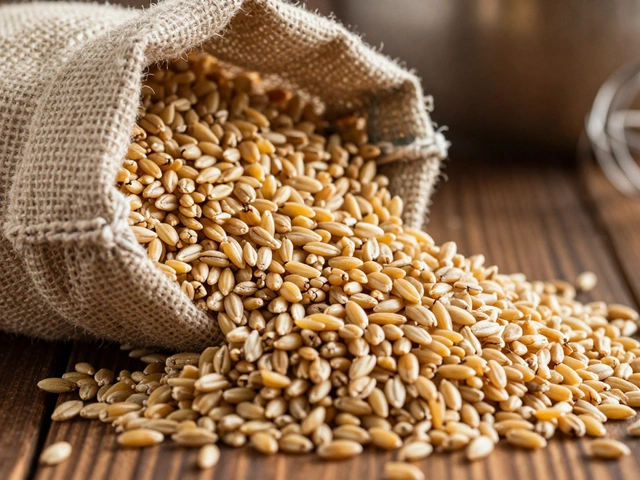
First, we need to talk about what we're actually replacing. Gluten is a protein found in wheat, barley, and rye that acts like a stretchy web, trapping air bubbles and giving cakes their bounce. Without it, your cake has no skeletal system. This is why your best gluten-free flour choice depends entirely on whether you want a light sponge or a rich, fudgy layer cake.
The Convenience Route: Pre-Mixed Flour Blends
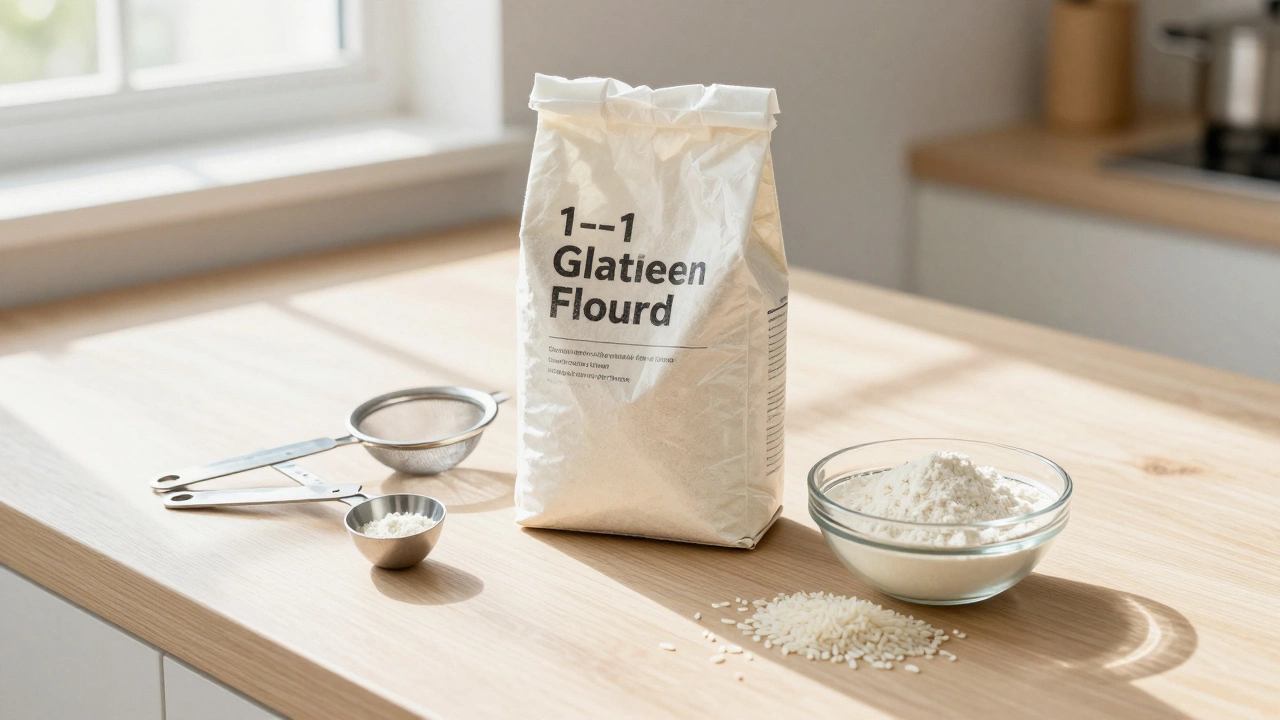
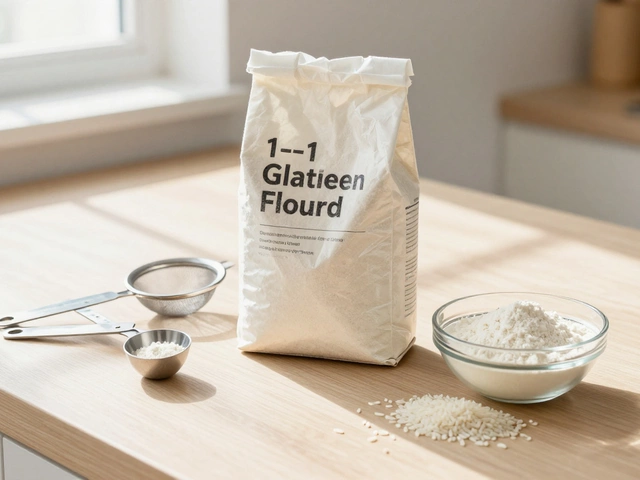
If you aren't in the mood to play chemist in your kitchen, reach for a Gluten-Free Flour Blend. These are commercial mixtures containing a variety of starches and proteins designed to mimic the performance of all-purpose wheat flour. Most of these use a combination of rice flour, potato starch, and tapioca starch.
The "1-to-1" or "Measure for Measure" labels are a lifesaver. They mean you can swap them directly into a standard recipe without doing math. However, check the label for Xanthan Gum. This is a food additive that mimics the elasticity of gluten. If your blend doesn't have it, your cake will likely crumble into dust. If it does, and you add more, your cake might turn out gummy, like a sponge soaked in glue.
The Moisture Kings: Nut-Based Flours
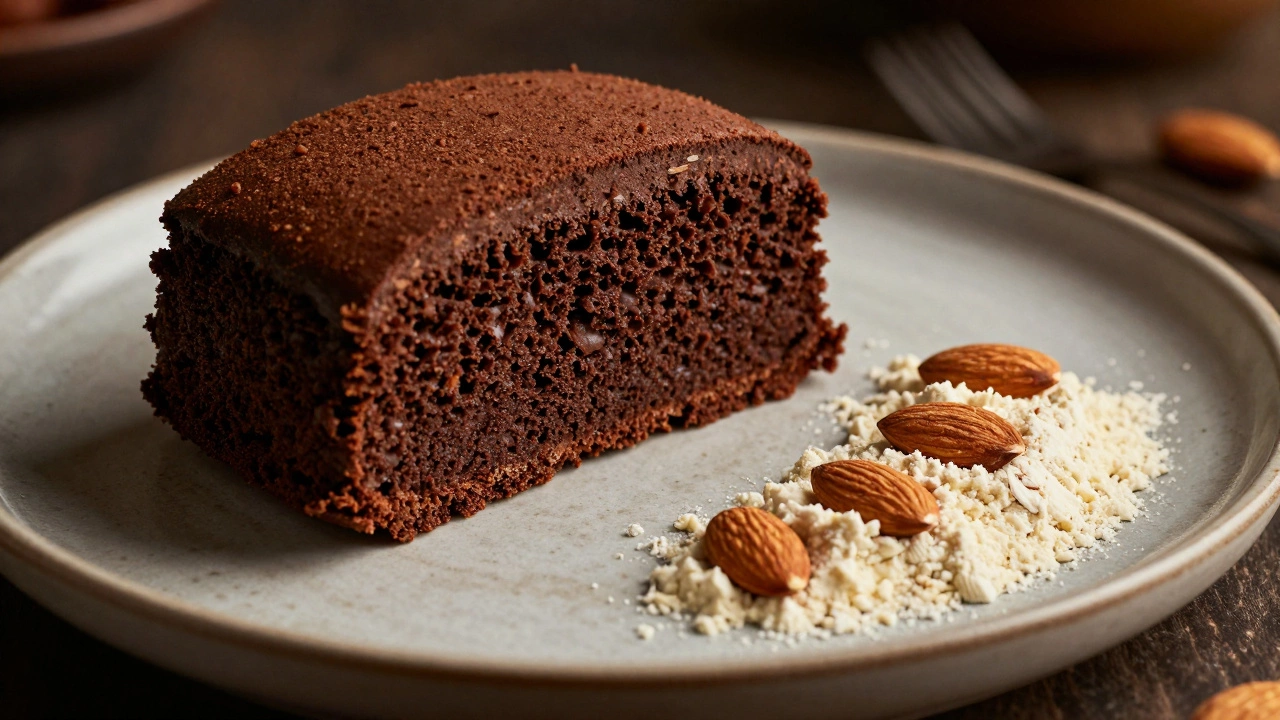
When you want a cake that feels luxurious and doesn't dry out, Almond Flour is the gold standard. Unlike grain flours, it's made from blanched almonds ground into a fine powder. It brings a natural fattiness and a subtle sweetness that makes cakes incredibly moist.
Almond flour is perfect for denser cakes. Think of a rich carrot cake or a decadent chocolate torte. Because it's heavy and lacks structure, you can't usually make a towering three-tier wedding cake using only almond flour-it would collapse under its own weight. But for a single-layer snack cake? It's unbeatable. Pro tip: always spoon almond flour into your measuring cup rather than scooping, or you'll end up with too much and a greasy cake.
The Structure Providers: Grain and Starch Flours
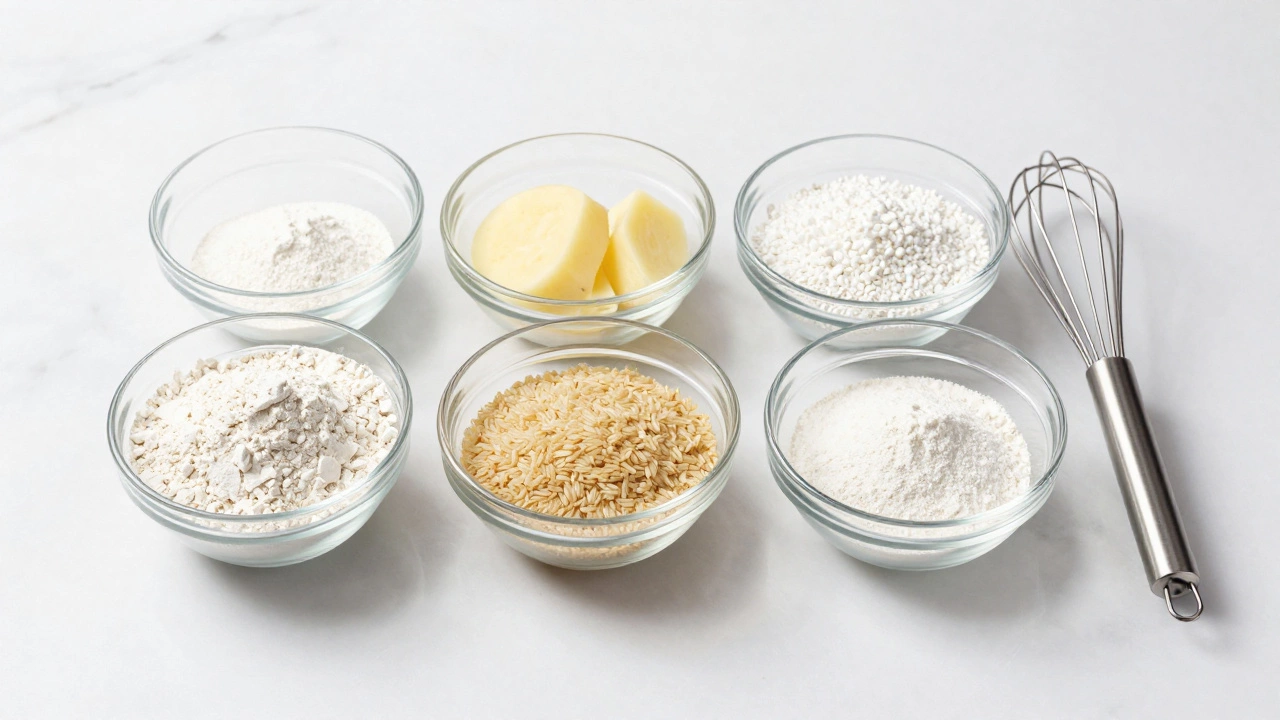
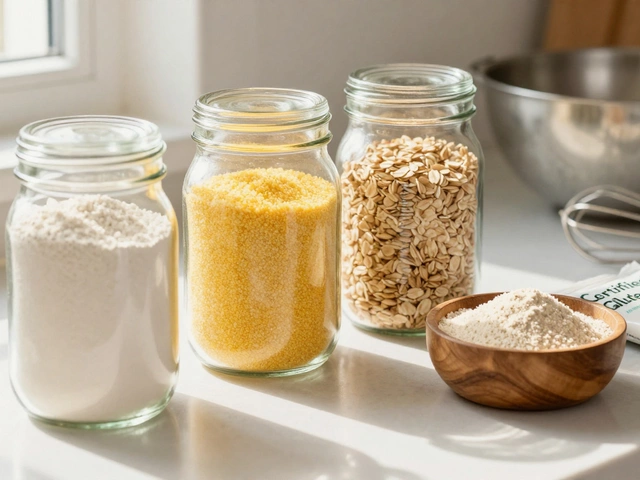
To get that classic "cakey" crumb, you need something with a bit more lift. This is where Rice Flour comes in. It's the backbone of most GF blends. You have two main types: white and brown. White rice flour is neutral and light, while brown rice flour adds a nuttier taste and more nutrients.
The problem with rice flour on its own is the "gritty" texture. Have you ever eaten a cake that felt like it had tiny grains of sand in it? That's too much rice flour. To fix this, bakers use starches like Tapioca Starch or Potato Starch. These add a lightness and a slight chewiness that balances the grittiness of the rice. If you're mixing your own, a common ratio is 2 parts rice flour to 1 part starch.
| Cake Type | Recommended Flour | Key Attribute | Potential Pitfall |
|---|---|---|---|
| Light Sponge/Cupcakes | 1-to-1 Blend (Rice/Potato/Tapioca) | Airy and consistent | Can be dry if overbaked |
| Rich Mud Cake/Torte | Almond Flour | Extreme moisture | Heavy, lacks height |
| Hearty Tea Cake | Brown Rice Flour + Starch | Nutty, robust flavor | Can feel grainy |
| Chewy Brownies/Blondies | Oat Flour + Tapioca | Dense and satisfying | Needs certified GF oats |
The Secret Weapon: Oat Flour
Oat Flour is an underrated hero in gluten-free baking. It gives a flavor that is much closer to traditional wheat flour than rice does. It's great for cakes that need a bit of a "bready" feel, like a coffee cake or a rustic apple cake.
One big warning: oats are often contaminated with wheat during processing. Always make sure your oat flour is explicitly labeled "Certified Gluten-Free." If you have a lot of rolled oats at home, you can just pulse them in a blender until they become a fine powder. This is usually cheaper and tastes fresher than store-bought versions.
Common Pitfalls to Avoid
Baking without gluten is a bit like learning to drive all over again. You can't use the same habits. One of the biggest mistakes is over-mixing. In wheat baking, mixing develops gluten. In GF baking, over-mixing just beats the air out of your batter, leaving you with a flat, dense slab. Mix until just combined, then stop.
Another issue is moisture loss. GF flours, especially rice-based ones, absorb liquid differently. If your batter looks too thick (like cookie dough instead of cake batter), don't be afraid to add a tablespoon of milk or applesauce. Also, remember that GF cakes often need to cool completely before you frost them. If you cut into a warm GF cake, the steam escapes too quickly, and the structure can collapse, leaving you with a gummy center.
Mixing Your Own: The "Golden Ratio"
If you want to move away from expensive store-bought blends, try this basic home-mix for a standard cake. It covers all the bases: protein, structure, and starch.
- 2 Cups Brown Rice Flour: Provides the bulk and structure.
- 1 Cup Potato Starch: Adds lightness and prevents grittiness.
- 1 Cup Tapioca Starch: Gives the cake a better "chew" and helps with browning.
- 1 Tablespoon Xanthan Gum: Keeps everything from falling apart.
Sift these together thoroughly. If you find the result is too dense, increase the potato starch. If it's too fragile, add another half-teaspoon of xanthan gum. Every oven and every brand of flour is slightly different, so treat your first few cakes as experiments.
Can I use coconut flour instead of almond flour for cakes?
Not as a direct swap. Coconut flour is incredibly absorbent-it acts like a sponge. If you swap a cup of almond flour for a cup of coconut flour, your cake will be dry and crumbly. Usually, you only need about 1/4 to 1/3 the amount of coconut flour compared to other GF flours, and you'll need to significantly increase the number of eggs in the recipe to provide moisture and binding.
Why does my gluten-free cake have a sandy texture?
This is usually caused by using too much rice flour without enough starch to balance it. To fix this, try using "superfine" rice flour, which is milled into much smaller particles, or increase the proportion of potato or corn starch in your mix. Letting the batter rest for 30 minutes before baking can also help the flour hydrate and reduce that grainy feel.
Do I always need xanthan gum in my GF cakes?
Almost always, yes-unless you are using a flour like almond flour in a very moist cake, or if your flour blend already includes it. Since GF flours don't have the protein structure to hold the cake together, xanthan gum acts as the glue. Without it, your cake will likely crumble the moment you try to slice it.
Is cornstarch a good gluten-free flour substitute?
Cornstarch is a starch, not a flour. You cannot make a cake out of cornstarch alone; it would be more like a thick paste or a pudding. However, adding a small amount of cornstarch to a GF blend can help make the cake lighter and softer. It works similarly to potato starch in providing a smooth texture.
How do I stop my GF cakes from sinking in the middle?
Sinking usually happens for two reasons: underbaking or opening the oven door too early. GF cakes take longer to "set" than wheat cakes. Avoid peeking into the oven until the timer is almost up. Additionally, make sure your leavening agents (baking powder/soda) are fresh, as GF batters are heavier and need a strong lift to stay up.
What to do next
If you're just starting, stick to a pre-made 1-to-1 blend for your first few attempts. Once you get the hang of the baking times and temperature, try adding a handful of almond flour to your blend for extra moisture. If you're feeling adventurous, start experimenting with your own ratios of rice and potato starch to find the exact texture you love. Don't be afraid to fail-even a "failed" GF cake usually tastes great as a trifle or a cake pop!



Write a comment