

Cheesecake Style Matcher
Answer these 5 questions to find out which cheesecake is your perfect match.
Your Result
Description goes here.
Key Characteristics:
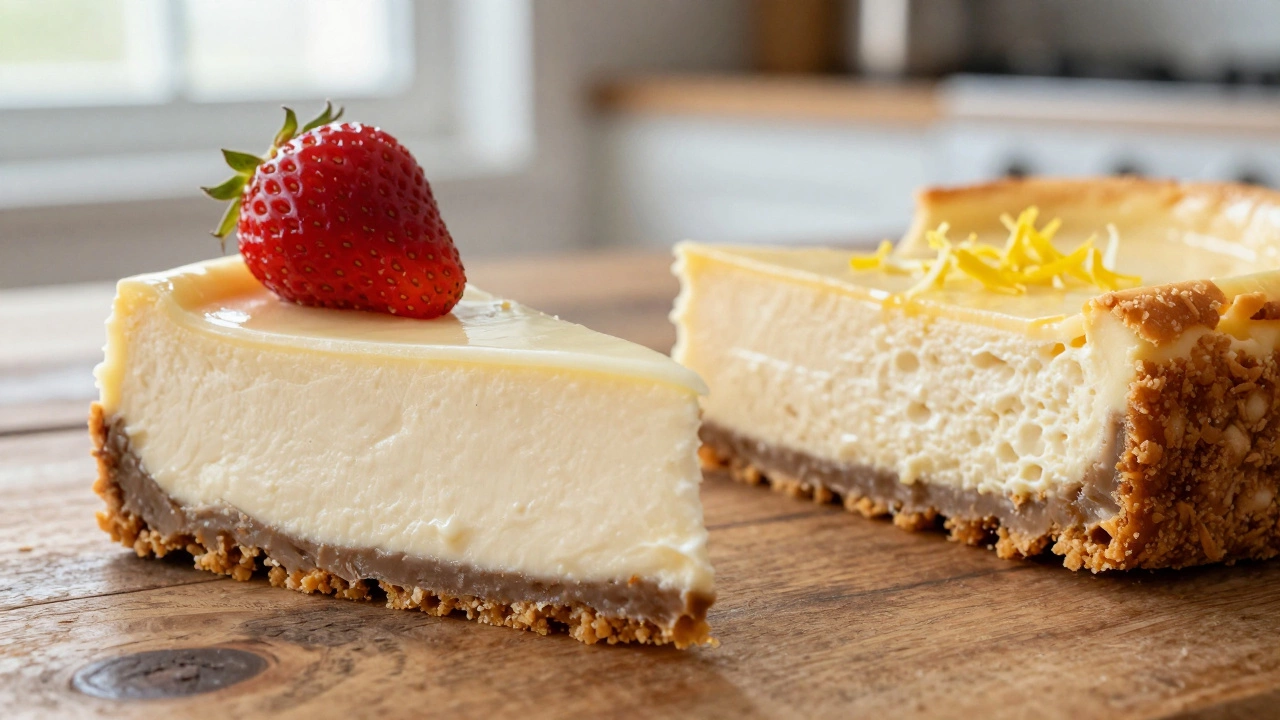
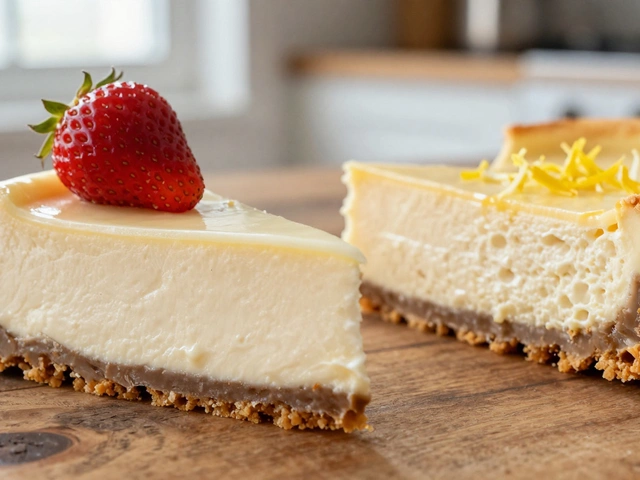
Walk into any bakery in Auckland or New York City, and you’ll likely find two very different cakes sitting under the glass dome. Both are called cheesecake. Both involve cheese, sugar, eggs, and a crust. But if you’ve ever taken a bite of one and thought, “This isn’t what I expected,” you’re probably looking at the wrong style. The confusion is common because the name implies they are the same thing, but the culinary DNA is completely different.
The short answer? New York cheesecake is dense, creamy, and made with heavy cream cheese, while Sicilian cheesecake is lighter, fluffier, and built on a foundation of fresh ricotta. One is a rich dessert; the other is a rustic, almost savory-leaning treat. Knowing the difference helps you choose the right recipe for your mood-or avoid a baking disaster when you try to swap ingredients blindly.
The Star Ingredient: Cream Cheese vs. Ricotta
The biggest divide between these two desserts starts in the dairy aisle. This single ingredient choice dictates the texture, flavor profile, and even how you bake the cake.
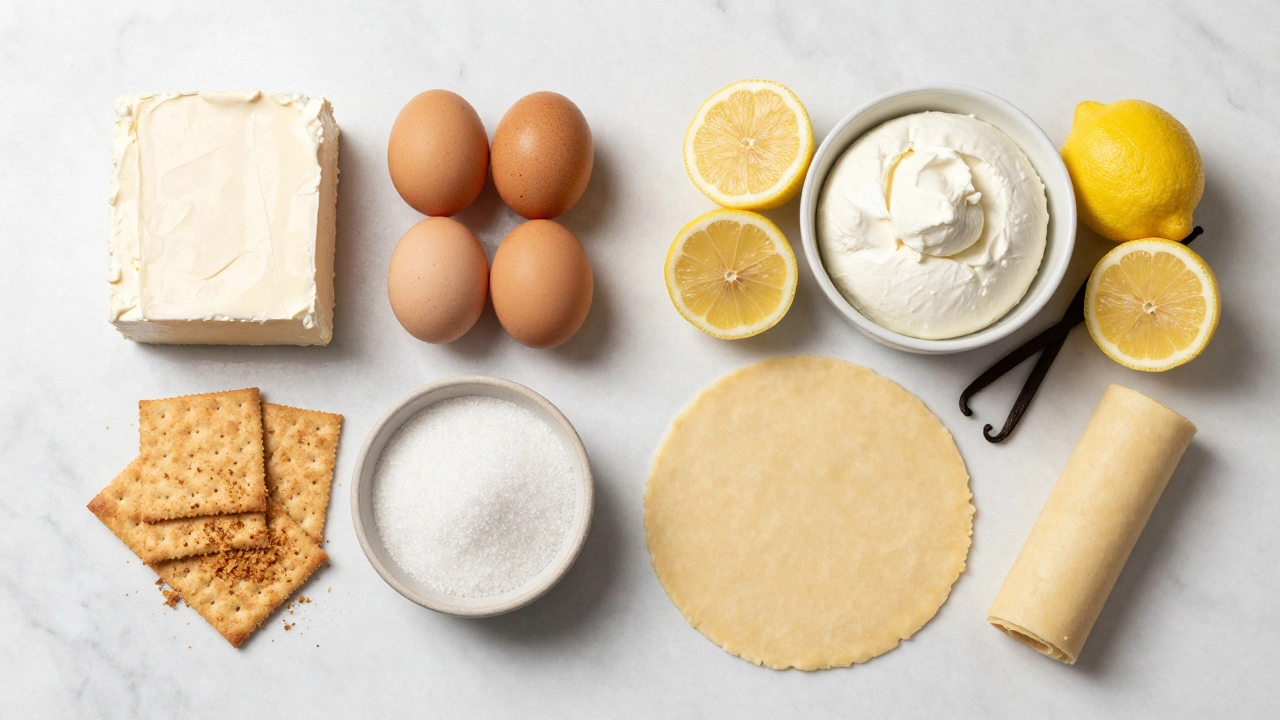
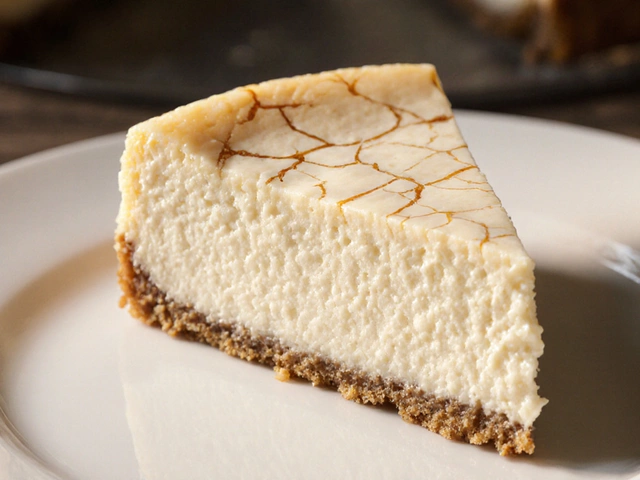
New York cheesecake relies exclusively on full-fat cream cheese (like Philadelphia brand). Cream cheese has a high fat content and a smooth, uniform structure. When you blend it with sugar and eggs, it creates a batter that sets firmly. The result is a slice that holds its shape perfectly, feels heavy on the tongue, and delivers an intense, tangy punch of flavor. It’s luxurious, almost like eating a solidified custard.
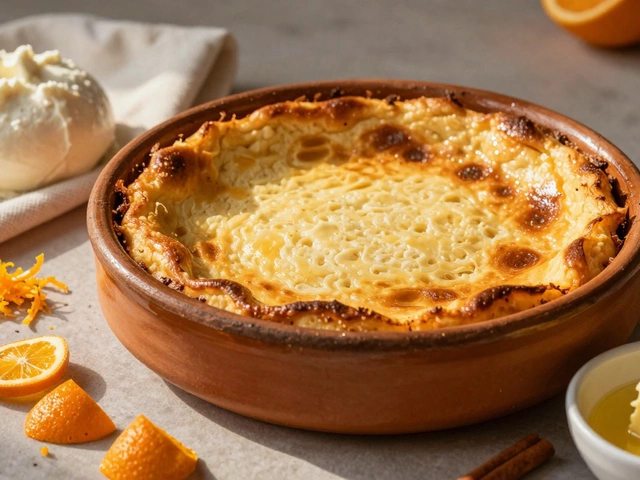
In contrast, Sicilian cheesecake uses fresh ricotta. In Italy, especially in Sicily, ricotta is not the drained, dry version you might buy in a tub for lasagna. It’s often freshly whey-ripened, meaning it retains more moisture and has a grainy, delicate texture. This makes the final cake much airier. You can actually see the tiny curds of cheese in the crumb. The flavor is milder, less acidic, and sweeter than the sharp tang of cream cheese. If you’ve never tasted authentic Italian ricotta, it tastes like sweetened milk solids-comforting and gentle rather than bold.
Can you swap them? Technically, yes, but you’ll change the entire character of the dish. Putting ricotta in a New York-style recipe will make it collapse. Putting cream cheese in a Sicilian recipe will make it too dense and lose that signature lightness. They are cousins, not twins.
The Foundation: Graham Cracker vs. Shortbread
If the filling is the body of the cheesecake, the crust is its skeleton. And here, the geographic origins show up clearly.
New York cheesecake sits on a base of graham crackers, butter, and sugar. Graham crackers are a distinctly American invention, made from coarse graham flour. They provide a crunchy, slightly sweet, and cinnamon-tinged contrast to the cool, dense filling. The crust is usually pressed into the bottom of the pan, sometimes halfway up the sides. It’s thin, crisp, and acts as a sturdy platform for the heavy cheese layer above.
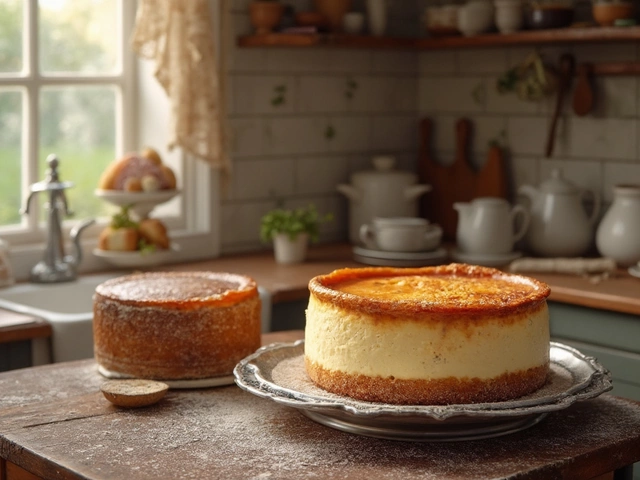
Sicilian cheesecake, however, flips this script. The crust is made from shortbread cookies (often called *frolla* in Italian) or sometimes just plain pastry dough. This crust is thick-sometimes half an inch or more-and it goes on the bottom only. Because the crust is so substantial, it doesn’t need to be crushed into crumbs. Instead, it’s rolled out and placed in the pan before the ricotta mixture is poured over it. After baking, the crust emerges soft, tender, and cookie-like, rather than crunchy. Some bakers even bake the crust separately first to ensure it stays firm enough to hold the wetter ricotta filling.
This structural difference changes how you eat it. With New York style, you get a bit of crunch in every bite. With Sicilian style, the experience is more about the harmony of the soft shortbread and the airy cheese. It’s less about contrast and more about complement.
Texture and Density: Heavy vs. Airy
Let’s talk about mouthfeel, because this is where most people decide which side they’re on.
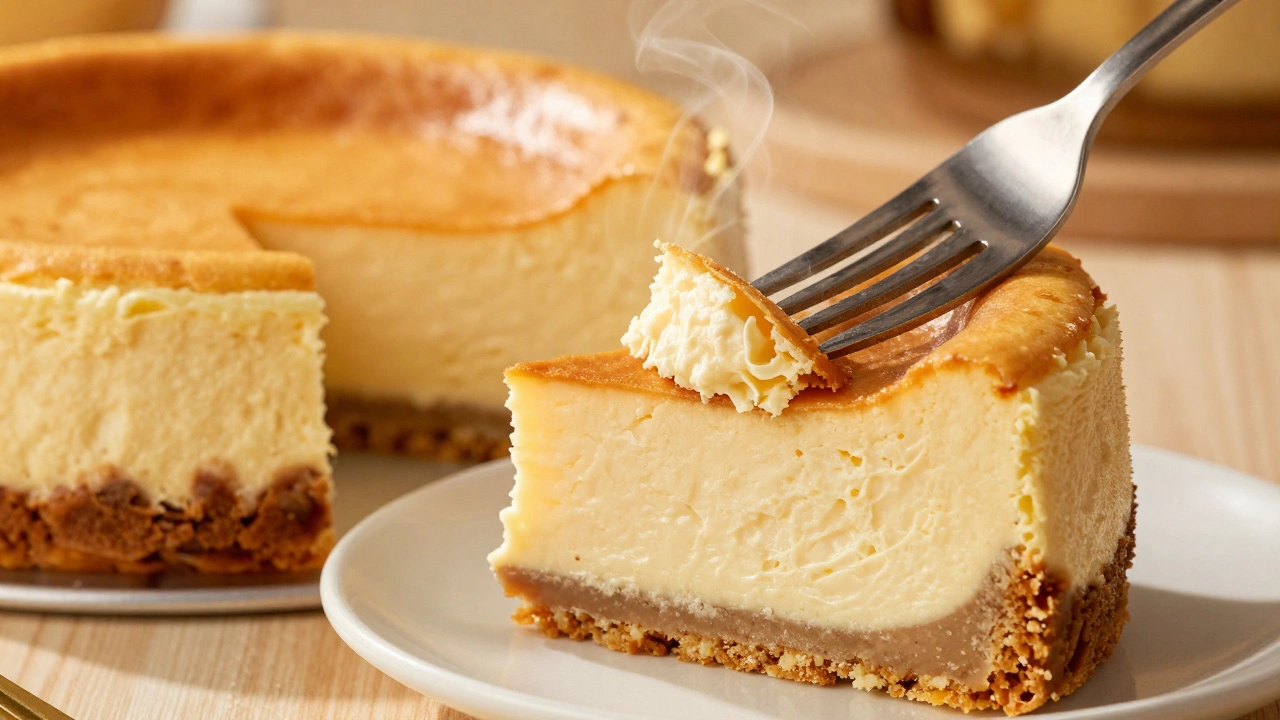
New York cheesecake is famous for being dense. We’re talking about a slice that requires a fork to cut through cleanly. It should jiggle slightly when you shake the pan during baking, but once cooled, it stands tall and proud. The density comes from the high ratio of cream cheese to liquid and the use of egg yolks (or whole eggs) which help emulsify the fats. There’s no whipping of air into the batter. In fact, you want to avoid over-mixing to prevent incorporating too much air, which could cause cracks. The goal is a silky, compact interior that melts slowly in your mouth.
Sicilian cheesecake is fluffy. Because ricotta contains more water and air pockets from its curd structure, the final product is lighter. It resembles a soufflé or a cloud cake more than a brick. The texture is moist and tender, with a slight graininess from the ricotta curds. It doesn’t stand up as rigidly as the New York version; it slumps slightly, embracing its rustic roots. This makes it easier to eat casually, perhaps with a spoon, though it still slices well. The lightness makes it feel less indulgent, even though it’s just as calorie-dense due to the butter in the crust and the richness of the cheese.
| Feature | New York Cheesecake | Sicilian Cheesecake |
|---|---|---|
| Cheese Type | Cream Cheese (Full Fat) | Fresh Ricotta |
| Crust Base | Graham Crackers | Shortbread Cookies / Pastry |
| Crust Texture | Crispy & Crunchy | Soft & Tender |
| Density | Dense & Heavy | Light & Airy |
| Flavor Profile | Tangy & Rich | Mild & Sweet |
| Baking Method | Water Bath (Bain-Marie) | Direct Oven Bake (No Water Bath) |
Baking Techniques: Water Bath vs. Direct Heat
How you bake these cakes is dictated by their ingredients. You can’t treat them the same way in the oven.
New York cheesecake almost always requires a water bath (bain-marie). Why? Because cream cheese is sensitive to rapid temperature changes. If you bake it directly in the hot oven, the outside sets before the inside cooks, leading to cracks on top and a rubbery texture. The water bath provides gentle, humid heat that cooks the cake evenly and slowly. It keeps the surface moist and prevents those dreaded fissures. Baking time is longer, usually around 60-90 minutes at a low temperature (around 325°F or 160°C).
Sicilian cheesecake skips the water bath. Since ricotta is already cooked during its production process and has a higher water content, it doesn’t need the extra humidity protection. It bakes faster, typically 45-60 minutes at a similar temperature. The lack of a water bath also means the crust gets a chance to brown and firm up properly without getting soggy from steam. This method is simpler for home bakers who don’t want to wrap their springform pan in foil or deal with splashing water.
Flavor Additions: Vanilla vs. Citrus
While both cakes are sweet, the flavor notes you add highlight their cultural backgrounds.
New York cheesecake is minimalist. The star is the cream cheese, so you don’t want to overpower it. Most recipes call for vanilla extract and maybe a touch of lemon zest to cut through the richness. Some variations add sour cream to the top for extra tang, but the base flavor remains clean and dairy-forward. It’s designed to be a canvas for toppings like strawberry compote, chocolate ganache, or caramel.
Sicilian cheesecake leans into citrus. Lemon zest and juice are standard additions to balance the sweetness of the ricotta and the buttery shortbread crust. In traditional Italian households, you might also find hints of orange blossom water or almond extract. The citrus notes brighten the mild cheese, making it taste fresher and more vibrant. It’s less about masking flavors and more about enhancing the natural sweetness of the ingredients.
Which One Should You Make?
Choosing between the two depends on what you’re craving and what occasion you’re cooking for.
Make New York cheesecake if:
- You love rich, decadent desserts that feel like a treat.
- You prefer a strong, tangy cheese flavor.
- You’re serving a crowd and want slices that look elegant and hold their shape.
- You enjoy experimenting with various fruit toppings and sauces.
Make Sicilian cheesecake if:
- You want something lighter and less heavy on the stomach.
- You appreciate subtle, nuanced flavors like lemon and vanilla.
- You’re short on time and don’t want to set up a water bath.
- You prefer a soft, cookie-like crust over a crunchy one.
Both styles have earned their place in dessert history. New York cheesecake is the powerhouse, the showstopper that demands attention. Sicilian cheesecake is the comforting hug, the rustic favorite that reminds you of homemade goodness. Neither is better; they’re just different expressions of the same idea: cheese, sugar, and joy.
Can I use store-bought ricotta for Sicilian cheesecake?
Yes, but drain it first. Store-bought ricotta often contains excess whey. Place it in a sieve lined with cheesecloth for an hour to remove extra moisture. This ensures your cheesecake doesn’t turn out watery or soupy. For best results, stir it well to break up large curds before mixing.
Why does my New York cheesecake crack on top?
Cracks usually happen due to overmixing (incorporating too much air), baking at too high a temperature, or cooling too quickly. Always use a water bath, mix on low speed until just combined, and let the cake cool in the turned-off oven with the door slightly ajar for an hour before removing it.
Do I need a springform pan for either cheesecake?
Yes, a springform pan is highly recommended for both. The removable sides make it easy to release the cake without damaging the delicate crust or filling. For New York cheesecake, ensure the pan is leak-proof if using a water bath. For Sicilian cheesecake, the thick crust helps seal the bottom, but a springform pan still offers the easiest removal.
Can I freeze these cheesecakes?
Absolutely. Both styles freeze well. Wrap individual slices or the whole cake tightly in plastic wrap and then aluminum foil. Thaw overnight in the refrigerator. New York cheesecake maintains its texture better after freezing, while Sicilian cheesecake may become slightly softer due to the ricotta’s water content.
Is Sicilian cheesecake gluten-free?
Not traditionally. The shortbread crust contains wheat flour. However, it’s easy to adapt. Use a gluten-free shortbread mix or almond flour for the crust. The ricotta filling is naturally gluten-free, so the adaptation is straightforward compared to modifying a graham cracker crust.



Write a comment