

NY Style Cheesecake Recipe Converter
Enter your springform pan dimensions to calculate the exact ingredients needed for a dense, creamy NY-style cheesecake. This tool uses the classic high-fat, high-egg ratio described in professional bakeries.
Pan Dimensions
Required Ingredients
- Sugar -
- Vanilla Extract -
- Graham Cracker Crust -
Baking Profile
Initial Temp: 450°F for 10 mins
Main Temp: 300°F
Est. Time: -
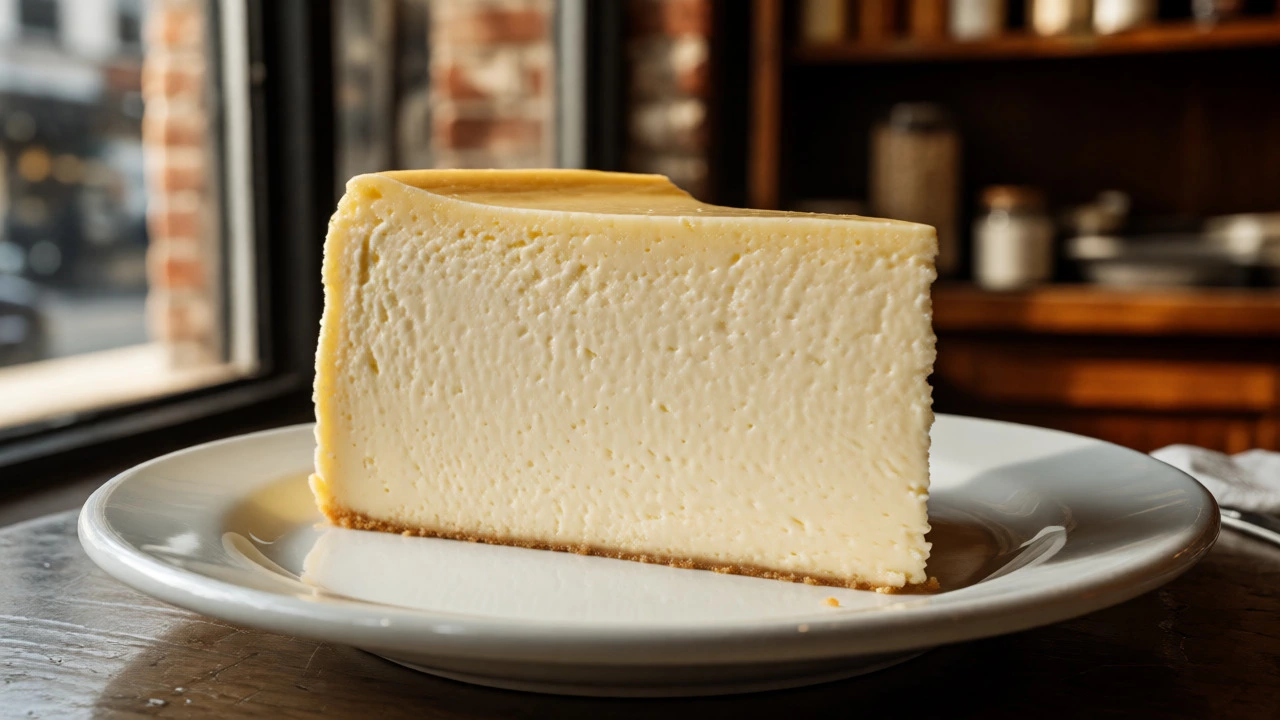
You’re standing in a bakery window in Manhattan, staring at a slice of cake that looks less like a dessert and more like a brick of pure joy. It’s tall, pale yellow, and sits on a crust so thin you can barely see it. You take a bite, and it doesn’t crumble; it melts. This is the New York Style Cheesecake, a dense, rich, and creamy dessert characterized by its heavy use of cream cheese, eggs, and sour cream, baked slowly to achieve a velvety texture without being airy or fluffy. But why "New York"? Did someone in Brooklyn invent it? Or is it just marketing genius?
The truth is a mix of history, chemistry, and a bit of culinary evolution. If you’ve ever tried to replicate this iconic slice at home and ended up with something that tasted more like a sweet omelet than a decadent treat, you’re not alone. Understanding *why* it’s called NY style helps you understand *how* to bake it right. Let’s break down the ingredients, the history, and the science behind the world’s most famous cheesecake.
The Origin Story: Arnold Reuben and the Cream Cheese Revolution
Before we get into the recipe details, let’s clear up the biggest myth: cheesecake wasn’t invented in New York. The ancient Greeks had it. The Romans loved it. But those early versions were nothing like what you find in a deli today. They used fresh cheese (like cottage cheese or ricotta) and honey. No cream cheese. No graham cracker crust. No vanilla bean paste.
The shift happened in the late 19th century when American dairies started producing cream cheese, a soft, mild-tasting cheese made from milk and cream, which became the defining ingredient of modern American cheesecake. Suddenly, bakers had a stable, high-fat base that didn’t separate easily during baking. Enter Arnold Reuben, a German immigrant who ran a popular deli in New York City. While some historians argue about whether he actually invented the sandwich that bears his name, there’s strong evidence he was one of the first to popularize the cream cheese-based cheesecake in NYC restaurants around the early 1900s.
By the mid-20th century, places like Lindy’s and Junior’s were serving massive slices of this dense, egg-rich cake. It became synonymous with the city itself-bold, unapologetic, and incredibly rich. That’s why it’s called "NY Style." It’s not just a geographic label; it’s a descriptor for a specific density and richness profile that other styles (like Italian or Japanese) simply don’t match.
Anatomy of the Slice: What Makes It "NY"?
If you look at a standard NY cheesecake, three things stand out immediately. First, the height. It’s thick. Second, the color. It’s uniformly pale, often with a slight golden top but no dark caramelization. Third, the texture. It’s smooth, almost custard-like, but firm enough to hold its shape when sliced.
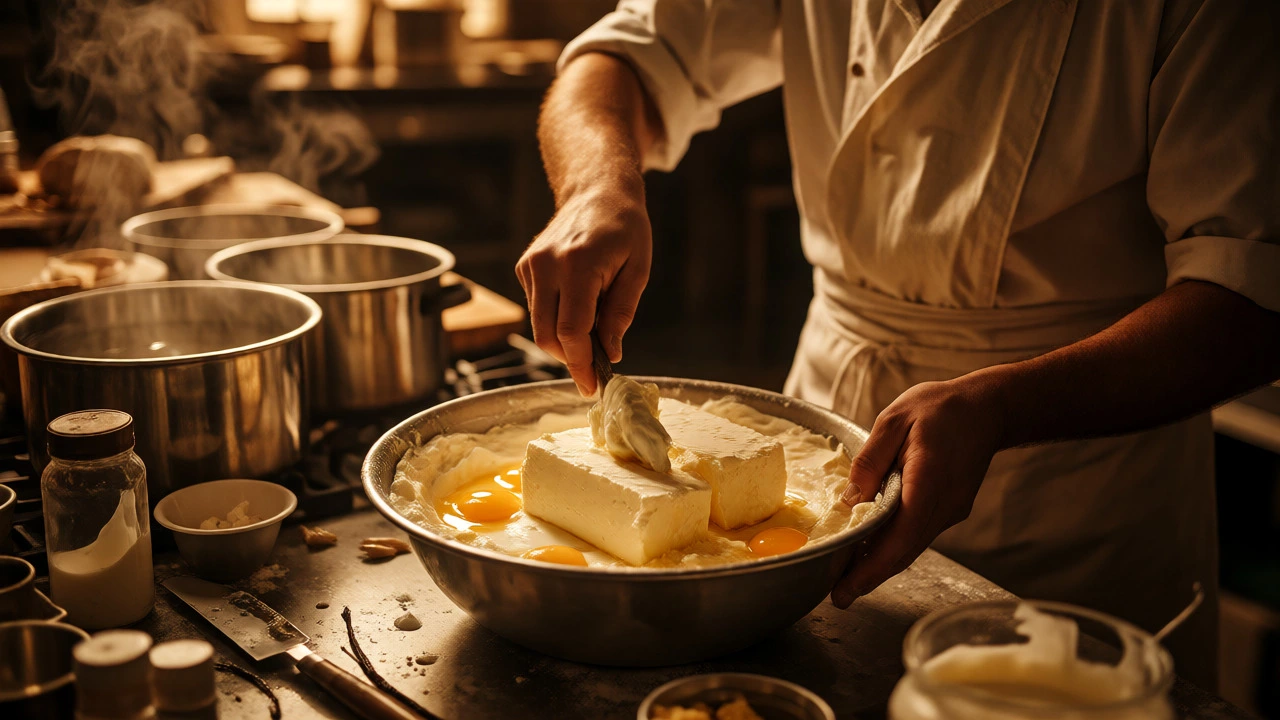
How do they achieve this? It comes down to the ratio of ingredients. A typical NY-style batter relies heavily on full-fat cream cheese. We’re talking about pounds of it per batch. Unlike lighter versions that might fold in whipped cream or meringue, NY style gets its lift from eggs alone. And lots of them. Some recipes call for six or eight eggs for a single springform pan. Why? Because the proteins in the eggs coagulate as they heat, creating a structure that is firm yet tender.
Then there’s the secret weapon: sour cream or heavy cream. Adding dairy fat keeps the mixture moist and prevents it from becoming rubbery. Without it, all those eggs would turn your cake into a dry sponge. The result is a cake that feels luxurious on the tongue, coating your palate rather than dissolving instantly.
Cream Cheese vs. Ricotta: The Great Divide
One of the most common questions home bakers ask is, "Can I use ricotta instead of cream cheese?" Sure, you can. But then you aren’t making NY style anymore. You’re making Italian style.
Here’s where the semantic difference matters. Ricotta cheese is an Italian whey cheese with a grainier texture and lower fat content compared to cream cheese, resulting in a lighter, fluffier cheesecake. When you bake ricotta, it tends to release moisture, which can make the crust soggy if you’re not careful. It also sets differently, yielding a crumbly, granular mouthfeel that many people love-but it’s distinct from the silky smoothness of NY style.
| Attribute | NY Style | Italian Style |
|---|---|---|
| Primary Cheese | Cream Cheese | Ricotta (often mixed with Mascarpone) |
| Texture | Dense, Smooth, Velvety | Lighter, Grainier, Fluffier |
| Fat Content | High (33%+) | Moderate (13-20%) |
| Flavor Profile | Tangy, Rich, Vanilla-forward | Sweeter, Nutty, Citrus notes |
| Crust Type | Graham Cracker (Buttery) | Pasta Frolla (Shortcrust) or None |
Notice the fat content difference. Cream cheese is roughly 33% fat. Ricotta is much leaner. Fat carries flavor. That’s why NY style tastes so intense. If you want that classic deli taste, stick to full-fat Philadelphia-style cream cheese. Low-fat versions will ruin the emulsion and leave you with a watery mess.
The Baking Method: Low and Slow
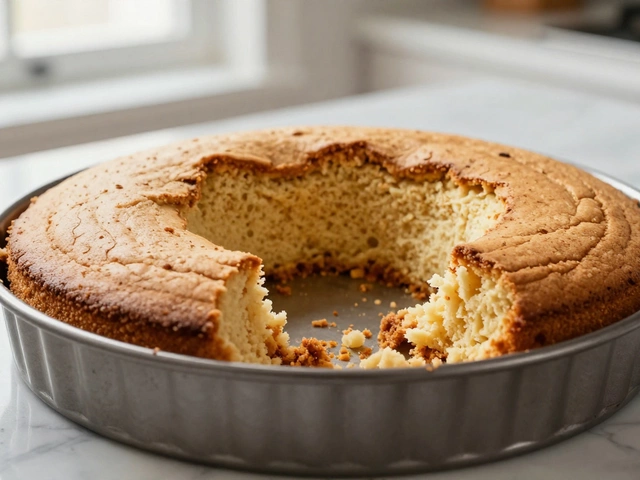
Knowing the ingredients is half the battle. The other half is technique. NY style cheesecakes are notorious for cracking if you rush them. Have you ever pulled a cheesecake out of the oven only to see a jagged line running across the top? That’s thermal shock. The outside set too fast while the inside was still liquid, causing the surface to tear as it cooled.
To avoid this, professional bakeries use a water bath. Yes, wrapping your springform pan in foil and submerging it halfway in hot water sounds annoying, but it works. The water regulates the temperature, ensuring the cake heats evenly. It creates a humid environment that prevents the surface from drying out and cracking before the center is done.
Temperature control is critical. Most NY style recipes call for an initial blast of high heat (around 450°F / 230°C) for 10 minutes to set the edges, followed by a drop to 300°F (150°C) for another hour or more. This gradual cooking allows the proteins to unwind and bond slowly, creating that signature creamy texture. If you bake it at a constant 350°F, you’ll likely end up with a drier, denser block that lacks the subtle jiggle of a perfectly cooked cheesecake.
And here’s a pro tip: turn off the oven after baking and crack the door open. Let the cheesecake cool inside the residual heat for an hour. Sudden temperature changes are the enemy of smooth surfaces.
Common Pitfalls: Why Your Cheesecake Isn't "NY" Yet
If your homemade version doesn’t quite hit the mark, check these three areas:
- Overmixing: Once you add the eggs, stop using a mixer. Switch to a spatula. Whipping air into the batter makes it rise like a soufflé, then collapse and crack. NY style should be dense, not airy.
- Cold Ingredients: Room temperature cream cheese blends smoothly. Cold chunks lead to lumps. Lumps create weak spots in the structure.
- Underbaking: It’s better to pull it out when the center still jiggles slightly like Jell-O. It continues to cook as it cools. If it’s firm in the oven, it’s overcooked and will be dry.
Also, consider the crust. Traditional NY style uses crushed graham crackers mixed with melted butter and sugar. Some purists insist on a thin layer pressed only on the bottom. Others prefer it up the sides. Either way, blind-bake the crust for 8-10 minutes before adding the filling. This ensures it stays crisp rather than getting soggy from the wet batter.
Beyond the Classic: Variations and Modern Twists
While the plain vanilla NY cheesecake is the gold standard, the style has evolved. You’ll now find variations that keep the dense texture but change the flavor profile. Chocolate chip, lemon swirl, and salted caramel are popular because they complement the tanginess of the cream cheese without overpowering it.
Some modern bakers experiment with brown butter in the crust or add a splash of bourbon to the batter. These additions enhance the complexity but shouldn’t alter the fundamental density. If you start folding in whipped cream or separating the eggs to whip the whites, you’re drifting away from NY style toward a New York-inspired hybrid. That’s fine-it might even taste better to you-but know the difference.
For those watching their calories, there are attempts to lighten it up. Using Neufchâtel cheese (which has 33% less fat) can work, but expect a softer set. You might need to adjust the baking time or add an extra egg yolk to compensate for the lost structure.
Final Thoughts: It’s About Experience
So, why is it called NY style? Because it represents a specific era of American indulgence. It’s bold, rich, and unpretentious. It’s the dessert you share with friends over coffee, or eat with a fork straight from the fridge. It’s not trying to be delicate or airy. It wants to satisfy.
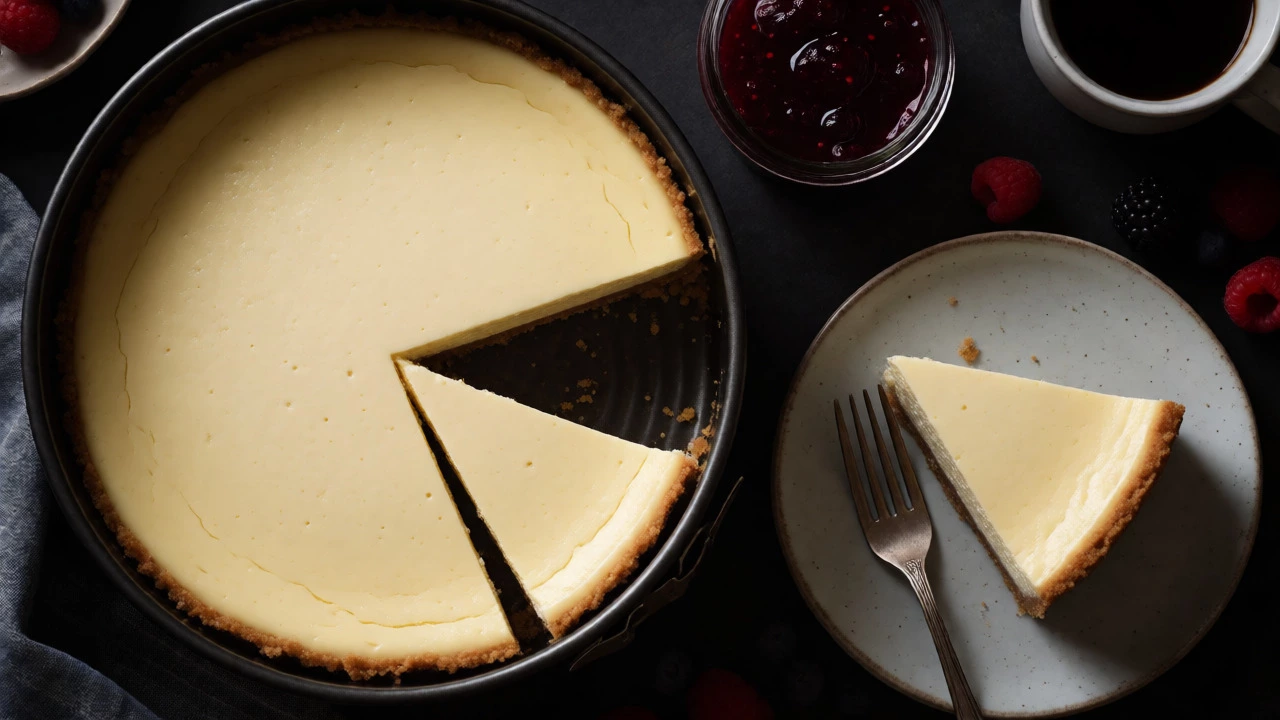
When you bake it, remember that patience pays off. Chill it overnight. Serve it cold. Pair it with a simple berry compote to cut through the richness. Once you nail that perfect balance of tangy, creamy, and dense, you’ll understand why this cake conquered the world from a small deli in New York City.
What is the main difference between NY style and regular cheesecake?
The primary difference lies in the density and ingredients. NY style uses a higher ratio of cream cheese and eggs, plus sour cream or heavy cream, resulting in a very dense, rich, and smooth texture. "Regular" or generic cheesecakes might use lighter cheeses, fewer eggs, or whipped toppings, leading to a fluffier, less intense experience.
Why does my NY style cheesecake crack on top?
Cracking usually happens due to overmixing (incorporating too much air), overbaking, or rapid cooling. To prevent cracks, mix until just combined after adding eggs, use a water bath for even heating, and allow the cheesecake to cool gradually in the turned-off oven with the door ajar.
Can I make NY style cheesecake without a water bath?
Yes, but it requires careful temperature management. Bake at a low temperature (around 300°F/150°C) throughout, avoiding high heat blasts. Place a rack of boiling water on the lower oven shelf to maintain humidity. However, a true water bath offers the most reliable protection against cracking and ensures the creamiest texture.
Is NY style cheesecake supposed to be jiggly?
Yes, when taken out of the oven, the center should jiggle slightly like gelatin while the edges are set. It continues to cook via residual heat. If it is completely firm in the center when removed from the oven, it is likely overbaked and may become dry or rubbery after chilling.
What type of crust is traditional for NY style cheesecake?
A traditional NY style crust is made from crushed graham crackers, melted butter, and sugar. It is typically pressed thinly into the bottom of the springform pan, though some variations extend it up the sides. Unlike pie crusts, it is not pre-baked fully unless specified, but a brief blind bake helps prevent sogginess.

Write a comment