

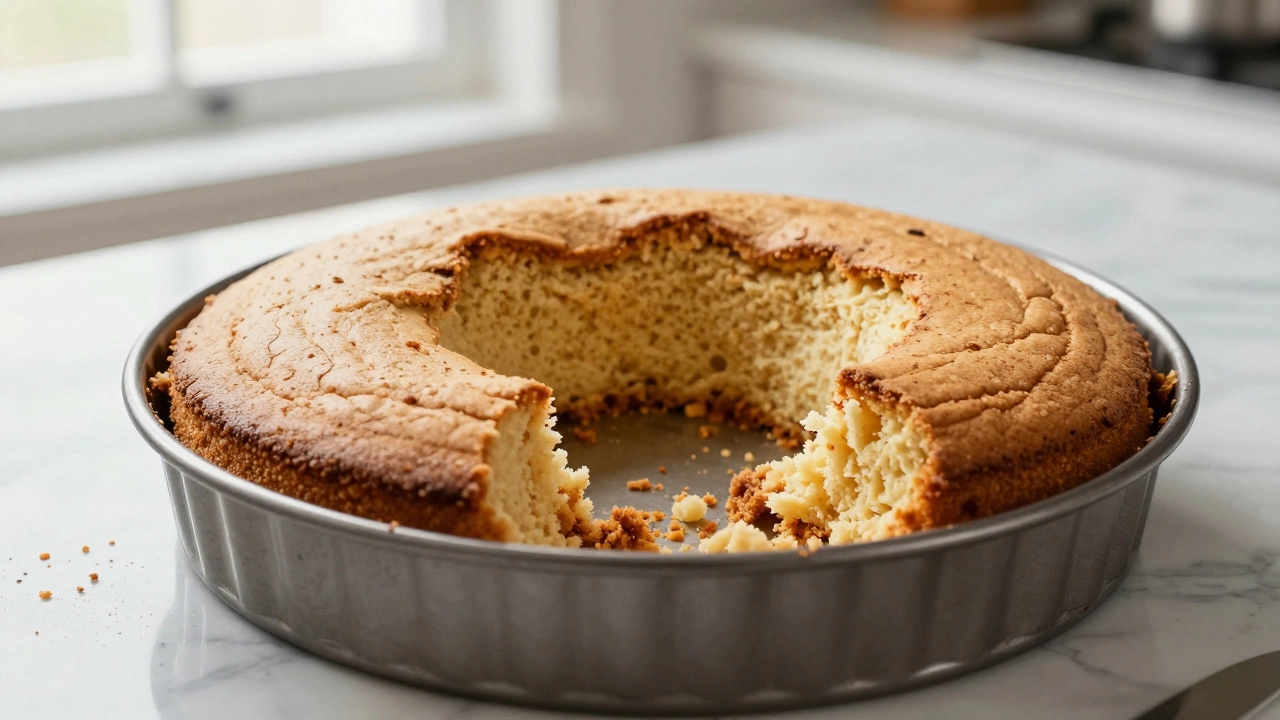
Quick Fixes for Sinking Cakes
- Check your leavening agents; old baking powder is a common culprit.
- Avoid opening the oven door before the cake is at least 80% baked.
- Use a binder like xanthan gum if your flour blend doesn't include it.
- Don't over-mix the batter once the flour is added.
- Ensure your eggs are at room temperature for a more stable emulsion.
The Missing Glue: What Exactly is Gluten?
To fix a sinking cake, we have to understand what we are missing. In a standard cake, Gluten is a protein complex formed when glutenin and gliadin bond during mixing and hydration in wheat flour. Think of it as a microscopic web of rubber bands. As the cake bakes, gases from baking powder or soda expand, pushing the batter upward. Gluten provides the structural tension needed to hold those air bubbles in place until the heat sets the starches and eggs.
When you remove the wheat, you remove that web. You are left with a batter that can rise-because the leavening agents still produce gas-but has no "skeleton" to support that growth. If the internal structure isn't strong enough to hold the weight of the ingredients, the air bubbles pop, and the center caves in. This is why gluten-free cakes sink more often than their wheat-based cousins.
The Role of Binders and Stabilizers
Since we can't use wheat, we have to cheat. This is where Xanthan Gum comes in. It is a polysaccharide produced by the fermentation of glucose by the bacterium Xanthomonas campestris. In the baking world, it mimics gluten by creating a viscous, sticky network that traps gas bubbles. If your recipe doesn't call for it and you aren't using a "1-to-1" blend that already has it mixed in, your cake is essentially a house with no nails.
Another heavy hitter is Guar Gum, which is often extracted from guar beans. While xanthan gum is great for structure, guar gum is often better for moisture and texture. Using a combination of both can create a more robust framework. If you use too little, the cake collapses; use too much, and the cake becomes gummy or dense, like a sponge soaked in glue.
| Binder | Primary Role | Risk of Overuse | Best For |
|---|---|---|---|
| Xanthan Gum | Structure & Lift | Gummy texture | Light, airy cakes |
| Guar Gum | Moisture & Binding | Slimy mouthfeel | Dense loaves, brownies |
| Psyllium Husk | Elasticity & Bulk | Gritty texture | Bread-like cakes |
| Flax Meal | Binding (Vegan) | Nutty flavor | Rustic cakes, muffins |
The Danger of Over-Leavening
It is tempting to throw in an extra teaspoon of baking powder to "force" a GF cake to rise higher. This is a trap. When you add too much leavening, you create air bubbles that are too large and too numerous. The fragile GF structure can't support these giant balloons. They expand rapidly in the heat of the oven, but as soon as they hit a peak, they burst. Because there is no gluten to hold the surrounding batter, the entire center crashes down.
Precision is everything here. If you are using Baking Powder, ensure it is fresh. If it has been sitting in your cupboard for two years, the chemical reaction will be weak, leading to a cake that doesn't rise enough to begin with, making it dense and prone to sinking under its own moisture.

Temperature Traps and the "Oven Shock"
Have you ever peeked into the oven just to see how your cake is doing? In GF baking, this can be fatal. Because the structure is so unstable during the first 20 minutes of baking, a sudden drop in temperature-caused by opening the door-can cause the air inside the cake to contract instantly. With no gluten web to hold the shape, the cake simply caves in.
The same goes for the cooling process. Moving a hot GF cake from a 350°F (175°C) oven to a cold kitchen counter can cause a thermal shock. The rapid cooling causes the internal steam to condense too quickly, pulling the center downward. Let your cake rest in the oven with the door cracked for a few minutes, or leave it in the pan for at least 15-20 minutes before attempting to flip it onto a wire rack.
The Moisture Balance: Fat vs. Flour
Gluten-free flours, especially those based on Rice Flour or Potato Starch, absorb liquids differently than wheat flour. If your batter is too wet, the weight of the liquid outweighs the strength of the binders. This creates a "muddy" center that cannot support the top crust.
Too much butter or oil can also be the enemy. Fat interferes with the bonding of proteins and starches. While a high fat content makes a cake moist, it also weakens the walls of the air bubbles. If you notice your cakes are consistently sinking and feel a bit greasy, try reducing the fat by 10% or increasing the amount of a high-protein flour, like almond flour, to add more structural integrity.
Working with Flour Blends
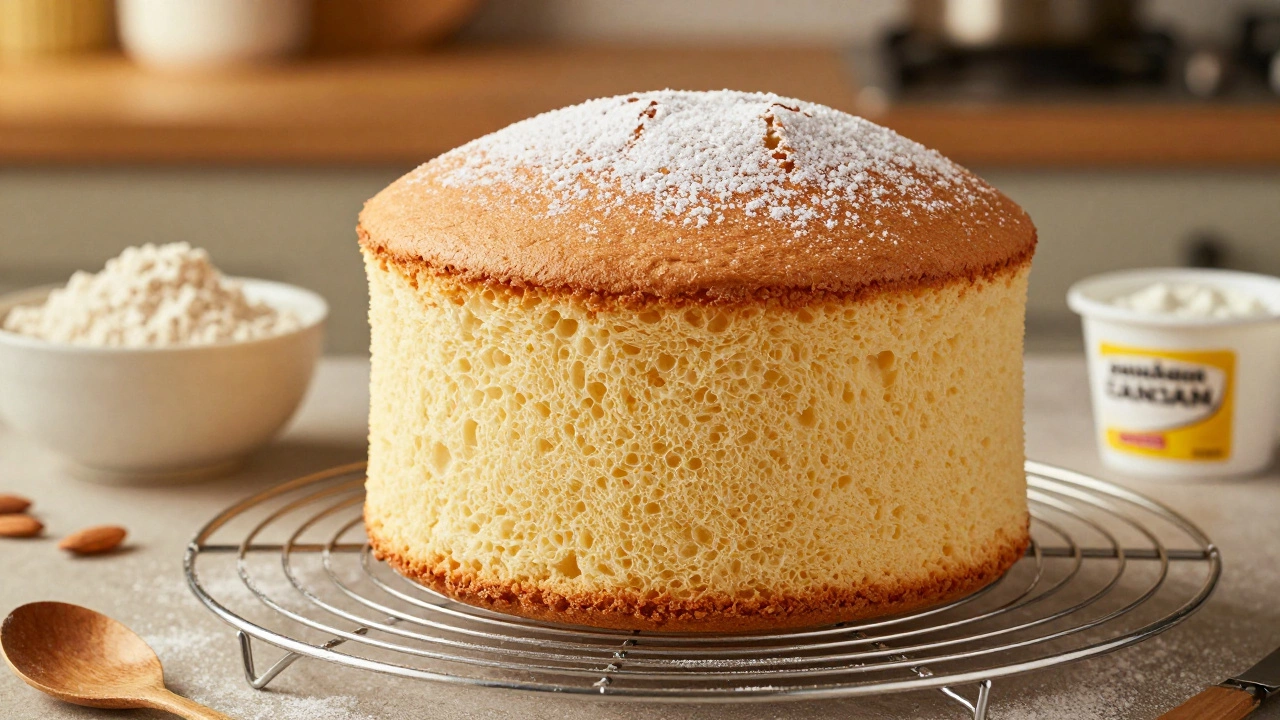
Not all Gluten-Free Flour Blends are created equal. A blend that is too heavy on cornstarch will produce a cake that rises quickly but has no "grip," leading to a collapse. On the other hand, blends with a high proportion of bean flours or brown rice flour can be too heavy, causing the cake to be dense and sink because the leavening agents can't push the weight up.
The secret is the ratio. A balanced blend usually combines a starch (like tapioca or cornstarch) for lightness, a grain flour (like rice) for bulk, and a protein (like almond or sorghum) for strength. If you are mixing your own, remember that starches provide the "puff," but proteins provide the "stay." If your cake is sinking, you likely need more of the latter.
Can I just add more xanthan gum to stop my cake from sinking?
Not necessarily. While xanthan gum provides the structure, adding too much will make your cake rubbery, gummy, or give it a strange, slimy mouthfeel. If your cake is sinking, first check your leavening agents and oven temperature. If those are fine, add xanthan gum in very small increments-usually 1/4 teaspoon at a time-until the texture stabilizes.
Why does my cake look perfect in the oven but sink as soon as I take it out?
This is usually due to "under-baking" or "thermal shock." GF cakes often look done on the outside while the center is still slightly raw. Because the center is essentially a wet foam, it collapses under the weight of the crust once the heat source is removed. Try baking for an extra 5-10 minutes or using a digital thermometer to ensure the center has reached about 205-210°F (96-99°C).
Do eggs help prevent sinking in GF cakes?
Yes, absolutely. Eggs provide both moisture and structure. The proteins in egg whites coagulate during baking, creating a physical network that supports the cake. If you are using egg substitutes, be aware that some (like applesauce or flax eggs) don't provide the same structural lift and may require additional binders like xanthan gum to prevent the cake from collapsing.
Which gluten-free flour is best for preventing collapse?
Blends that include a mix of superfine rice flour, potato starch, and a protein-rich flour like almond or sorghum tend to be the most stable. Avoid using only one type of flour (like just coconut flour), as the absorption rates are too extreme and often lead to either a dry rock or a sunken mess.
Should I beat the eggs longer for GF cakes?
Incorporating more air into your eggs (creaming them with sugar or whipping them to a ribbon stage) can help. By creating a mechanical foam, you are adding a second layer of support beyond the chemical leavening. This extra air helps the cake stay loftier and reduces the chance of a catastrophic center collapse.
Next Steps for Your Next Bake
If you are still struggling, start by auditing your ingredients. Check the expiration date on your baking powder and ensure your flour blend has a binder. If you are using a recipe from a blog, look at the comments-often other GF bakers will suggest adjusting the liquid or baking time for specific altitudes or oven types.
Try a "test bake" with a smaller batch. If the cake still sinks, try increasing the almond flour content or adding a pinch more xanthan gum. Once you find the sweet spot for your specific oven and flour brand, write it down. GF baking is as much about the environment (humidity, oven hotspots) as it is about the recipe.




Write a comment