

Cookie Texture Calculator
Expected Texture
Cookies with 50% brown sugar, butter fat, and 24+ hour chilling will have a soft center with crisp edges.
- 75% brown sugar, 25% white sugar
- 1 egg + 1 yolk
- Chill dough 24+ hours
- Bake at 325°F for 12-14 minutes
If your cookies are spreading too much, try chilling the dough longer or reducing sugar by 10%.
Cookie texture isn’t random. It’s not luck. It’s not magic. It’s chemistry, temperature, and a few simple choices you make before the oven even heats up. If your cookies always turn out too flat, too cakey, or never quite as soft as the ones from the bakery, it’s not your fault-you just haven’t been given the right clues.
It Starts with Fat
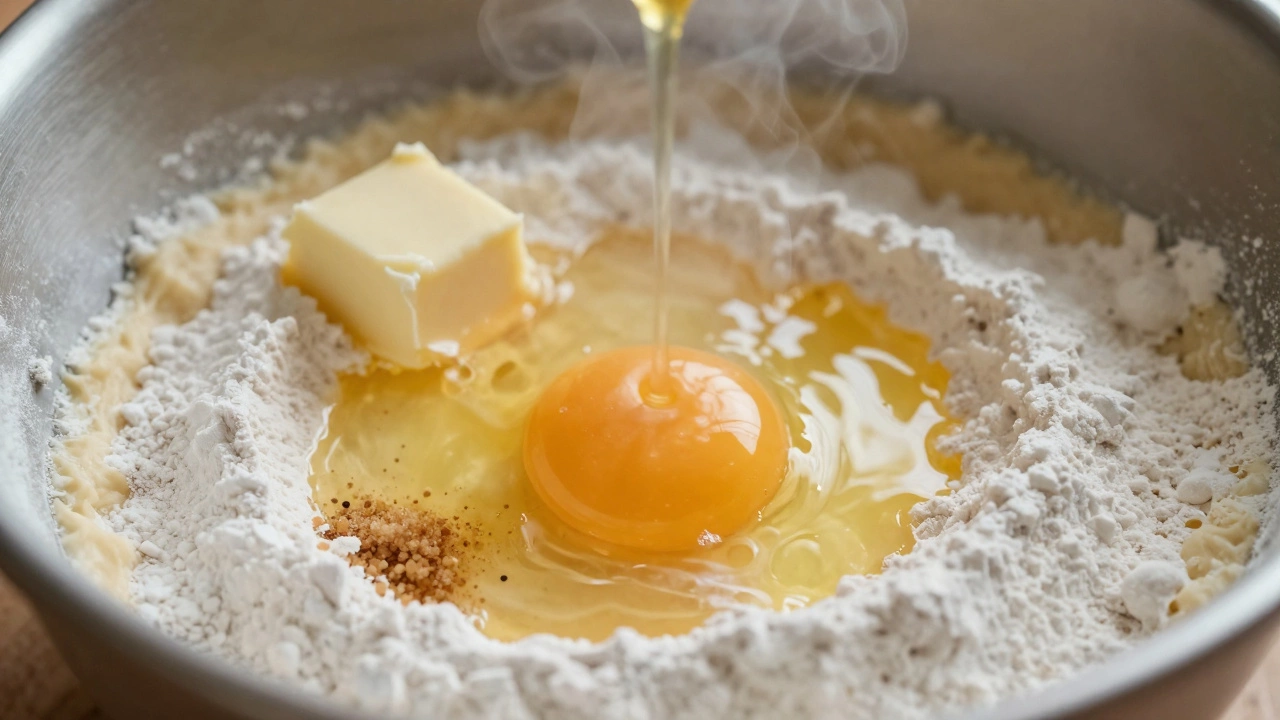
Butter vs. margarine vs. shortening. It sounds like a grocery aisle debate, but it’s the first real fork in the road for cookie texture. Butter has water in it-about 15%-and when that water turns to steam in the oven, it creates air pockets. That’s why butter-based cookies spread more and end up crisp around the edges. Shortening? It’s 100% fat. No water. That means less spread, thicker cookies, and a softer bite. Margarine? It’s a wildcard. Some brands have more water than butter. Others are nearly pure fat. Stick to real butter if you want that classic crisp edge with a chewy center.Sugar Matters More Than You Think
White granulated sugar pulls moisture out of the dough as it bakes. That’s why cookies with mostly white sugar come out crisp and crunchy. Brown sugar? It’s white sugar with molasses. That molasses holds onto water. More moisture = softer cookies. If you want a chewy center, use at least half brown sugar. Try 75% brown sugar and 25% white for a cookie that’s soft in the middle with just a hint of crunch on the outside. Some bakers even add a tablespoon of honey or corn syrup-both are hygroscopic, meaning they actively attract and hold water, keeping cookies tender for days.Flour Is the Skeleton
Flour gives structure. Too much, and your cookies turn into hockey pucks. Too little, and they collapse into greasy puddles. All-purpose flour works fine for most recipes, but if you want maximum softness, try replacing 10-20% of the flour with cake flour. Cake flour has less protein, so it forms less gluten. Less gluten = less chew, more melt-in-your-mouth softness. If you’re going for crunch, stick with all-purpose or even bread flour. Higher protein means more gluten development, which creates a firmer, crisper cookie.How You Mix It Changes Everything
Creaming butter and sugar isn’t just a step-it’s a control knob. When you beat them together for 3-5 minutes, you’re trapping air. More air = more lift = a lighter, cakier cookie. If you cream for just 1 minute, you get less air, less rise, and a denser, chewier cookie. And don’t forget the eggs. One whole egg adds structure. An extra yolk adds fat and moisture. Two yolks and no white? That’s the secret behind bakery-style soft cookies. The white dries out. The yolk keeps things rich and tender.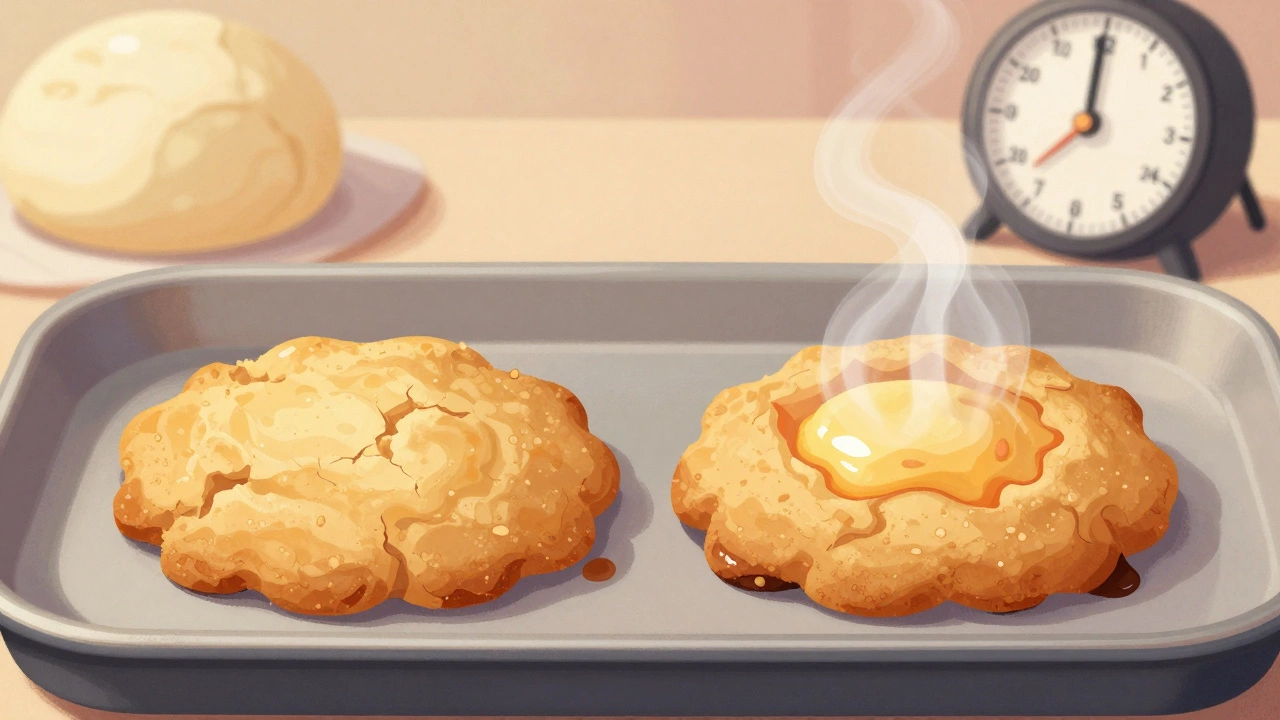
Chilling the Dough Isn’t Just for Flavor
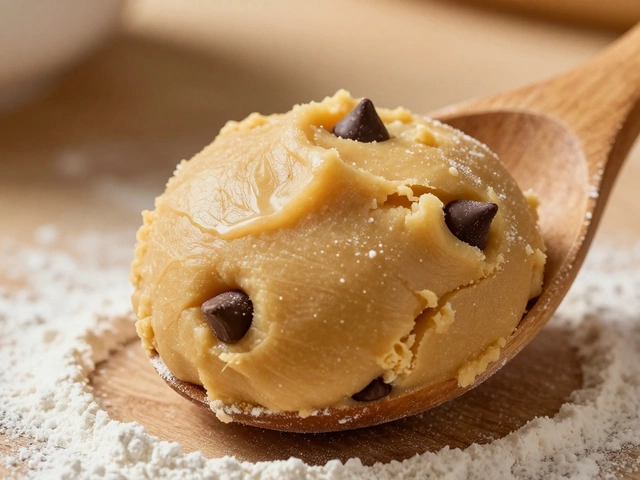
You’ve heard to chill dough for 24 hours to deepen flavor. That’s true. But chilling also solidifies the fat. When you bake cold dough, the butter melts slower. That means the cookie holds its shape longer before spreading. Result? Thicker, chewier cookies. Skip chilling, and your dough spreads fast in the hot oven-thin, crispy edges, and maybe even burnt bottoms. If you want soft cookies, chill for at least 2 hours. If you want thick, bakery-style cookies, chill overnight. It’s not optional-it’s the difference between a good cookie and a great one.The Oven Temperature Trick
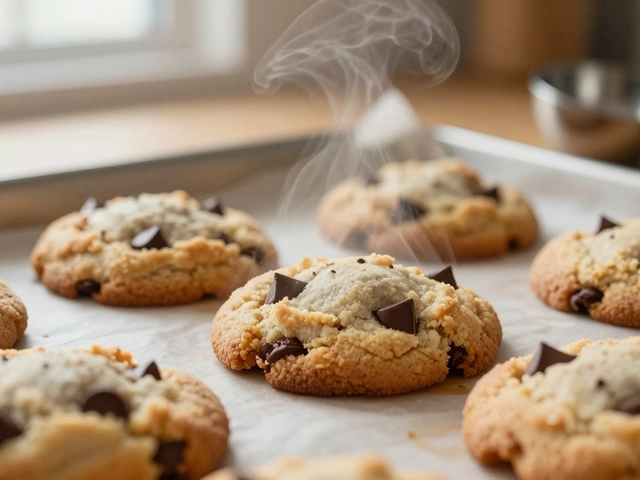
Most recipes say 350°F (175°C). That’s fine. But if you want soft cookies, try 325°F (160°C). Lower heat means slower baking. The outside doesn’t crisp up before the inside sets. You get even cooking, no burnt edges, and a center that stays tender. For crunchier cookies, bump it to 375°F (190°C). The high heat sets the edges fast, creating a crisp shell while the center stays slightly underdone-perfect for that contrast. Watch the edges. When they turn golden but the center still looks a little underbaked, take them out. They’ll keep cooking on the hot tray.Storage Is the Final Step
You baked them right. Now don’t ruin it. Cookies go stale when moisture escapes. Store them in an airtight container with a slice of bread or a piece of apple. The bread will give up its moisture, and your cookies will stay soft for days. If you want to keep them crunchy, store them in a paper bag or leave the lid slightly ajar. Moisture can’t build up, so the crunch stays. Never refrigerate cookies unless they have a filling that needs it. Cold dries them out.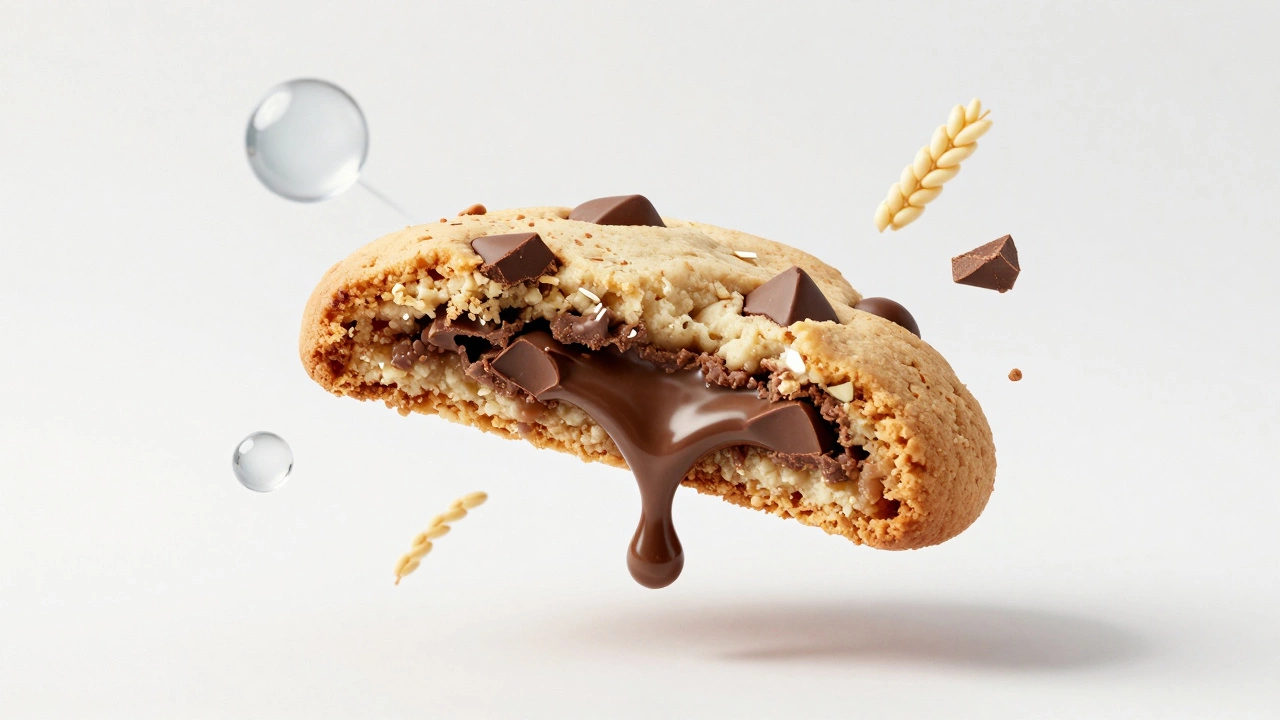
Quick Fixes for Common Problems
- Too flat? Use less sugar, chill the dough longer, or switch to butter with higher fat content (like European-style butter).
- Too cakey? You over-creamed the butter, used too much baking powder, or added an extra egg white. Stick to one whole egg and one yolk.
- Too hard? You baked too long or stored them in the fridge. Take them out 1-2 minutes earlier next time and store with a bread slice.
- Not chewy enough? Add 1-2 tablespoons of brown sugar or a teaspoon of corn syrup to the dough.
What the Experts Do
Professional bakers don’t guess. They test. At top bakeries in New York and London, the go-to formula for a soft, chewy chocolate chip cookie is: 75% brown sugar, 1 egg plus 1 yolk, bread flour (for structure), chilled dough for 48 hours, baked at 325°F for 14 minutes. The result? A cookie with a crisp edge, a soft center, and a slight underbaked look in the middle-just like the ones you remember from childhood.Try This Simple Formula
Here’s a baseline recipe that gives you control:- 1 cup (225g) unsalted butter, softened
- 3/4 cup (150g) light brown sugar
- 1/4 cup (50g) white sugar
- 1 large egg + 1 egg yolk
- 2 1/4 cups (280g) bread flour
- 1 tsp baking soda
- 1 tsp salt
- 1 cup (175g) chocolate chunks
Why This Works Every Time
You’re not following a recipe. You’re controlling variables. Sugar type controls moisture. Fat type controls spread. Flour type controls structure. Temperature controls bake time. Chilling controls shape. Each choice adds up. Once you understand how each ingredient behaves, you don’t need a new recipe. You can tweak any recipe you find. Want a crunchy oatmeal cookie? Swap half the brown sugar for white. Want a thick, gooey peanut butter cookie? Use shortening and chill for 3 days. You’re not baking by instinct anymore. You’re baking by design.Why do my cookies spread too much?
Cookies spread too much when the fat melts too fast before the structure sets. This happens with room-temperature butter, too much sugar, or not enough flour. Chill the dough before baking, use less sugar, or switch to a higher-fat butter. You can also try adding 1-2 tablespoons more flour to the recipe.
Can I make cookies crunchy without using a lot of sugar?
Yes. Use all white sugar instead of brown, reduce the egg yolk (or skip it), and bake at a higher temperature-375°F (190°C). Also, roll the dough balls flatter before baking. Less thickness means more surface area exposed to heat, which creates crunch. Baking longer (but not burning) also helps, but watch carefully.
Does the type of chocolate affect texture?
Not directly. But chocolate chips hold their shape and melt slower, while chopped chocolate or chunks melt faster and create gooey pockets. Those pockets can make the cookie feel softer around them. For maximum chew, use large chunks of dark chocolate-they melt into the dough and add moisture. For crunch, use chocolate chips-they stay firm and give a slight snap.
Why do my cookies get hard after a day?
Moisture escapes. Cookies are like sponges-they lose water to the air. To keep them soft, store them in an airtight container with a slice of bread or a damp paper towel. The bread releases moisture slowly, and the cookies reabsorb it. If you want them to stay crunchy, leave the container open slightly or store them in a paper bag.
Can I use margarine instead of butter?
You can, but you’ll get different results. Most margarine has more water than butter, which makes cookies spread more and turn out flatter and crispier. Some margarines are labeled "baking sticks" and have less water-they work better. But real butter gives better flavor and more control over texture. If you must use margarine, chill the dough longer and reduce the baking time by 1-2 minutes.




Write a comment