

Brownie Identity & History Explorer
Select your preferences below to see which type of brownie you should bake based on ingredient ratios.
Key Technique:
Ingredient Tip:
Click on a milestone to learn how the term "Brownie" evolved from mythical creatures to chocolate squares.
The Fairy Tale Connection
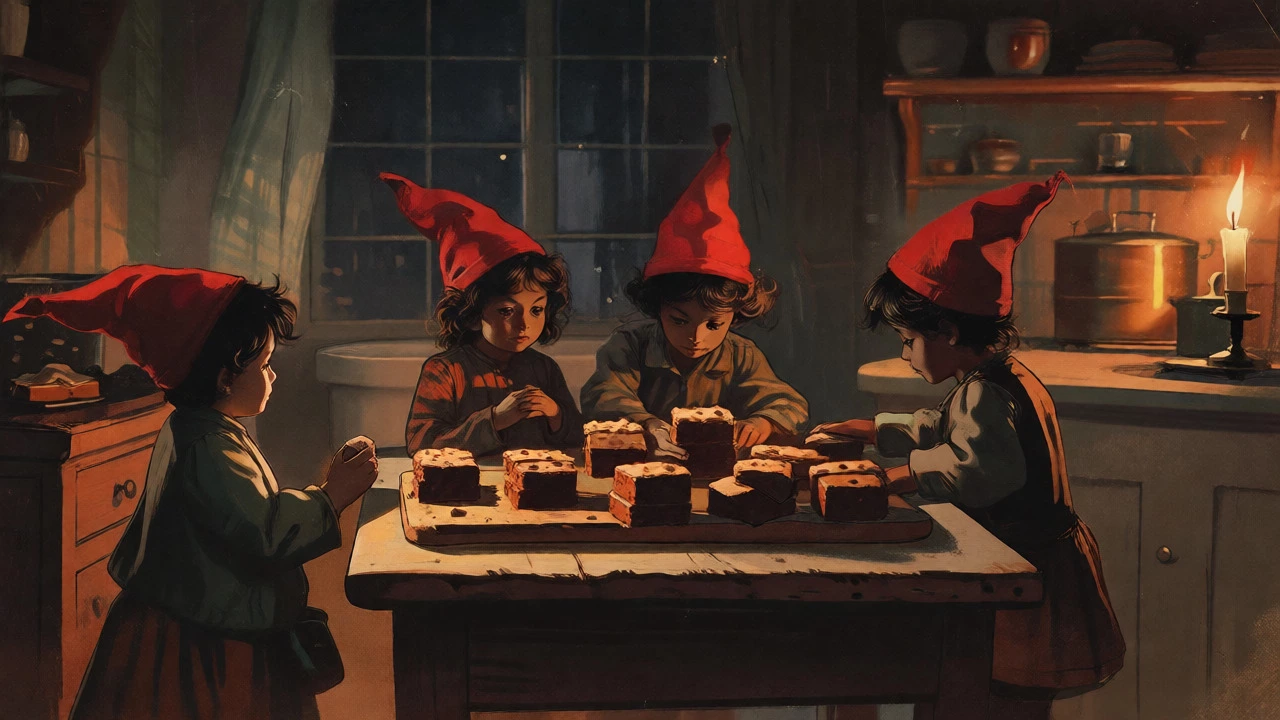
In the late 19th century, children's literature was obsessed with "Little Brownies," tiny helpful house spirits. Marketers likely chose the name "Brownie" for these new treats to leverage this cultural familiarity—small, magical, and comforting.
You’ve probably bitten into a brownie more times than you can count. Maybe it was gooey in the middle, maybe it had crispy edges, but did you ever stop to wonder why we call them that? It’s not exactly obvious when you look at a square of dense, chocolatey cake. Is it because they’re brown? Sure, but that feels too simple. Is it because they’re small? Maybe. The truth is, the story behind the name is a mix of folklore, accidental baking errors, and a dash of supernatural branding.
Let’s cut through the noise. There isn’t one single, undisputed document from 1893 that says, "We are naming this cake 'brownie' because..." Instead, food historians have pieced together clues from cookbooks, patents, and early 20th-century advertising. If you’re curious about what’s really going on inside that chocolate square’s identity crisis, you’re in the right place. We’re going to unpack the etymology, debunk the myths, and explain why the name stuck while others faded away.
The Fairy Tale Connection: Little Brownies
To understand the name, you have to look beyond the kitchen and into the nursery. In the late 19th century, specifically around the 1870s and 1880s, children’s literature was obsessed with tiny, helpful house spirits known as Little Brownies. These weren't scary ghosts; they were mischievous but benevolent creatures who tidied up houses at night while humans slept. They were often depicted wearing red caps and having dark skin or hair, hence the name "Brownie."
Why does this matter for your dessert? Because brand owners love recognizable characters. When these small, square, dark-colored treats started appearing in American households, marketers needed a catchy name. "Chocolate Fudge Cake" was boring. "Dark Square" was uninspiring. But "Brownie"? That tapped into a cultural phenomenon. The treats were small, they appeared magically in lunchboxes (or so the marketing implied), and they were sweetly comforting. The connection between the mythical creature and the snack was likely deliberate, leveraging the popularity of Palmer Cox’s illustrations which made the term "Brownie" household vocabulary across North America.
The Accidental Discovery: A Baker’s Mistake?
There’s a persistent legend that the brownie was an accident. The story goes something like this: A baker forgot to add baking powder to a batch of chocolate cake batter. Or perhaps they ran out of flour. Whatever the specific error, the result wasn’t a fluffy cake-it was a dense, fudgy block. Rather than throwing it away, someone sliced it into squares and served it warm. It was a hit.
This narrative fits perfectly with the idea of the "little brownie" spirit-something small that appears unexpectedly and solves a problem (in this case, hunger). While we can’t verify if a specific baker in Bangor, Maine, or Chicago actually made this mistake first, the concept of the accidental origin helps explain the texture. Unlike a layer cake, which requires precision leavening, a brownie relies on the ratio of fat to flour. Too little air, too much sugar, and you get that signature chew. The name reflects the outcome: a humble, unpretentious treat born from imperfection.
Fudge vs. Brownie: Where Did the Line Blur?
Here is where things get tricky. Before the word "brownie" took over, many similar desserts were called fudge. Fudge is a candy made by boiling sugar, butter, and milk until it reaches a soft-ball stage, then beating it until creamy. It doesn’t use eggs or flour in the same way a baked good does.
The transition from "fudge" to "brownie" happened gradually in the early 1900s. Early recipes often used the terms interchangeably. You might find a recipe from 1905 titled "Fudge Squares" that looks exactly like what we’d call a brownie today. The key differentiator became the cooking method. Fudge is cooked on the stovetop; brownies are baked in the oven. As ovens became standard in every home kitchen, the baked version gained dominance. The name "brownie" helped distinguish the baked egg-based treat from the boiled sugar confection. It wasn’t just a rename; it was a clarification of technique.
| Feature | Traditional Fudge | Classic Brownie |
|---|---|---|
| Cooking Method | Stovetop boiling and beating | Baking in an oven |
| Main Ingredients | Sugar, butter, milk/cream | Flour, eggs, butter, chocolate/cocoa |
| Texture | Smooth, grainy, melts on tongue | Dense, chewy, or cake-like crumb |
| Leavening | None (relies on crystallization) | Minimal (baking powder/soda optional) |
The First Written Record: 1896 Cookbook
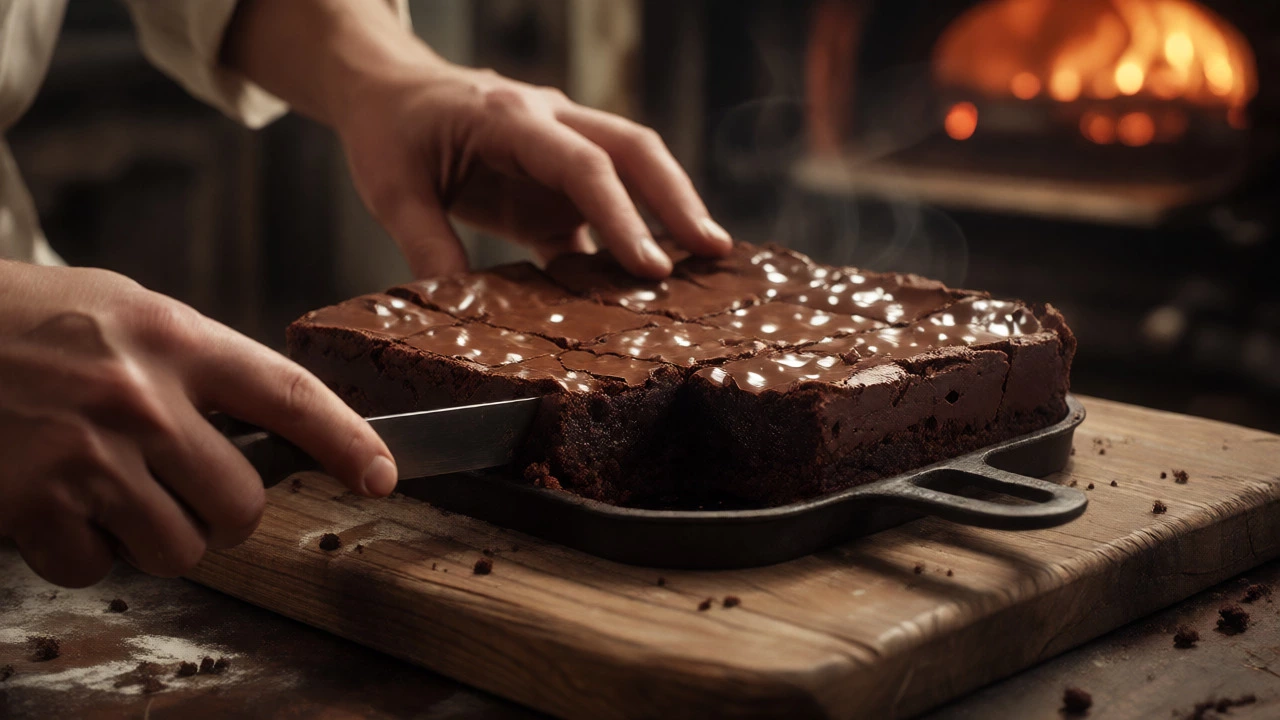
If you want hard evidence, look no further than the Boston Cooking-School Cook Book, published in 1896 by Fannie Farmer. This is widely considered the first documented appearance of a recipe explicitly called "Brownies."
But here’s the twist: Farmer’s brownies didn’t contain any chocolate. Her recipe called for molasses, walnuts, and spices, resulting in a light, gingerbread-like bar. So, technically, the first "brownie" was a spice cookie disguised as a bar. The chocolate version came later, gaining traction in the early 1900s as cocoa became cheaper and more accessible. The name survived the ingredient swap because it described the final color of the baked good once chocolate was added. It’s a classic example of how language evolves alongside technology-or in this case, pantry staples.
Why the Name Stuck: Marketing and Lunchboxes
By the 1920s, the brownie had secured its place in American culture, largely thanks to school lunch programs. Teachers loved them because they were easy to transport, didn’t require plates, and were affordable. The name "Brownie" sounded friendly and approachable to children. Compare that to "Sachertorte" or "Pavlova," and you see why the simpler name won.
Furthermore, the shape played a role. Cutting a sheet cake into uniform squares made them portable. The name implies a unit-a single serving. You don’t eat "some brownie"; you eat "a brownie." This grammatical shift reinforced their status as individual snacks rather than slices of a larger communal cake. It turned a dessert into a commodity, perfect for vending machines and bakery counters.
Modern Variations and Naming Confusion
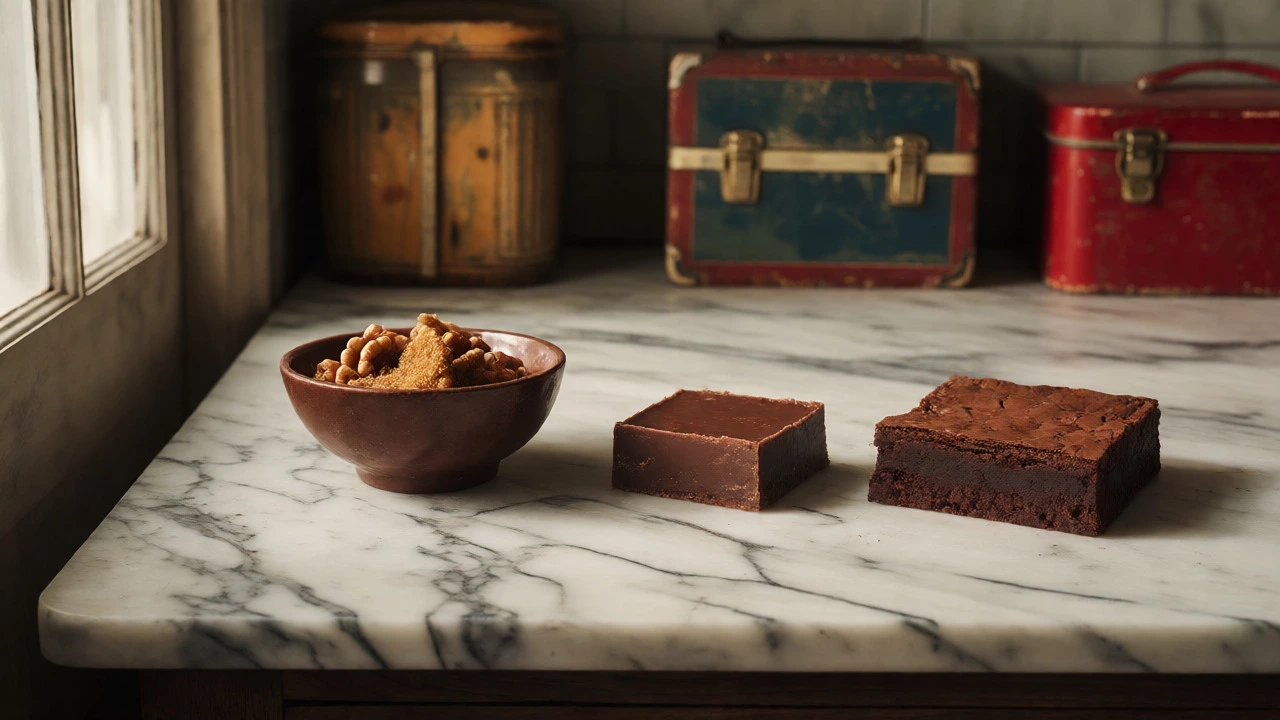
Today, the definition of a brownie has expanded wildly. You have blondies (vanilla instead of chocolate), marbled brownies, and even savory versions. Does the name still hold up? Technically, yes, because the structural integrity remains the same. A blondie is structurally identical to a brownie, just without the cocoa solids. Yet, some purists argue that calling a vanilla bar a "blondie" dilutes the original concept.
In New Zealand, where I live, we often debate whether our "Lemon Slice" or "Blondies" belong in the same category. The answer depends on texture. If it’s dense and fudgy, it’s in the brownie family. If it’s airy and sponge-like, it’s a slice or a cake. The name "brownie" now refers less to the color and more to the density and lack of frosting. It’s a textural descriptor masquerading as a color description.
What This Means for Your Baking
Understanding the origin helps you bake better. Knowing that brownies evolved from fudge tells you that moisture control is critical. Knowing they started as accidental under-leavened cakes reminds you that mixing matters. Over-mixing incorporates air, turning your fudgy brownie into a cakey disappointment.
- For Fudgy Results: Use melted chocolate and minimal flour. Avoid baking powder.
- For Cakey Results: Add extra flour and use baking powder. Cream the butter and sugar thoroughly.
- For Chewy Results: Use brown sugar (which adds moisture) and bake slightly longer than usual.
The name "brownie" is a historical artifact. It carries the weight of Victorian fairy tales, early 20th-century industrial baking, and the evolution of the American diet. Next time you bite into one, remember: you’re eating a piece of culinary history that was named after a mythological housekeeper, refined by accident, and perfected by convenience.
Is the brownie named after the color brown?
Partially, yes. While the initial association was with the mythical "Little Brownies" characters popular in the late 19th century, the literal color of the chocolate-infused treat certainly helped cement the name. However, the first recorded recipe in 1896 contained no chocolate, suggesting the name originated from the character reference before becoming associated with the color.
Who invented the first brownie?
There is no single inventor. Food historians credit several potential sources, including a chef in Chicago during the 1893 World's Columbian Exposition, a woman in Bangor, Maine, who accidentally omitted baking powder, and Fannie Farmer, whose 1896 cookbook included the first written recipe. The exact origin remains debated among culinary experts.
Are brownies just fudge?
No. While they share similarities in richness and density, brownies are baked goods containing flour and eggs, whereas traditional fudge is a confection made by boiling sugar, butter, and milk without baking. The distinction lies in the cooking method and the presence of gluten-forming ingredients in brownies.
Why are vanilla ones called blondies?
The term "blondie" emerged in the mid-20th century as a playful counterpart to "brownie." Since the primary difference is the absence of chocolate (resulting in a lighter, golden-brown color), bakers adopted the rhyming, descriptive name. Structurally, they are identical to brownies, relying on the same dense, chewy texture profile.
Did brownies originally have nuts?
Yes, many early recipes, including Fannie Farmer's 1896 version, called for walnuts or other nuts. Nuts provided crunch and contrast to the soft, dense base. Today, nuts are optional, with many modern variations favoring chocolate chips, swirls, or plain dough instead.


Write a comment