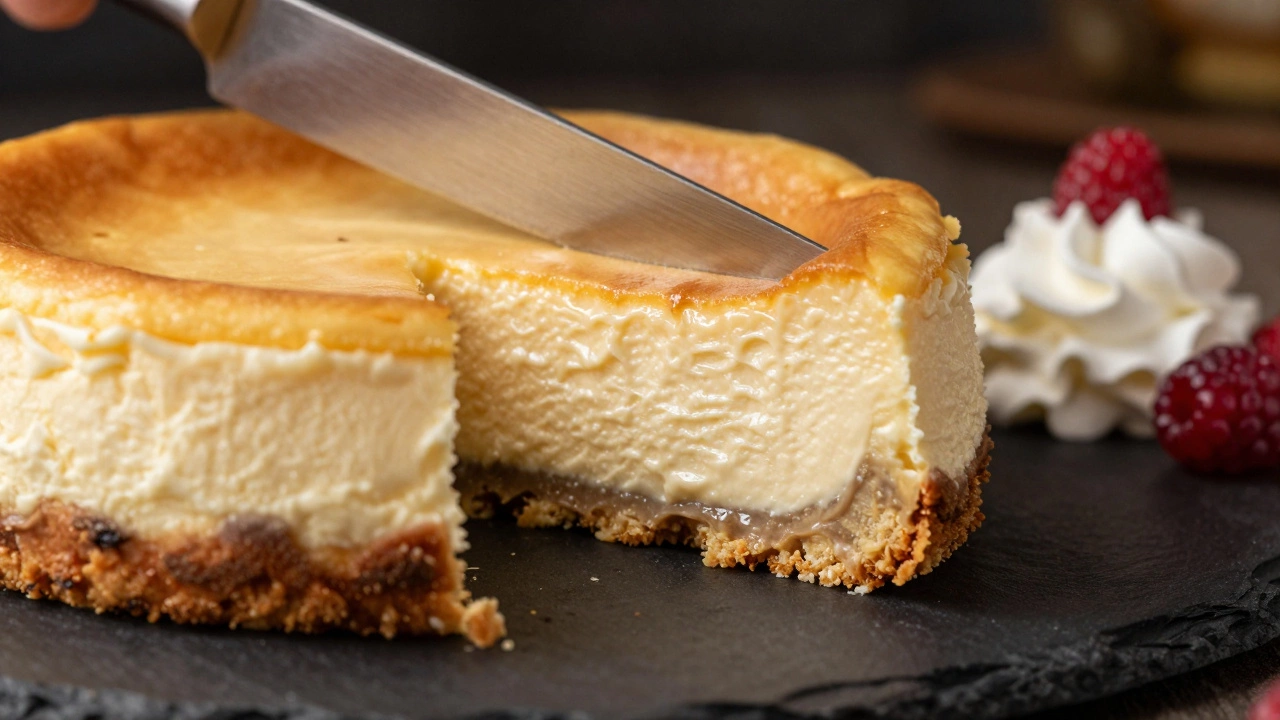
What Makes a Cheesecake Dense or Fluffy? The Science Behind the Texture
Discover why some cheesecakes are rich and dense while others are light and fluffy. Learn how cream cheese, eggs, sugar, and baking method control texture in every slice.

When you're making a cheesecake, a rich, creamy dessert made from cream cheese, eggs, and sugar, often baked in a crust. Also known as New York-style cheesecake, it's one of the most popular desserts worldwide because it’s simple but easy to mess up. The difference between a flawless cheesecake and a cracked, watery mess isn’t luck—it’s technique. Most people think it’s about following the recipe exactly, but the real secret is understanding how heat, ingredients, and timing interact. A good cheesecake baking tip isn’t just a trick—it’s science you can use every time.
One of the biggest problems? Cracks. They happen when the cheesecake overbakes or cools too fast. The fix? Bake it low and slow, and turn off the oven when the center still jiggles slightly. Let it sit inside with the door cracked open for an hour. That’s it. No water bath needed for every recipe, but if you’re going for that ultra-smooth texture, a water bath helps control the heat. Another common issue is a soggy crust. That’s usually from butter leaking or not pre-baking the crust long enough. Try pressing the crust firmly into the pan and baking it for 10 minutes before adding the filling. It makes a huge difference.
Then there’s the baked cheesecake, a dense, custard-like dessert that sets in the oven. It’s the classic version, with a firm yet creamy bite. And then there’s the no bake cheesecake, a chilled dessert that uses whipped cream and condensed milk instead of eggs and baking. It’s faster, lighter, and perfect for summer—but it won’t hold up under heavy toppings. Both have their place. If you want a restaurant-quality slice, go baked. If you need something quick and foolproof, no-bake wins. But neither works if you skip the chilling time. Don’t rush it. At least 6 hours in the fridge, overnight is better. Cold = set = sliceable.
And don’t overlook your ingredients. Cream cheese must be room temperature. Cold cream cheese means lumps. Use full-fat. Low-fat versions add water, which turns your cheesecake grainy. Eggs? Add them one at a time and mix just until combined. Overmixing adds air, and air = cracks. Vanilla extract? Always use pure. Imitation tastes like chemicals. And if you’re adding fruit or chocolate, wait until after baking. Heat makes fruit bleed and chocolate seize.
What you’ll find below are real, tested fixes from people who’ve burned, cracked, and ruined cheesecakes—then learned how to fix them. You’ll see how to rescue a runny filling, why some recipes call for sour cream and others don’t, and what really happens when you skip the springform pan. These aren’t generic tips. These are the exact steps that turned failed batches into crowd-pleasers. Whether you’re a first-timer or you’ve made ten cheesecakes this year, there’s something here that’ll save your next one.
Discover why some cheesecakes are rich and dense while others are light and fluffy. Learn how cream cheese, eggs, sugar, and baking method control texture in every slice.