

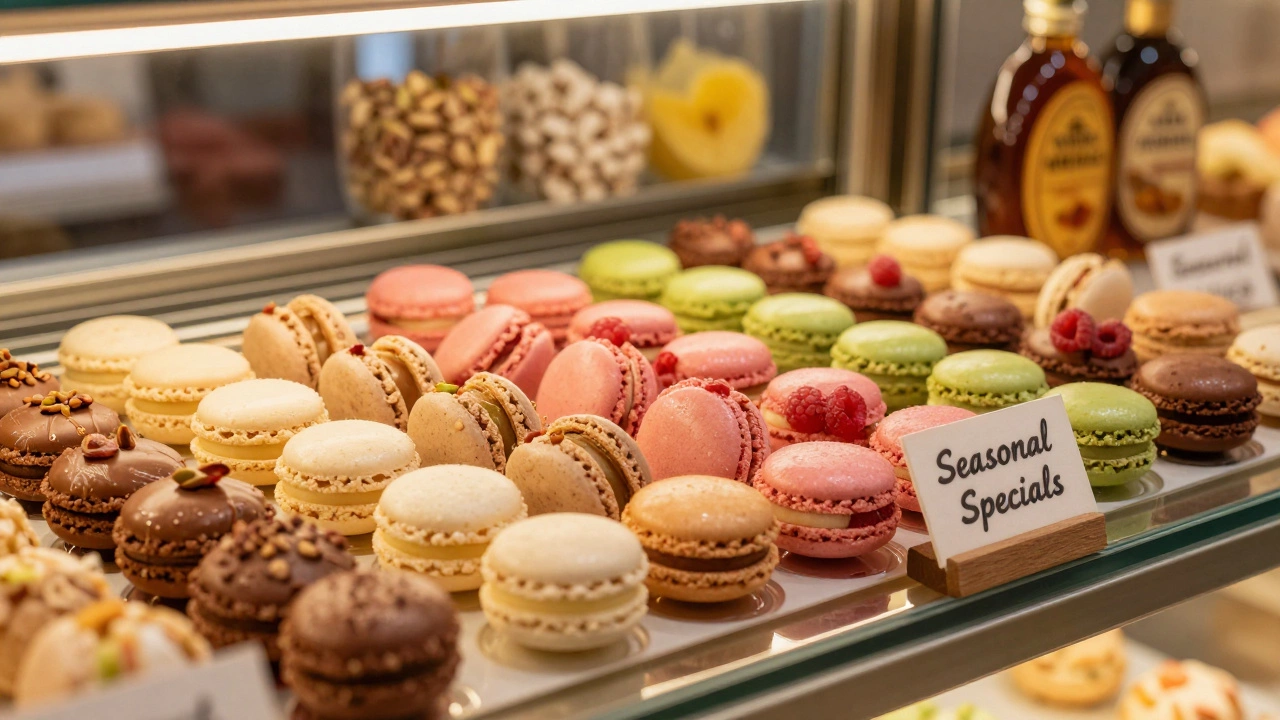
Macarons aren’t just delicate cookies with colorful shells-they’re a world of flavor waiting to be explored. If you’ve ever stood in front of a bakery case wondering how many different macaron flavors exist, you’re not alone. The truth? There’s no fixed number. But that doesn’t mean it’s random. From classic vanilla to wild combinations like matcha yuzu or bacon-maple, the possibilities are endless-and constantly evolving.
What Makes Macarons So Flexible?
Unlike cakes or cookies, macarons have a simple structure: two almond meringue shells with a filling in between. That simplicity is their superpower. The shell itself is neutral-slightly sweet, nutty, and crisp on the outside with a chewy center. It doesn’t fight the filling. It lets it shine. That’s why bakers use it as a canvas. You can stuff it with almost anything that holds its shape and complements the texture: ganaches, curds, buttercreams, jams, even savory spreads.
The French version, the original, sticks close to tradition. But today’s global scene? It’s wild. In Tokyo, you’ll find black sesame and red bean. In New York, bourbon caramel and s’mores. In Auckland, where I live, we’ve got manuka honey and kumquat. The shell doesn’t change much-but the filling? That’s where creativity runs free.
Classic Macaron Flavors You Can’t Miss
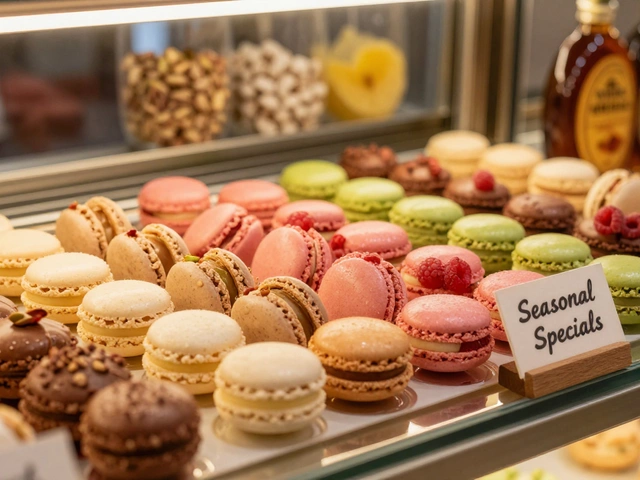
Some flavors have stood the test of time. These are the ones you’ll find in nearly every bakery that takes macarons seriously:
- Vanilla - Often paired with vanilla bean buttercream or Swiss meringue. Clean, creamy, and perfect for beginners.
- Chocolate - Dark, milk, or white chocolate ganache. The most popular flavor worldwide.
- Strawberry - Usually a fruit purée mixed with buttercream. Bright, tart, and visually striking.
- Lemon - A zesty lemon curd filling. Tart enough to cut through the sweetness of the shell.
- Raspberry - Often combined with white chocolate ganache. A classic pairing that never gets old.
- Coffee - Espresso-infused ganache or coffee buttercream. Rich and bold, great for afternoon tea.
- Pistachio - Ground pistachios in the shell, with a pistachio cream filling. Nutty, elegant, and slightly earthy.
These aren’t just flavors-they’re benchmarks. If a bakery can’t nail these, you might want to look elsewhere.
Modern and Trending Macaron Flavors (2025-2026)
Over the last two years, macaron flavors have gotten bolder, weirder, and more delicious. Here’s what’s trending right now:
- Matcha Yuzu - Earthy green tea meets citrusy Japanese yuzu. The balance is perfect: bitter, sweet, and sour all at once.
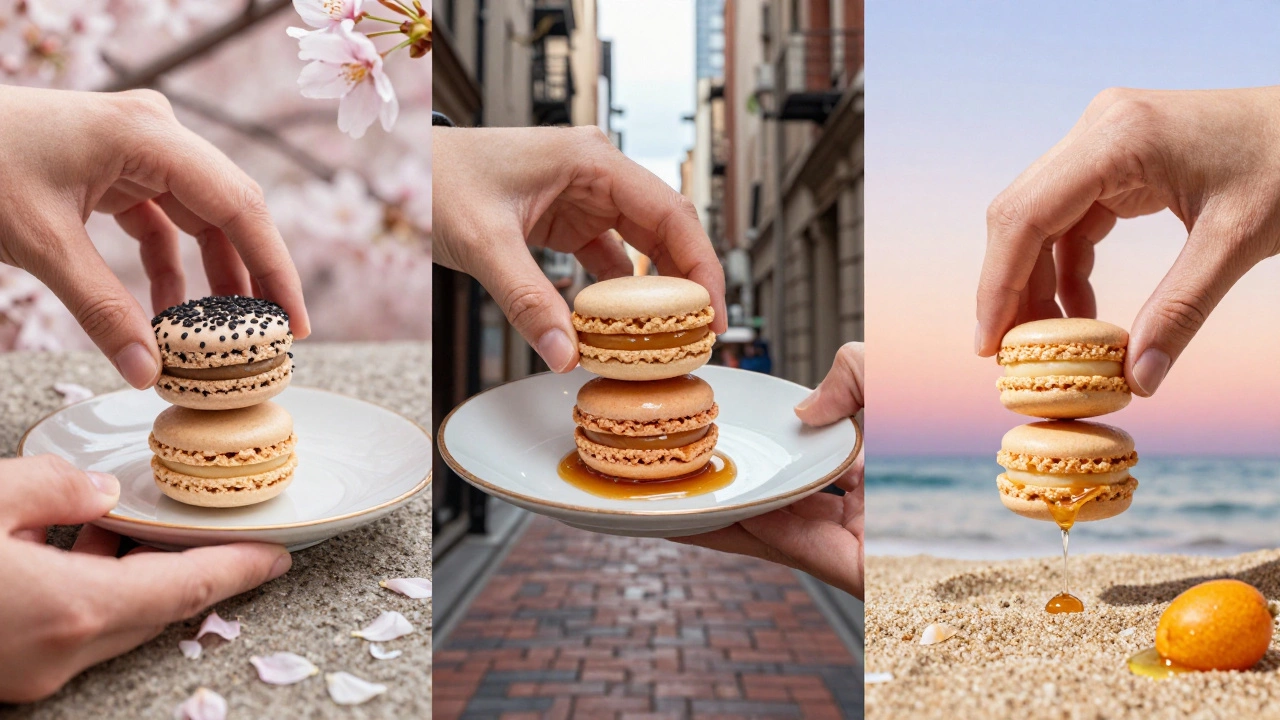
- Black Sesame - Deep, toasty, and nutty. Often paired with white chocolate or honey cream. Popular in Asia and now spreading globally.
- Bacon Maple - Yes, bacon. Crispy bits folded into a maple buttercream. Sweet and salty, crunchy and creamy. Surprisingly addictive.
- Passionfruit Coconut - Tropical, tangy, and creamy. A favorite in coastal cities like Auckland and Sydney.
- Earl Grey Lavender - Floral, aromatic, and subtly tea-infused. Feels like a luxury tea break in cookie form.
- Manuka Honey - Made with New Zealand’s famous antibacterial honey. Often paired with lemon or vanilla. It’s got a distinct, complex sweetness.
- Salted Caramel with Bourbon - Deep, smoky, and buttery. A crowd-pleaser at holiday markets.
These aren’t gimmicks. They’re crafted with intention. Bakers test these combinations for months before they hit the menu. The goal? To surprise without overwhelming.
Savory Macarons? Yes, They Exist
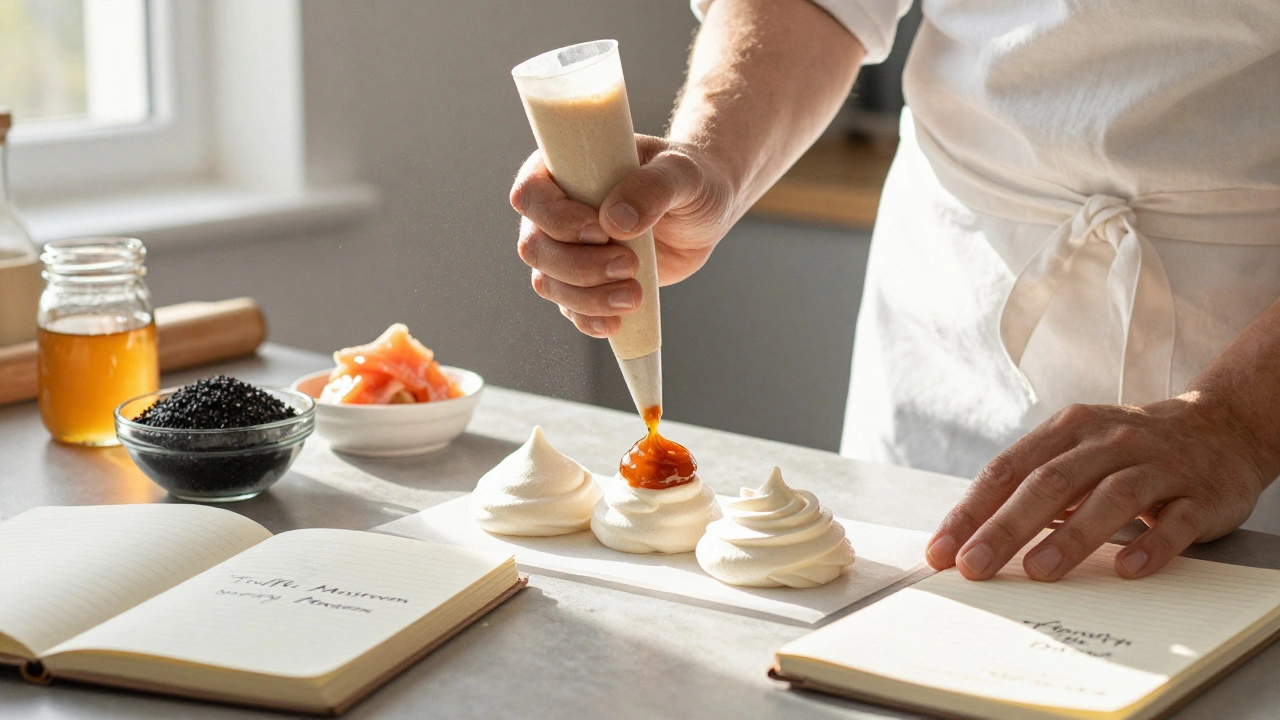
Most people think macarons are sweet. But savory versions have been around since the early 2000s-and they’re gaining steam. Think of them as gourmet canapés in cookie form.
- Goat Cheese & Herb - A soft goat cheese filling with chives and black pepper. Served chilled. Perfect for appetizer trays.
- Truffle Mushroom - Earthy mushroom duxelles with truffle oil. Paired with a dark chocolate shell for contrast.
- Smoked Salmon & Dill - A cream cheese base with real smoked salmon flakes. Often served with a dollop of caviar on top.
- Chili Lime - Not sweet at all. A spicy chili-infused cream with lime zest. Surprisingly refreshing.
Savory macarons are still rare in most bakeries, but they’re showing up at high-end events, wine pairings, and chef’s tasting menus. If you’ve never tried one, you’re missing out.
How Many Flavors Are There Really?
Let’s cut through the noise. There’s no official count. But here’s what we know:
- Traditional French patisseries offer 6-12 flavors.
- High-end boutiques in Paris, Tokyo, or New York rotate 20-30 seasonal flavors a year.
- Independent bakers experiment with 50+ flavors annually, often as one-off specials.
- Online databases like Macaron Madness is a community-driven catalog of over 400 unique recipes have documented more than 400 unique flavor combinations.
So, is the answer 12? 50? 400? The real answer: it depends on who’s asking. If you want to taste the classics, 10 flavors will cover it. If you want to explore every possibility? You’ve got a lifetime of tasting ahead.
What Makes a Great Macaron Flavor?
Not every flavor works. Here’s what separates the good from the great:
- Balance - Sweetness should never overpower. Tart, salty, or bitter elements help cut through.
- Texture - Fillings must be thick enough to hold shape but soft enough to melt slightly on the tongue.
- Harmony - The filling and shell should complement, not compete. A chocolate shell with citrus filling? Brilliant. A chocolate shell with chocolate ganache? Boring.
- Seasonality - Fresh berries in summer, spiced nuts in winter. Good bakers change their menu with the seasons.
The best macarons don’t just taste good-they feel good. They’re light, layered, and surprising.
How to Explore Macaron Flavors Yourself
Want to taste more? Here’s how:
- Start with a classic assortment from a reputable bakery.
- Ask what’s new or seasonal. Many places don’t list everything online.
- Try one savory flavor. Even if you’re skeptical.
- Buy a DIY macaron kit and experiment at home. You’ll learn more about flavor pairing than you think.
- Follow macaron artists on Instagram. They post new creations weekly.
Don’t limit yourself to what’s on the menu. Ask for off-list flavors. Many bakers will make you a custom pair-for a small fee.
Are macaron flavors the same as filling flavors?
Yes, mostly. The flavor of a macaron comes from its filling, not the shell. The shell is usually plain almond with a hint of sweetness. The filling-whether it’s ganache, buttercream, or jam-gives it the character. Some bakers add color or flavor to the shell, like matcha powder or cocoa, but that’s rare. The real taste is in the middle.
Can you make macarons without sugar?
Not really, not in the traditional sense. Sugar is essential for the meringue structure-it helps form the crisp shell and the chewy interior. You can reduce sugar slightly, or use alternatives like erythritol for low-sugar versions, but they won’t have the same texture or shelf life. Most sugar-free macarons are gummy or crumbly. If you need to avoid sugar, look for specialized diabetic-friendly bakeries-they use carefully balanced blends.
Do macarons need to be refrigerated?
Yes, especially if they have a cream, buttercream, or fruit-based filling. Store them in an airtight container in the fridge for up to 5 days. Bring them to room temperature for 30 minutes before eating-that’s when the texture and flavor peak. Freezing works too, for up to a month. Just thaw slowly in the fridge.
Why do macarons cost so much?
It’s not just the ingredients. Macarons take hours to make. The shells require precision: exact weights, resting time, oven temperature control, and piping consistency. Then there’s the filling prep, assembly, and curing. A single macaron might take 20 minutes to make by hand. Plus, almond flour is expensive. That’s why a box of six can cost $12-$18. You’re paying for skill, time, and quality-not just sugar and nuts.
Can I make macarons at home without a special oven?
Absolutely. You don’t need a professional oven. A standard home oven works fine if you follow a few rules: preheat thoroughly, use an oven thermometer (home ovens are often inaccurate), and bake on the middle rack. Many bakers use a second baking sheet on the bottom to diffuse heat. The key is patience. Let the shells dry for 30-60 minutes before baking. That’s what gives them the signature feet.
Final Thought: It’s Not About Counting Flavors
Forget trying to memorize every flavor. The joy of macarons isn’t in the number-it’s in the discovery. The first time you bite into a passionfruit coconut macaron and realize the tartness cuts the sweetness perfectly? That’s the magic. The surprise of a savory truffle mushroom one at a dinner party? That’s the thrill.
There are hundreds of flavors out there. Maybe thousands. But the best one? The one you haven’t tried yet.
Write a comment