

Which Dessert Should You Try?
Texture Preference
Flavor Profile
Experience Style
Your Perfect Dessert Match
Alfajor
Sturdy, comforting, and rich with dulce de leche
Macaron
Delicate, refined, and filled with buttercream
Based on your preferences, you're more likely to enjoy the alfajor for its crumbly texture and rich dulce de leche filling, or the macaron for its crisp shells and elegant presentation.
Have you ever seen a small, colorful cookie that looks like a sandwich and thought it was an alfajor? Or maybe you bit into a soft, chewy almond cookie and assumed it was a macaron? They’re both sweet, both often layered, and both come in pretty packaging-but they’re not the same. In fact, they come from completely different worlds.
Alfajor: A South American Classic
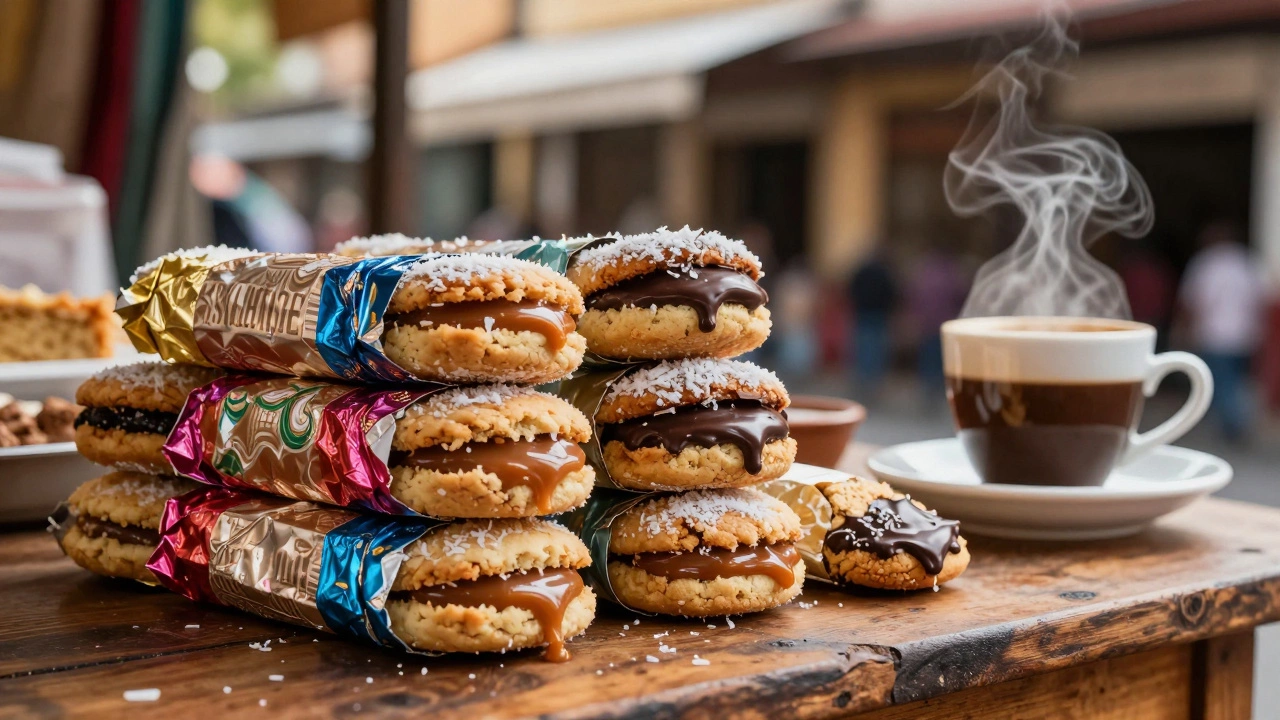
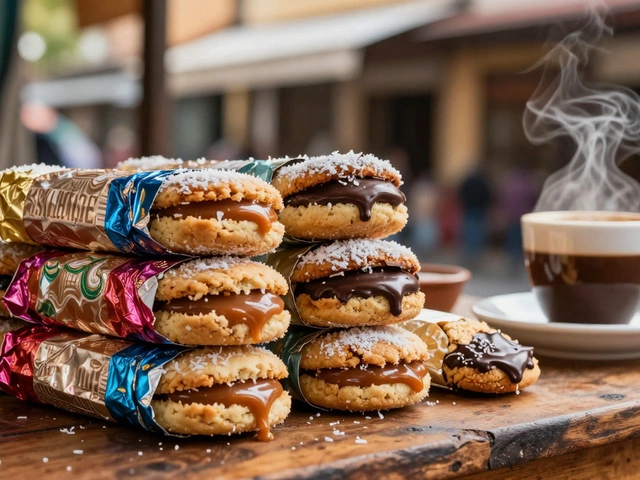
Alfajor is a traditional treat from Argentina, Uruguay, Peru, and other parts of Latin America. It’s not fancy. It’s not delicate. It’s sturdy, comforting, and packed with flavor. At its core, an alfajor has two soft, crumbly cookies-usually made with flour, butter, and sometimes cornstarch-sandwiched together with a thick layer of dulce de leche. That’s it. Sometimes it’s rolled in coconut, dusted with powdered sugar, or dipped in chocolate. But the heart of it? Two cookies and one sticky, caramel-like filling.
Think of it like a cross between a shortbread and a caramel square. The texture is dense but melts in your mouth. The flavor is rich, milky, and sweet without being cloying. You’ll find alfajores in every corner store in Buenos Aires, wrapped in colorful foil, and sold by the dozen. They’re the kind of snack you eat after lunch, with a cup of coffee, or as a quick pick-me-up during a long afternoon.
Macaron: A French Delicacy
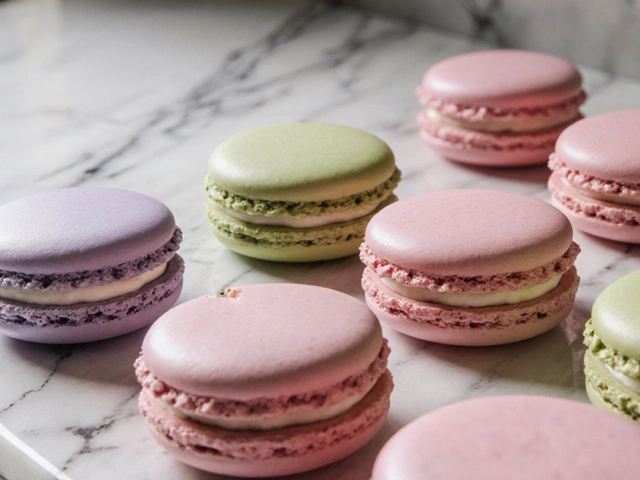
Macarons, on the other hand, are French. They’re from Paris, not Patagonia. They’re made with almond flour, egg whites, and sugar-whipped into a meringue, then piped into perfect little rounds. The shells are crisp on the outside, with a slight chew underneath, and they have a signature ruffle around the edge called the “foot.” Inside, they’re filled with buttercream, ganache, or jam. The filling is usually smooth, not sticky, and never dulce de leche.
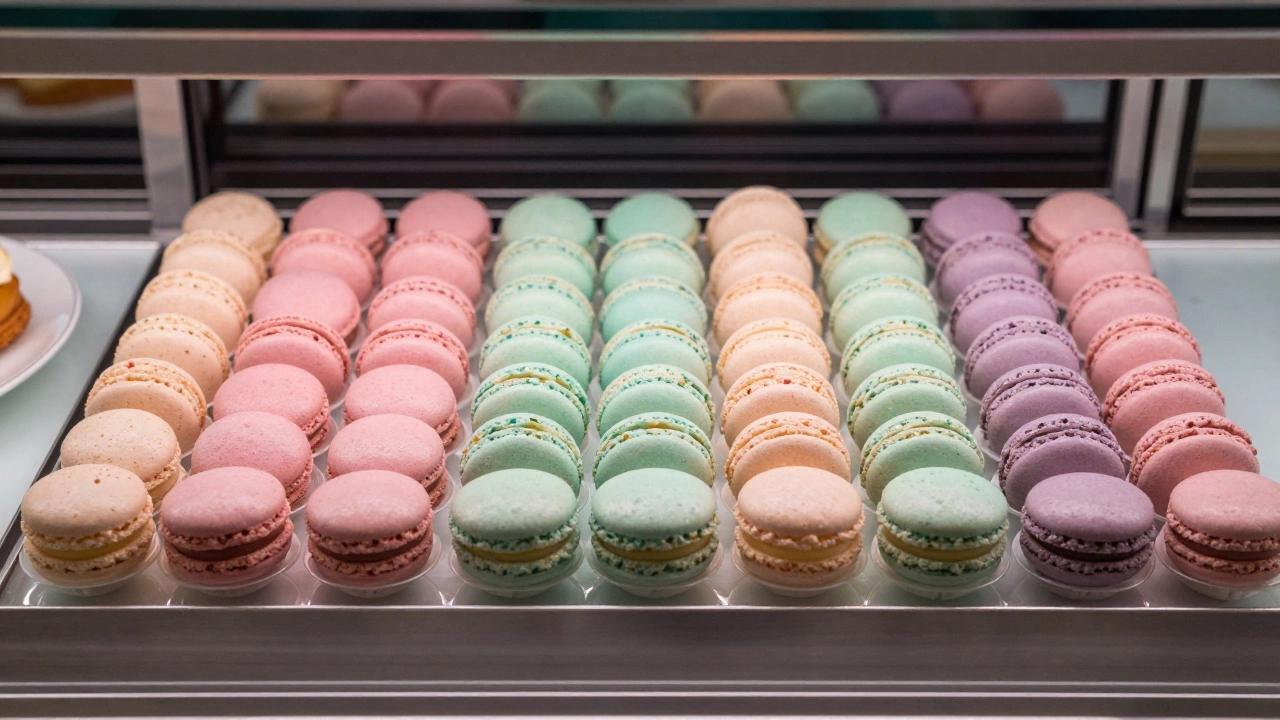
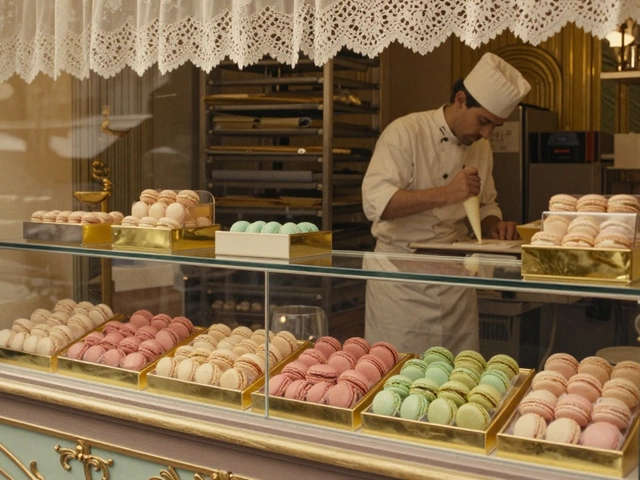
Macarons are delicate. They’re finicky to make. One wrong step-overmix the batter, bake at the wrong temperature-and they crack, flatten, or turn out hollow. Professional bakers spend months perfecting them. They come in pastel colors: blush pink, mint green, lavender, sky blue. They’re served on porcelain plates at tea rooms, given as gifts for weddings, or displayed in glass cases in high-end patisseries.
Texture: Crisp vs. Crumbly
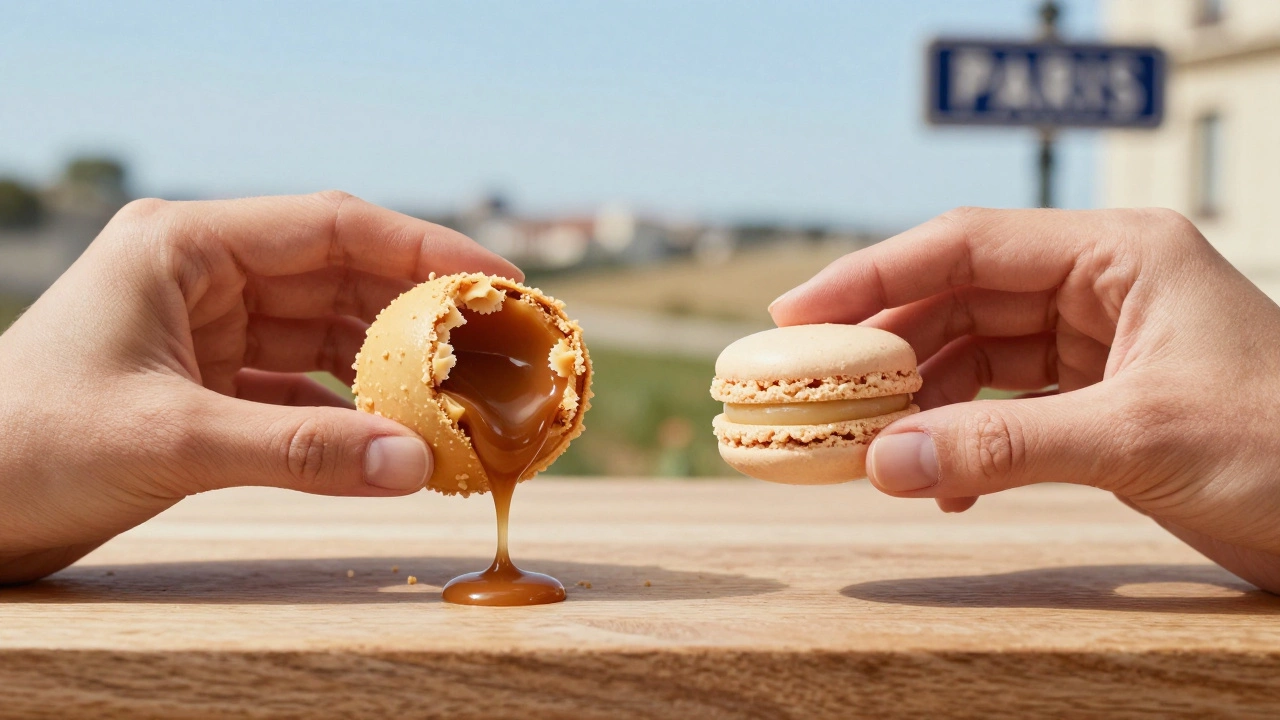
If you close your eyes and bite into one, you’ll know right away. A macaron has two thin, smooth shells that give way to a soft, chewy center. The texture is airy and light, almost like eating a cloud with a hint of almond. The filling is creamy, not dense.
An alfajor? It’s the opposite. The cookies are crumbly, almost sandy. They break easily when you bite into them. The dulce de leche is thick and sticky-it clings to your teeth. There’s no airiness here. It’s all about richness and substance.
Ingredients: Almond Flour vs. Wheat Flour
Macarons rely on almond flour. That’s non-negotiable. It’s what gives them their nutty flavor and delicate structure. You can’t substitute regular flour without completely changing the texture. Egg whites are the backbone-they’re whipped to stiff peaks and folded in gently.
Alfajores use wheat flour. Sometimes a little cornstarch is added to make them extra tender. Butter is the main fat. No egg whites are whipped. No meringue. No precision baking. It’s a simple, rustic recipe passed down through generations.
Flavor: Dulce de Leche vs. Buttercream
The filling is where the biggest difference lies. Dulce de leche is made by slowly cooking sweetened milk until it turns golden brown and thick. It tastes like caramelized milk-deep, milky, slightly smoky. It’s the soul of the alfajor.
Macaron fillings are usually buttercream (butter + powdered sugar + flavoring), chocolate ganache, or fruit jam. They’re bright, clean, and often flavored with vanilla, raspberry, pistachio, or matcha. There’s no caramelization here. No slow-cooked dairy. Just pure, concentrated flavor.
Appearance: Simple vs. Elegant
Alfajores are practical. They’re wrapped in plastic or foil, sometimes in cardboard boxes. Their look is casual. The chocolate coating might be uneven. The coconut might be patchy. They don’t need to be perfect-they’re meant to be eaten, not Instagrammed.
Macarons are designed to be seen. They’re arranged in neat rows, often with matching colors. The shells are uniform in size and shape. The filling peeks out just enough to show off the contrast. They’re made for presentation. You buy them for a birthday, a bridal shower, or to impress someone.
Where You’ll Find Them
Go to a bakery in Buenos Aires, and you’ll find alfajores on every counter. They’re sold in supermarkets, gas stations, and street stalls. They cost about $1 to $2 each. They’re everyday food.
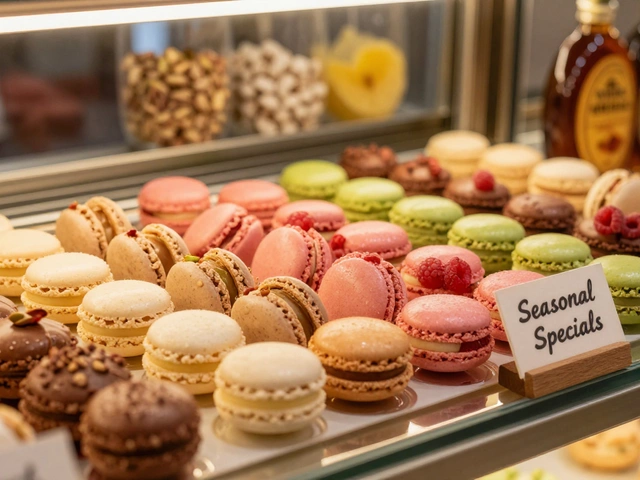
Macarons? You’ll find them in Parisian patisseries, upscale dessert shops in New York or Tokyo, or specialty bakeries that charge $3 to $5 each. They’re a luxury item. You don’t grab one on your way to work-you save them for a special moment.
Can You Substitute One for the Other?
No. Not really. If you’re craving something rich and sticky, go for an alfajor. If you want something light, colorful, and refined, pick a macaron. They’re not interchangeable. Trying to replace a macaron with an alfajor is like swapping a silk scarf for a wool blanket-both warm, both useful, but totally different experiences.
Some bakers have tried blending the two-chocolate-dipped alfajores with a hint of almond, or macarons filled with dulce de leche. These are creative twists, not traditional versions. They’re fun to try, but they’re hybrids, not the real thing.
Which One Should You Try?
If you’ve never had either, start with the alfajor. It’s easier to love. The flavor is familiar-like caramel, but creamier. It’s forgiving, comforting, and doesn’t demand perfection.
If you’re feeling adventurous, try a macaron. Look for one with a crisp shell and a smooth, flavorful filling. Don’t expect it to be sweet like candy. It’s more about balance: nutty, sweet, tart, creamy.
Both are delicious. But they’re not the same. And that’s the point.
Are alfajores and macarons the same thing?
No, they’re not the same. Alfajores are South American cookies made with wheat flour and filled with dulce de leche. Macarons are French cookies made with almond flour and filled with buttercream or ganache. They differ in ingredients, texture, flavor, and origin.
Can I make alfajores without dulce de leche?
You can, but it won’t be a traditional alfajor. Some people use jam, chocolate, or caramel as a substitute, but dulce de leche is what gives it its signature taste. Without it, you’re just making a cookie sandwich.
Why are macarons so expensive?
Macarons are expensive because they’re hard to make. They require precise measurements, controlled baking conditions, and high-quality ingredients like almond flour and food-grade colorants. A single batch can fail due to humidity or overmixing, so bakers often waste a lot before getting a perfect one.
Do alfajores need to be refrigerated?
Not usually. Alfajores stay fresh at room temperature for up to a week if stored in an airtight container. The dulce de leche filling is stable and doesn’t spoil quickly. Refrigeration can make the cookies soggy, so it’s best to keep them cool and dry.
Are macarons gluten-free?
Yes, traditional macarons are naturally gluten-free because they’re made with almond flour instead of wheat flour. But always check the ingredients if you have a gluten sensitivity-some fillings or decorations might contain gluten.

Write a comment