

Macaron History & Identity Quiz
Loading question...
Quiz Complete!
You scored 0 out of 5.
You bite into that delicate, crisp shell of a macaron, a sweet meringue-based confection made with egg white, icing sugar, granulated sugar, almond meal, and food coloring. It’s light, airy, and melts on your tongue. But have you ever stopped chewing long enough to wonder: why on earth is it called that? "Macaron" sounds like something you’d order at an Italian bistro, not a quintessential Parisian pastry. The disconnect between the sound of the word and its modern French identity confuses almost everyone who picks up a box from a bakery.
The answer isn’t just about linguistics; it’s a story of migration, mispronunciation, and centuries of culinary evolution. To understand the name, you have to travel back in time, far before Instagram made these colorful cookies famous. We’re going to unpack the etymological roots, clear up the confusion with its Italian cousin, and explain how a simple almond biscuit became one of the most iconic desserts in the world.
The Italian Root: Maccarone or Maccherone?
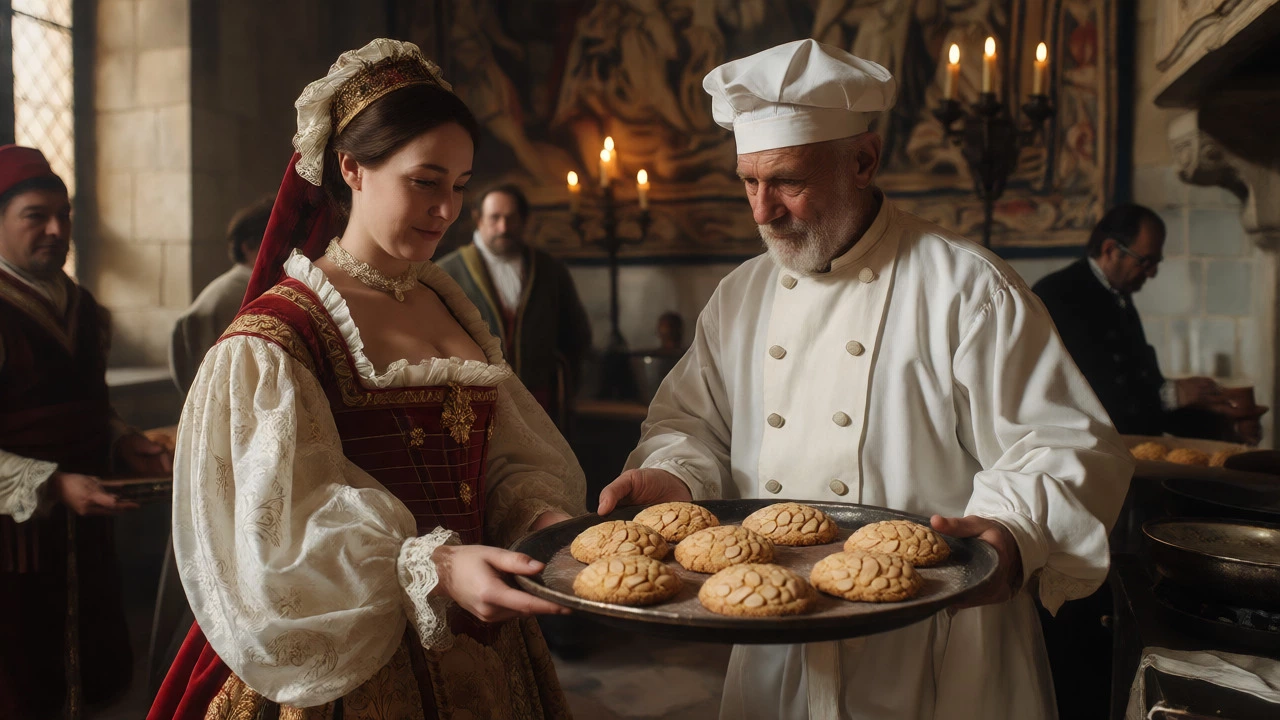
Let’s start with the obvious clue. The word "macaron" doesn’t originate in France. It comes from Italy. Specifically, it derives from the Italian word maccarone (or sometimes maccherone). In medieval Italian dialects, this term generally referred to a paste or a mixture. Think of it as a broad category for dough-like substances. When Catherine de’ Medici, an Italian noblewoman, married King Henry II of France in 1533, she didn’t just bring her political influence; she brought her chefs. Among the many sweets introduced to the French court was a simple almond-based cookie that the Italians called maccarone.
This early version wasn’t the sandwich-style treat we know today. It was a single, round, dry cookie made primarily from almond flour, sugar, and egg whites. It lacked the smooth ganache filling and the distinct "feet" (the ruffled edge at the bottom) that define modern macarons. Yet, the name stuck. As the recipe spread through French aristocracy, the pronunciation softened. The hard 'c' sound in Italian often softens in French phonetics, transforming maccarone into macaron. This linguistic shift is common when words cross borders, but here, it also marked the beginning of the dessert’s transformation.
French Adaptation and the Rise of the Modern Macaron
For nearly two centuries after Catherine’s arrival, the French version remained relatively unchanged. It was a humble almond cake, often served alongside other pastries. However, the name "macaron" began to solidify in French culinary dictionaries during the 17th and 18th centuries. By the time the French Revolution rolled around, the term was well-established in bakeries across Lyon and Paris.
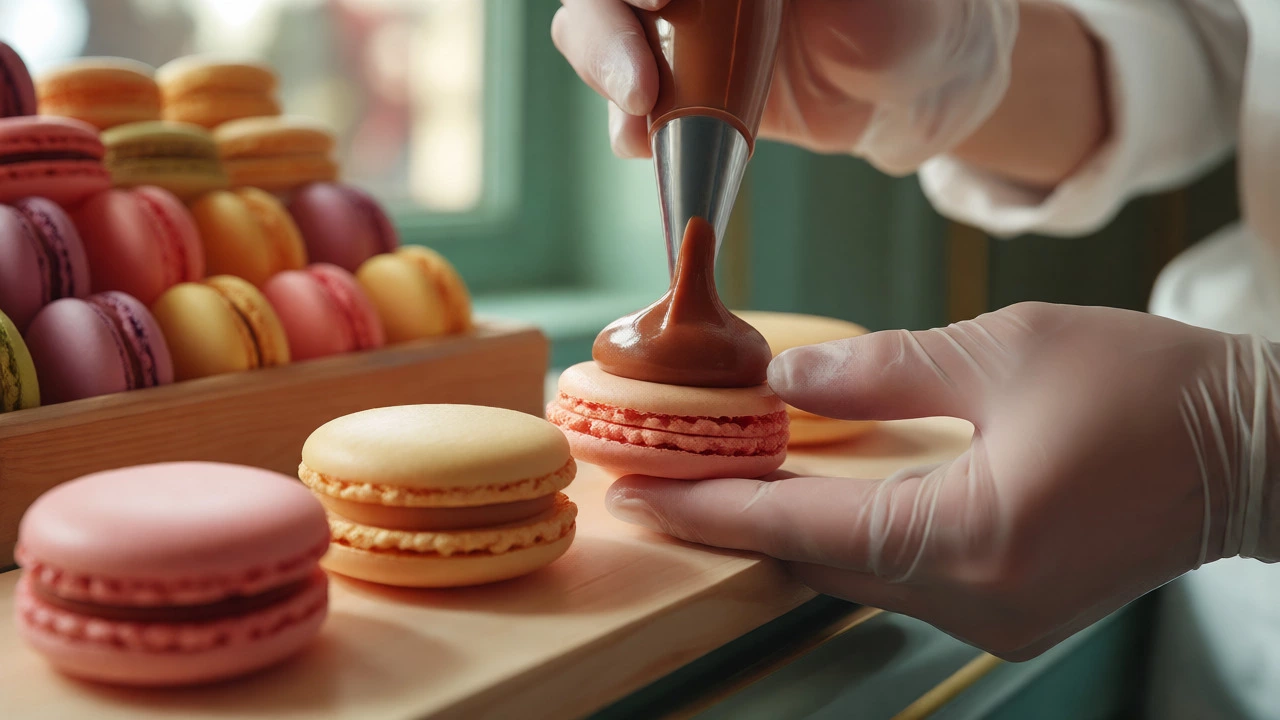
The real game-changer happened much later, in the late 19th century. Two brothers, Louis-Ernest and Charles-Louis Desfontaines, who owned the renowned patisserie Ladurée in Paris, had a brilliant idea. They took two separate almond meringue shells and sandwiched them together with a layer of flavored jam or ganache. This created the macaron parisien, or Parisian macaron. While the structure changed dramatically, the name remained tied to its Italian ancestor. This is a crucial point: the name refers to the base ingredient-the almond meringue-rather than the assembly method.
This distinction helps explain why you might hear purists argue about what constitutes a "true" macaron. Technically, any almond-egg-white-sugar cookie fits the historical definition. But in modern commercial contexts, if it doesn’t have two shells and a filling, people usually call it an "almond macaroon" or just an "almond cookie," even though the etymological link remains strong.
Macaron vs. Macaroon: A Common Mix-Up
You can’t talk about the name without addressing the elephant in the room: the coconut macaroon. Why do so many people confuse the two? And why does one end in 'on' and the other in 'oon'?
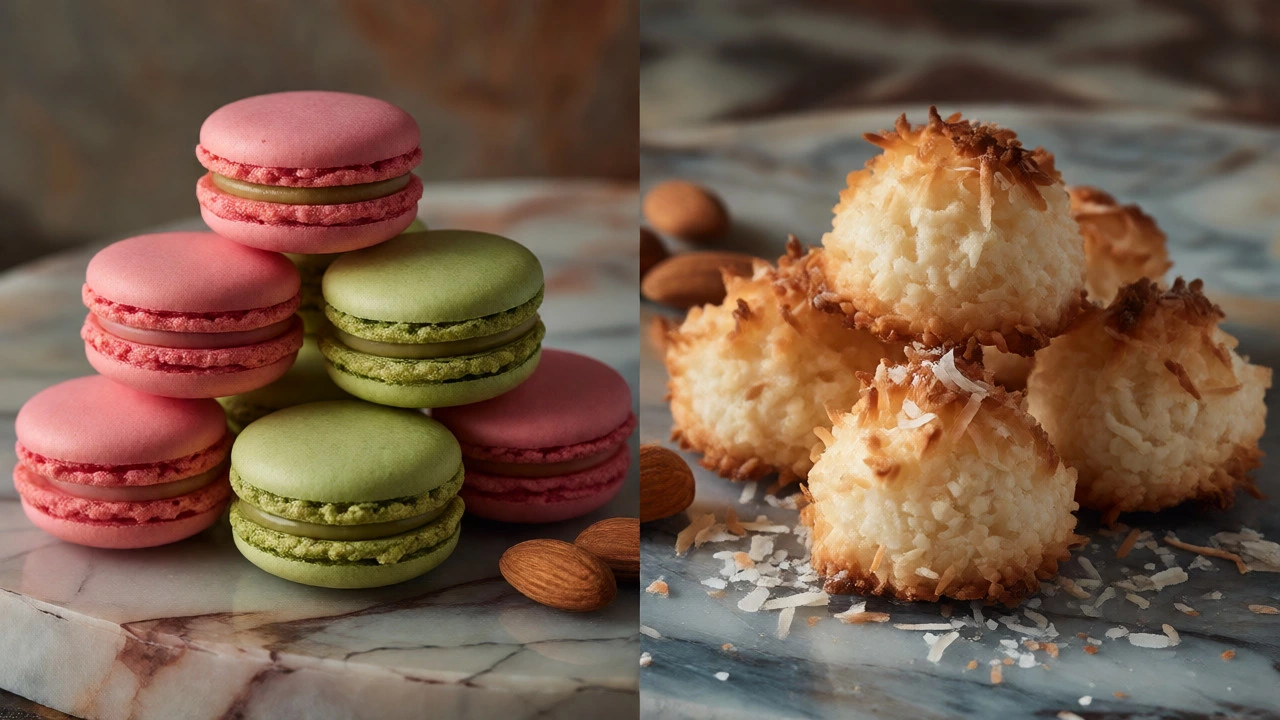
The difference is purely structural and ingredient-based, despite their shared ancestry. Both words trace back to the same Italian root maccarone. However, over time, they diverged completely in the kitchen.
| Feature | Macaron | Macaroon |
|---|---|---|
| Primary Ingredient | Almond flour | Shredded coconut |
| Texture | Crisp shell, chewy interior | Chewy, dense, moist |
| Appearance | Smooth, domed, colorful | Rough, irregular, browned |
| Structure | Sandwich (two shells + filling) | Single mound |
| Origin | Italian/French hybrid | Italian/American adaptation |
The coconut macaroon likely evolved separately in Jewish communities in Europe, where almonds were expensive or scarce, and coconut was a more accessible substitute for texture. When immigrants brought these recipes to America, the spelling "macaroon" became standard for the coconut variety, while "macaron" retained its association with the refined French almond treat. If you see a menu listing "macaroons," expect a sticky, coconut-heavy cookie. If it says "macarons," expect a delicate, almond-flavored sandwich.
Why the Name Matters in Baking Science
Understanding the name isn’t just trivia; it affects how you bake. The term "macaron" implies specific technical requirements. Because the original maccarone relied on almond paste, modern macarons must maintain a high ratio of nut protein to sugar to achieve the correct structure. Almonds provide fat and protein, which stabilize the meringue and create the signature "feet." Coconut, used in macaroons, behaves differently-it absorbs moisture and creates density rather than lift.
If you try to make a "macaron" using coconut flour instead of almond flour, you’ll end up with a dense brick, not a light shell. You’ve essentially made a macaroon, regardless of what you label it. The name carries a set of chemical expectations. The French technique requires aging egg whites, sifting almond powder twice, and precise oven temperatures to ensure the meringue rises correctly. These steps are non-negotiable because the name promises a specific sensory experience: a crisp snap followed by a soft, moist center.
Global Variations and Naming Confusion Today
As macarons went global, the naming conventions got even messier. In Japan, for instance, macarons are incredibly popular, but they often feature local flavors like matcha, yuzu, or black sesame. Despite these variations, they retain the name "macaron" because the base remains almond meringue. However, in some parts of Asia and Latin America, you might find products labeled "macarons" that use different nuts or even wheat flour bases, deviating from the strict French definition.
Furthermore, the rise of "gourmet" branding has led to creative names. You’ll see terms like "mini-macaron," "tower macaron," or "macaron tart." These are marketing tweaks, but they rely on the consumer’s recognition of the core entity. The brand value of the word "macaron" is tied to luxury and precision. Bakeries leverage this by emphasizing the French connection, even if the product is made in Auckland, New Zealand, or Texas.
It’s worth noting that in France itself, there is a protected geographical indication for certain pastries, but the macaron itself is not strictly protected by appellation d’origine contrôlée (AOC) laws in the same way Champagne is. This means anyone can make a macaron, but doing it well requires respecting the historical techniques that gave the name its prestige.
Practical Tips for Buying and Baking
Now that you know why it’s called a macaron, how does this help you in the kitchen or at the bakery? First, check the ingredients list. If a package claims to be "macarons" but lists coconut as the primary ingredient, it’s mislabeled or simply using loose terminology. True macarons should list almond flour or ground almonds first.
- Check the Feet: Look for the ruffled edge at the bottom. This indicates proper meringue stability, a hallmark of authentic macarons.
- Ask About Storage: Real macarons need refrigeration to let the flavors meld and the texture soften slightly. If they’re sitting at room temperature for days, they’re likely stale or artificially preserved.
- Beware of "Macaroon" Substitutes: If you’re baking, don’t swap almond flour for coconut flour expecting the same result. Stick to almond for the classic taste.
For home bakers, understanding the history helps troubleshoot failures. If your macarons crack, it’s often because the skin didn’t form properly before baking-a step rooted in traditional drying methods. The name reminds us that this is a delicate craft, not a quick cookie mix.
Is a macaron French or Italian?
The macaron has Italian origins but is famously associated with France. The recipe originated in Italy as a simple almond cookie called maccarone. It was introduced to France by Catherine de’ Medici’s Italian chefs in the 16th century. Over time, the French refined the recipe, eventually creating the sandwich-style macaron parisien in the 19th century. So, while the name is Italian-derived, the modern form is distinctly French.
What is the difference between a macaron and a macaroon?
The main difference lies in the ingredients and structure. A macaron is made from almond flour, egg whites, and sugar, formed into two smooth shells with a filling. A macaroon is typically made from shredded coconut, egg whites, and sugar, baked into a single, rough-textured mound. While both share the same etymological root, they are distinct desserts with different textures and tastes.
Why do macarons have feet?
The "feet" are the ruffled edges at the bottom of a macaron shell. They form when the air bubbles inside the meringue expand during baking, pushing the batter outward against the tray. Properly dried surface skins allow the steam to escape only from the bottom, creating the foot. Feet are considered a sign of a well-made macaron, indicating correct technique and ingredient balance.
Can I make macarons with coconut flour?
You can experiment, but the result won’t be a traditional macaron. Coconut flour absorbs significantly more moisture than almond flour and lacks the same fat content. Using it will likely produce a denser, chewier cookie closer to a macaroon in texture. For the classic crisp-shell-and-chewy-center experience, almond flour is essential due to its specific protein and fat profile.
Are macarons gluten-free?
Yes, traditional macarons are naturally gluten-free. The main ingredients are almond flour, powdered sugar, egg whites, and granulated sugar. None of these contain gluten. However, always check for cross-contamination in bakeries, especially if they also process wheat-based pastries. Some flavored fillings or additives might introduce gluten, so reading labels is wise for those with celiac disease.
Write a comment