

Macaron Party Planner Calculator
Step 1: Event Details
Your Results
💡 Pro Tips for Your Event
- Offer at least 6 different flavors to encourage variety. Guests eat more when they can try unique options like salted caramel or lavender.
- Always add a 10% buffer to account for "grabbers" who take extra pieces and potential breakage during transport.
- Store leftovers in an airtight container with a slice of bread to keep shells soft for up to a week.
- Serve with unsweetened black coffee or green tea to balance sweetness and allow guests to enjoy more pieces.
There is nothing quite as intimidating as a blank invitation list and a looming deadline. You have decided on the menu, the venue, and even the playlist. But then you hit the dessert dilemma. Specifically, the macarons dilemma. These delicate French almond cookies are visually stunning and delicious, but they are also small. Too small to be a full meal, yet too rich to eat ten of in one sitting without regret.
You might be wondering: if I order a box of twelve, will that disappear in seconds? If I serve twenty guests, do I need two hundred macarons? The answer isn't just about hunger; it is about context. Are these macarons the star of the show, or just a polite afterthought following a heavy roast beef dinner? Getting this number wrong means either empty plates and disappointed guests or a fridge full of stale meringue shells three days later.
The Golden Rule of Macaron Portions
Let’s cut through the noise. For most standard social gatherings, the magic number is **three macarons per person**. This is not a random guess; it is based on the typical size of a professional macaron (about 3-4 cm in diameter) and the richness of the buttercream or ganache filling.
Why three? Think about it. One macaron is a taste test. It satisfies curiosity but leaves you wanting more. Two macarons feel like a snack, but it lacks the variety to truly enjoy the flavor profile. Three macarons allow for a proper experience: perhaps one classic vanilla, one chocolate, and one fruit-based flavor like raspberry or lemon. This trio provides enough volume to feel satisfied without weighing you down before coffee or tea.
If you are hosting a casual office lunch where people are grabbing food quickly, you can drop this to **two per person**. However, if this is a wedding reception or a formal dinner party, stick to three. Guests tend to linger longer at dessert tables when the atmosphere is relaxed, and they want enough treats to share stories over.
Context Changes Everything: Scenarios and Adjustments
The "three per person" rule is a baseline, but real life rarely fits into neat boxes. The role of the macaron in your event dictates the final count. Here is how to adjust based on what else is happening on the plate.
| Event Type | Macarons Per Person | Reasoning |
|---|---|---|
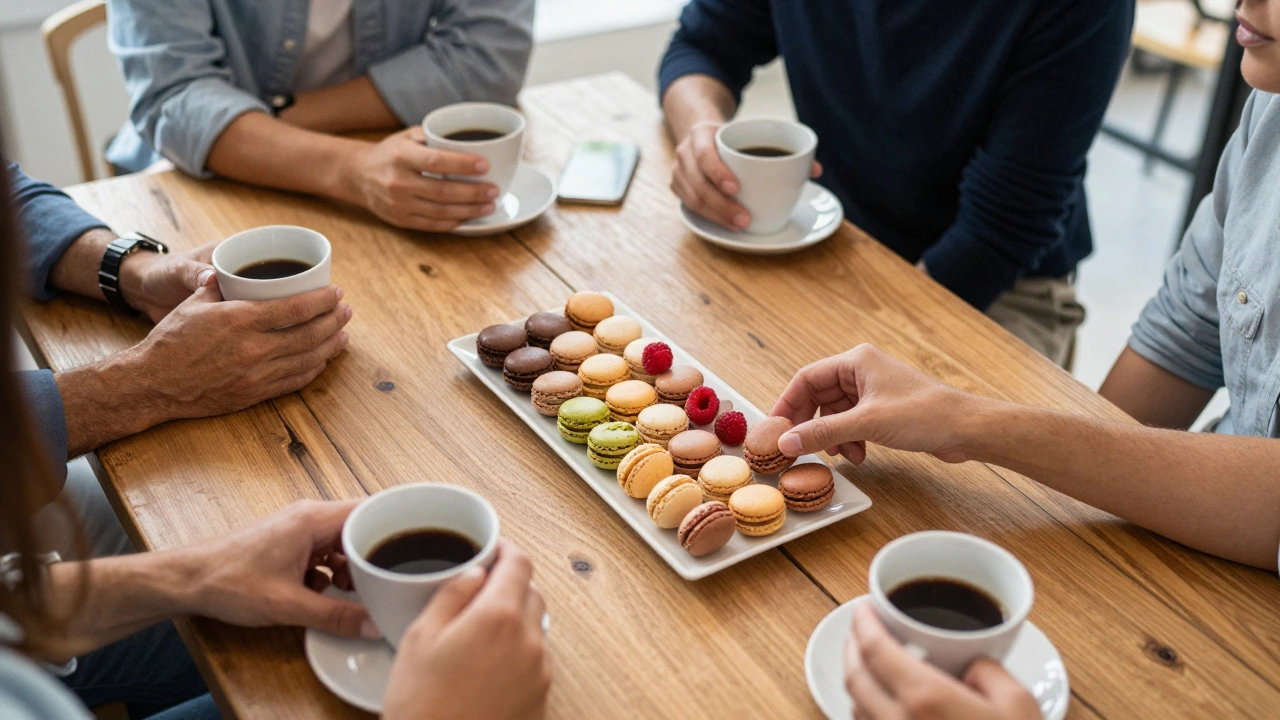
| Coffee Break / Tea Party | 3 - 4 | Macarons are the main carbohydrate source here. They pair directly with hot drinks. |
| Wedding Reception | 2 - 3 | Usually served alongside a larger cake or other petit fours. Less competition for attention. |
| Office Meeting | 1 - 2 | People are distracted, talking, and likely eating light snacks throughout the day. |
| Birthday Celebration | 3 - 5 | Celebratory mood leads to higher consumption. Kids may eat fewer, adults more. |
| Finger Food Dinner | 1 - 2 | Guests are already full from savory appetizers. Macarons are a light finisher. |
Consider the crowd's age group as well. Children generally have smaller appetites for sweets and may struggle with the texture of a dense almond shell. Plan for **one to two** per child. Adults, especially those who appreciate fine pastries, often gravitate toward the higher end of the spectrum. If you know your guest list includes serious dessert lovers, bump the average up by one.
The Flavor Factor: Variety Drives Consumption
Here is a secret that pastry chefs know: variety sells. If you only offer chocolate macarons, people will eat one or two and stop because the flavor becomes repetitive. If you offer twelve different flavors, people will feel compelled to try at least one of each unique option.
This is why the composition of your box matters as much as the quantity. A balanced selection encourages higher consumption rates. Aim for a mix of:
- Classic Flavors: Vanilla, Chocolate, Pistachio. These are safe bets that everyone enjoys.
- Fruit Flavors: Raspberry, Lemon, Strawberry. These provide acidity that cuts through the sweetness.
- Unique/Adult Flavors: Salted Caramel, Lavender, Earl Grey, or Rose. These intrigue guests and encourage them to take an extra piece to "try something new."
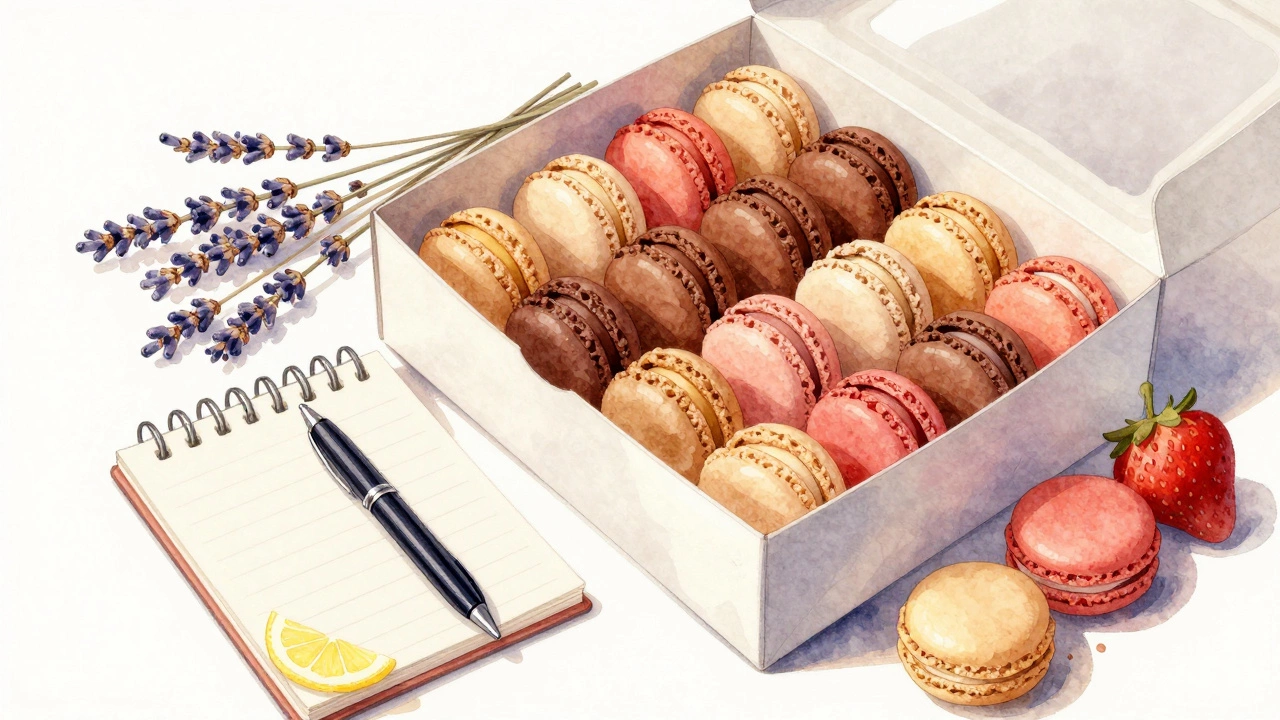
If you are buying from a bakery, ask for a mixed box. Most professional bakeries sell macarons in boxes of 6, 12, 24, or 48. Buying a large mixed box allows you to distribute flavors evenly. For example, if you have 20 guests and plan for 3 macarons each, you need 60 macarons. You could buy two boxes of 24 and one box of 12, ensuring a wide variety of colors and tastes on the platter.
Buying vs. Making: Cost and Logistics
Deciding whether to bake your own macarons or purchase them professionally affects your portion planning. Homemade macarons often vary slightly in size. Some might be smaller due to spreading issues, while others might be thicker. Professional macarons are uniform, usually weighing between 12 to 15 grams each.
If you are making them yourself, remember that yield is unpredictable. You might aim for 60 macarons but end up with 52 perfect ones and 8 cracked shells. Always bake a buffer of 10-15% extra. When buying, however, you get exactly what you pay for. This precision makes calculation easier but requires you to order accurately upfront.
Cost-wise, professional macarons range significantly. In major cities, a single high-end macaron can cost $2.50 to $4.00. For a party of 20 people at 3 macarons each, that is 60 macarons. At $3.00 per unit, you are looking at $180 for dessert. Compare this to homemade costs, where ingredients (almond flour, egg whites, sugar) might bring the cost down to $0.75 per macaron. That is a savings of over $100. However, factor in your time. Baking macarons requires skill, patience, and cleanup. Is your time worth $5 per hour? For many, the convenience of ordering out justifies the price, provided they calculate the portions correctly to avoid waste.
Presentation Matters: How to Serve Them
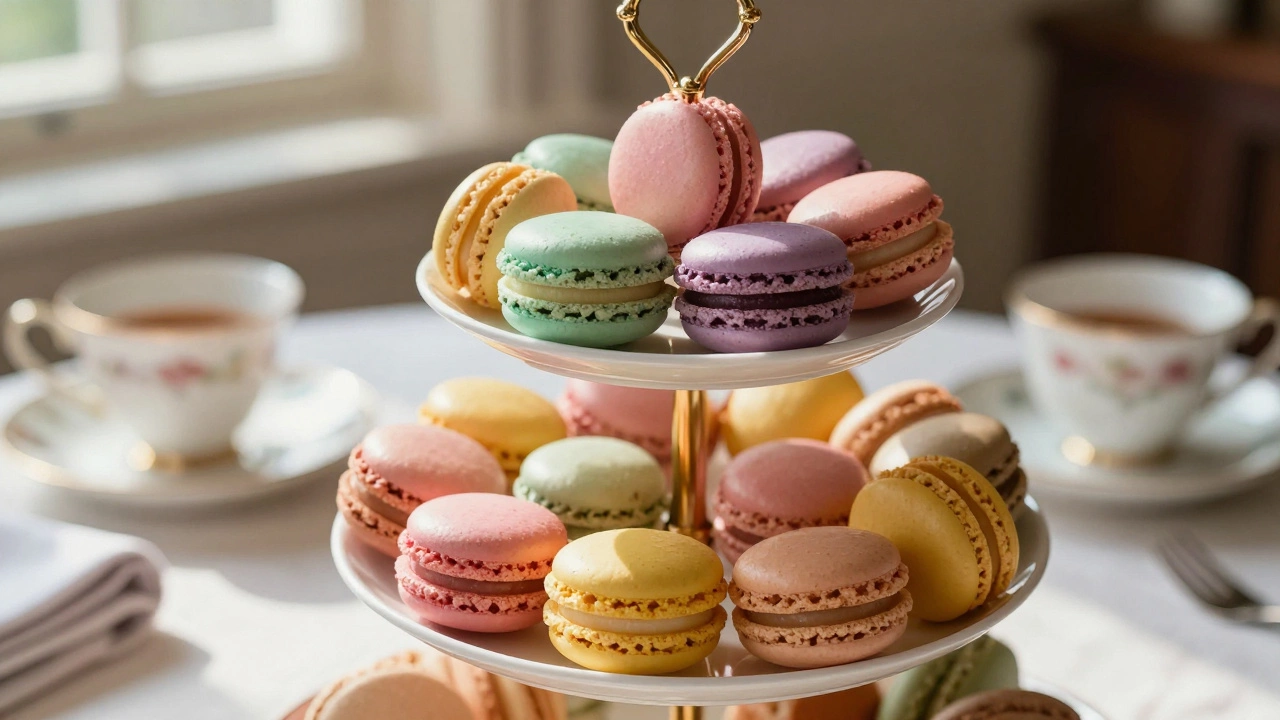
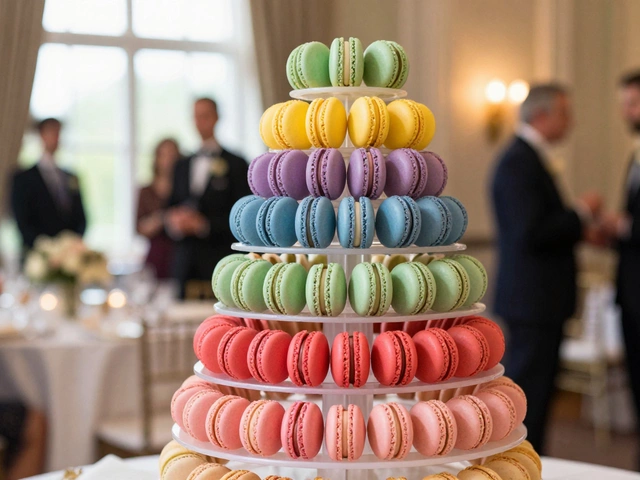
How you present the macarons influences how many people take. A towering pyramid display invites abundance. A flat plate with scattered macarons feels sparse. Use tiered stands to create visual height. This not only looks elegant but also prevents guests from seeing the bottom layer, which psychologically suggests there is plenty left.
Avoid serving macarons directly on paper napkins if possible. They look better and stay fresher on ceramic plates or wooden boards. Also, consider the timing. Macarons are best served at room temperature. Cold macarons straight from the fridge have hardened fillings and less aromatic shells. Take them out 30 minutes before serving to let the flavors bloom.
If you are worried about running out, keep a reserve box hidden away. Refill the display discreetly as it empties. This keeps the table looking inviting until the very last guest leaves. An empty plate signals scarcity, which can make guests feel rushed or unsatisfied. A full plate signals generosity.
Storage and Leftovers: Minimizing Waste
Even with careful planning, leftovers happen. Macarons have a shelf life, but it depends on storage. At room temperature, they last 2-3 days if kept in an airtight container. In the refrigerator, they can last up to a week. However, refrigeration dries out the shells. To mitigate this, place a slice of bread in the container with the macarons. The bread releases moisture, keeping the shells soft.
If you have significant leftovers, freeze them. Macarons freeze exceptionally well. Wrap them individually in plastic wrap, then place them in a freezer bag. They can be stored for up to a month. Thaw them in the fridge overnight, then bring to room temperature before eating. This is a great strategy for large events where you cannot predict exact attendance.
Another tip: gift the extras. Small boxes of 4 or 6 macarons make excellent party favors. Instead of throwing away leftovers, package them nicely with a ribbon. Guests love taking home a taste of the celebration, and you reduce waste. Just ensure you have enough boxes prepared beforehand.
Common Mistakes to Avoid
Planning macaron portions seems simple, but common errors lead to disappointment. First, underestimating the appetite of children. While kids eat less, they are enthusiastic. Don’t assume they won’t touch them. Second, ignoring dietary restrictions. Traditional macarons contain eggs and nuts (almonds). If you have guests with allergies, you need alternatives. Gluten-free options are easy since macarons are naturally gluten-free, but nut-free versions require hazelnut or rice flour substitutes. Always label your desserts clearly.
Third, failing to account for the "grabber." Every party has someone who takes four macarons at once. Plan for outliers. If you calculate strictly by the average, you will run short. Adding a 10% buffer accounts for these super-eaters and ensures no one goes hungry.
Finally, don’t neglect the beverage pairing. Macarons are sweet. Serving them with unsweetened black coffee, green tea, or sparkling water balances the palate. If you serve them with sugary sodas or sweet wines, guests will feel overwhelmed by the sweetness faster, leading to lower consumption. This might sound counterintuitive, but balancing flavors actually enhances enjoyment and allows guests to savor more pieces over time.
How many macarons should I buy for a wedding of 100 people?
For a wedding, plan for 2 to 3 macarons per person. Since macarons are usually part of a larger dessert spread including cake, 2 per person is often sufficient. For 100 guests, that means 200 to 300 macarons. Order 250 to be safe, allowing for some variety and a small buffer.
Are macarons suitable for a lunch party?
Yes, but limit the portion to 1 or 2 per person. Lunch meals are typically heavier, and guests may not have a strong appetite for dense sweets. Macarons work well as a light accompaniment to afternoon coffee or tea during a luncheon.
Can I make macarons ahead of time?
Absolutely. Macarons actually improve in flavor after resting for 24-48 hours, as the shells soften and absorb moisture from the filling. You can bake them up to a week in advance if stored properly in the refrigerator or frozen for longer periods.
What is the best way to transport macarons to a party?
Keep them flat and secure. Use rigid boxes designed for macarons. Do not stack them unless they are specifically packaged for stacking. Keep the box level during transport to prevent cracking. Avoid extreme temperatures; do not leave them in a hot car.
Do macarons go bad quickly?
Fresh macarons last 2-3 days at room temperature and up to a week in the fridge. Freezing extends their life to a month. Signs of spoilage include a sour smell, mold, or a dry, crumbly texture. Always check before serving leftovers.


Write a comment