

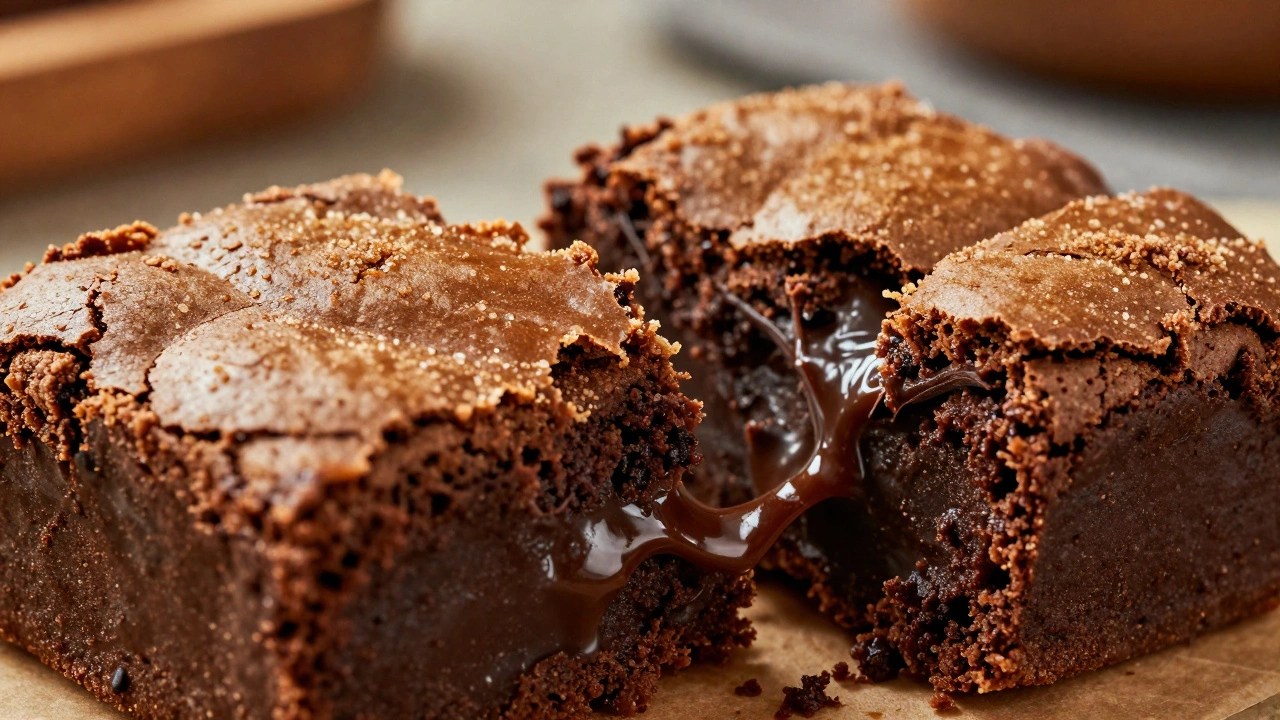
Brownie Texture Calculator
Design Your Perfect Brownie
Adjust the sliders below to determine the ideal ingredient balance for your desired texture.
There is a specific sound that happens when you bite into a perfect brownie is a dense, moist chocolate bar cookie known for its rich flavor and varying textures from fudgy to cakey. It’s a soft squish followed by a slight resistance. That texture is not an accident; it is the result of decades of culinary evolution and a chemical balance that triggers deep satisfaction in the human brain. You might wonder why this simple square of chocolate holds such a dominant place in bakeries, school cafeterias, and home kitchens worldwide.
The answer isn't just about sugar. It’s about versatility, nostalgia, and the unique way cocoa interacts with fat and flour. Unlike a pie or a complex layer cake, a brownie is accessible yet sophisticated enough to be elevated with toppings like sea salt or nuts. Let’s look at what makes this dessert so universally loved.
The Historical Accident That Created a Global Icon
To understand the brownie's rise, we have to look back to the late 19th century. The story usually points to Bertha Palmer was the hostess of the 1893 World's Columbian Exposition in Chicago who commissioned the creation of small, individual cakes. Legend has it that she wanted a dessert that could be eaten with fingers rather than a fork during her lavish luncheons. Her pastry chefs, working under pressure, may have accidentally overbaked a cake batter or forgotten to add leavening agents, resulting in a denser, moister treat.
Whatever the exact origin, the first printed recipe appeared in the 1904 Boston Cooking School Cookbook. At that time, "brownies" were often made with molasses or honey, not necessarily chocolate. It wasn't until the mid-20th century, with the mass production of baking chocolate and cocoa powder, that the modern chocolate brownie took shape. This timing coincided with the post-war boom in suburban American cooking, where quick, oven-baked desserts became a staple of family life. The brownie moved from high-society luncheon experiments to the everyday pantry because it required ingredients most households already had: eggs, butter, sugar, flour, and chocolate.
The Texture Spectrum: Fudgy, Cakey, and Chewy
One reason the brownie remains popular is its ability to cater to different textural preferences. Not everyone wants the same mouthfeel. This variety keeps the dessert fresh for repeat consumers. There are three main categories defined by their ingredient ratios:
- Fudgy Brownies: These contain more fat (butter or oil) and less flour. They are dense, moist, and almost melt in your mouth. The high fat content prevents gluten formation, keeping them tender.
- Cakey Brownies: These use more flour and often include baking powder or soda. They rise more, have a lighter crumb, and resemble a dense chocolate cake. They are preferred by those who find fudgy brownies too heavy.
- Chewy Brownies: This style often includes brown sugar, which adds moisture and acidity. Some recipes even add corn syrup or extra egg yolks to create a sticky, resilient texture that holds together well.
This range means that whether you prefer the snap of a truffle or the lift of a sponge, there is a brownie version for you. The flexibility allows bakers to experiment without losing the core identity of the product.
The Chemistry of Comfort: Why Chocolate and Fat Work
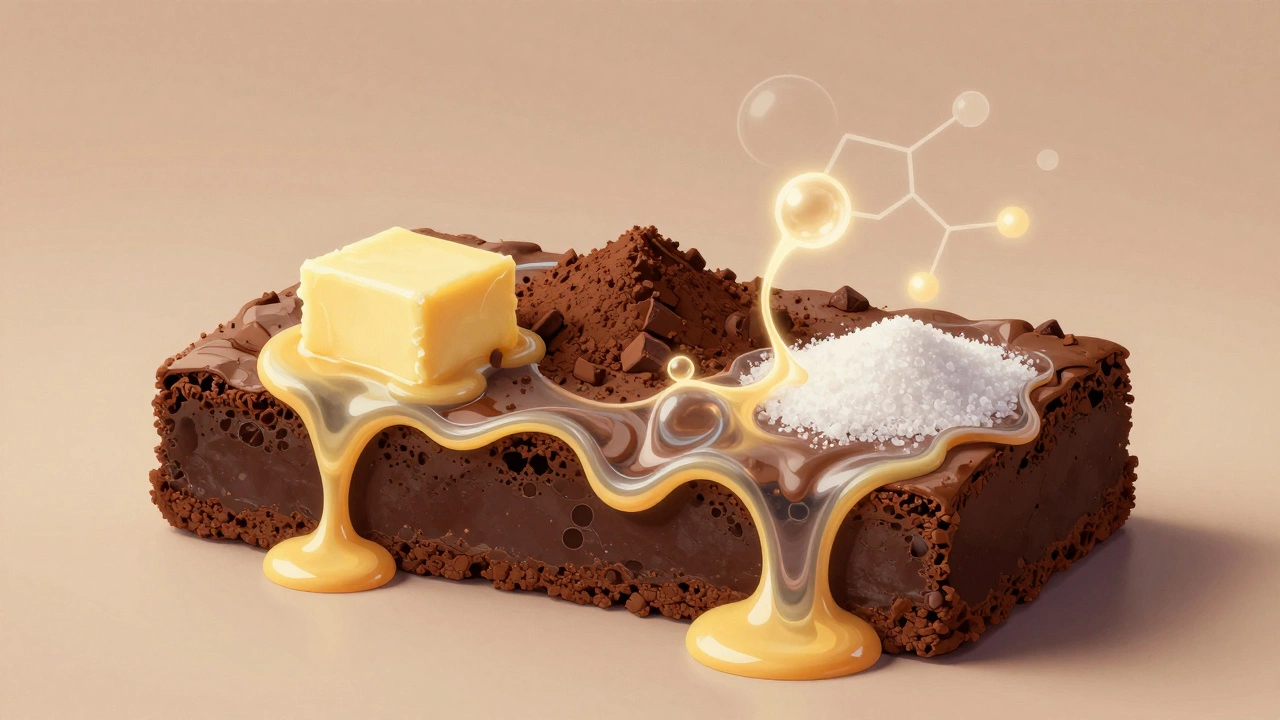
From a scientific perspective, the brownie is a masterpiece of food chemistry. The combination of cocoa butter is the natural fat found in cacao beans that provides a creamy texture and distinct melting point near body temperature. and melted dairy butter creates a luxurious mouthfeel. Cocoa butter melts at approximately 34°C (93°F), which is just below human body temperature. When you eat a brownie, the fats liquefy instantly on your tongue, releasing aromatic compounds that signal pleasure to the brain.
Sugar plays a dual role. It sweetens, yes, but it also retains moisture. In a fudgy brownie, the high sugar-to-flour ratio ensures that the starches don't dry out the structure. Additionally, the Maillard reaction occurs during baking, creating complex flavors beyond simple sweetness. If you toast walnuts before adding them, you introduce nutty, roasted notes that contrast with the bitter depth of dark chocolate. This layering of flavors-bitter, sweet, salty, and fatty-is biologically rewarding. Humans are hardwired to seek out energy-dense foods, and the brownie delivers exactly that in a compact form.
Nostalgia and Cultural Ubiquity
Beyond chemistry, there is the emotional connection. For many, the smell of baking brownies is tied to childhood memories. It is a scent associated with safety, comfort, and celebration. Unlike exotic desserts that require specialized skills, making brownies feels achievable. This accessibility fosters a sense of ownership. People don't just buy brownies; they make them, customize them, and share them.
Culturally, the brownie has transcended its American roots. In Europe, it is often viewed as a decadent treat, sometimes served with vanilla ice cream or whipped cream. In Asia, particularly in Japan and Korea, brownies have been adapted to local tastes, often featuring matcha, red bean, or yuzu flavors. This global adaptability proves that the concept is robust. It can absorb local ingredients while maintaining its structural integrity. The brownie is a canvas, not just a final product.
Versatility in Modern Cuisine
In recent years, the brownie has evolved from a simple box-mix dessert to a gourmet item. Chefs are using it in savory applications, such as brownie-crusted steaks or as a base for cheese plates. The density of a brownie makes it an excellent vehicle for toppings. A sprinkle of flaky sea salt enhances the chocolate's bitterness. A drizzle of caramel or peanut butter adds another layer of fat and salt. Even fruit compotes, like raspberry or cherry, cut through the richness, providing balance.
Dietary restrictions have also expanded the brownie's reach. Gluten-free brownies using almond flour or oat flour are now common, offering a grain-free option that is still moist and dense. Vegan versions utilize applesauce, mashed bananas, or aquafaba to replace eggs, proving that the texture relies more on technique than traditional animal products. This inclusivity ensures that the brownie remains relevant in a health-conscious market. It is no longer just a "guilt-inducing" snack but a customizable treat that fits various lifestyles.
| Type | Key Ingredient Ratio | Texture | Best Paired With |
|---|---|---|---|
| Fudgy | High Fat / Low Flour | Dense, Moist, Crackly Top | Vanilla Ice Cream, Whipped Cream |
| Cakey | Higher Flour / Leavening Agent | Light, Fluffy, Soft | Coffee, Tea |
| Chewy | Brown Sugar / Extra Egg Yolk | Sticky, Resilient, Dense | Hot Chocolate, Fruit Compote |
The Role of Quality Ingredients
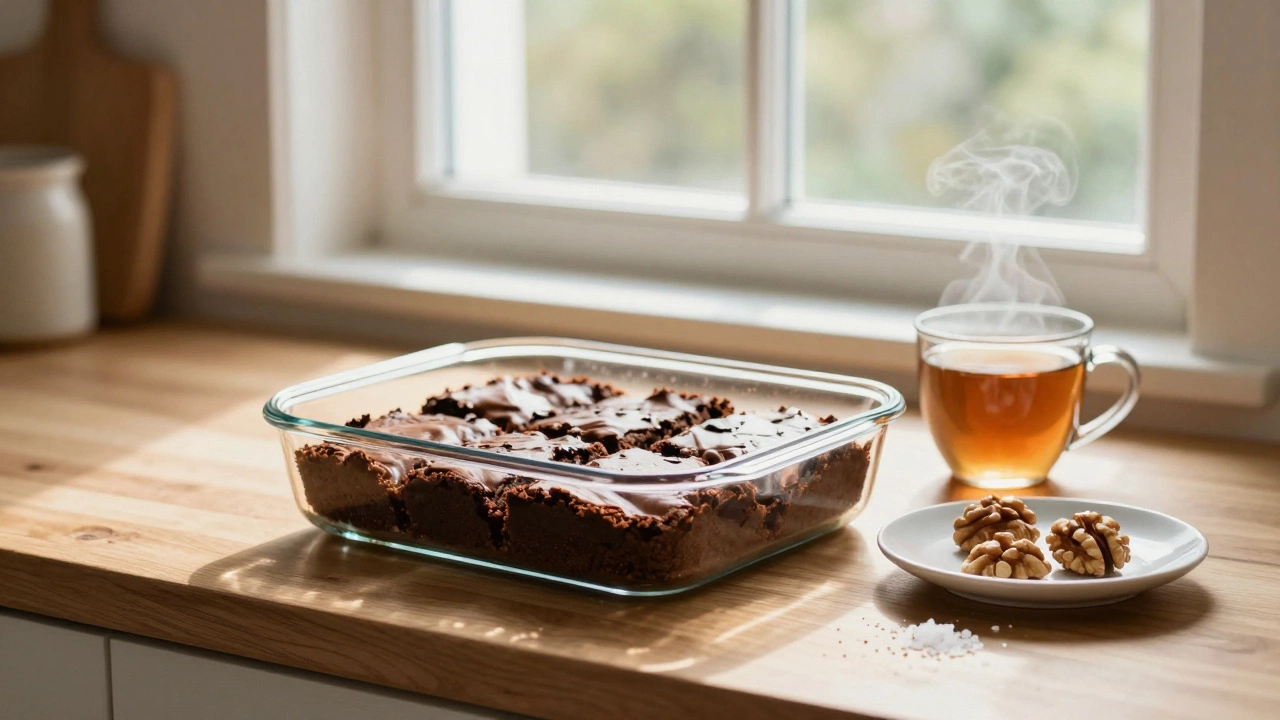
While convenience drives sales, quality drives loyalty. The difference between a mediocre brownie and a memorable one often comes down to the chocolate used. High-cocoa percentage bars provide a deeper, less sweet profile that appeals to adult palates. Using real butter instead of margarine adds a nutty, creamy dimension that vegetable oils cannot replicate. Even the type of sugar matters. Granulated white sugar creates a crisp crust, while brown sugar contributes moisture and chew.
Professional bakers often temper their chocolate or use a mix of melted chocolate and cocoa powder to achieve both intensity and stability. This attention to detail elevates the brownie from a casual snack to a refined dessert. Consumers are increasingly aware of these nuances, seeking out artisanal bakeries that highlight single-origin cocoa or house-made butters. This shift towards quality reinforces the brownie's status as a premium product.
Conclusion: The Enduring Appeal
The popularity of brownies is not a fleeting trend. It is built on a foundation of historical accident, scientific perfection, and emotional resonance. They are easy to make but hard to master, inviting endless experimentation. Whether you crave a fudgy bite with a crackly top or a cakey slice with coffee, the brownie delivers. Its ability to adapt to dietary needs, cultural flavors, and culinary innovations ensures it will remain a favorite for generations to come. Next time you bake a batch, pay attention to the texture. You are experiencing a perfect storm of chemistry and comfort.
What is the secret to a fudgy brownie?
The secret lies in the ratio of fat to flour. Use more butter or oil and less flour than a standard cake recipe. Avoid adding baking powder or soda, as these leavening agents create air pockets and a cakey texture. Melted chocolate also contributes to the dense, fudgy consistency.
Why do my brownies turn out cakey instead of fudgy?
This usually happens if you add too much flour or overmix the batter. Overmixing develops gluten, which makes the structure tougher and more bread-like. Also, ensure you are measuring flour correctly; spooning it into the cup rather than scooping directly prevents packing excess flour.
Can I make brownies without eggs?
Yes. Eggs act as a binder and add moisture. You can replace each egg with a quarter cup of unsweetened applesauce, mashed banana, or a tablespoon of ground flaxseed mixed with three tablespoons of water. Aquafaba (chickpea brine) is also an excellent vegan substitute for binding.
How do I get the crackly top on brownies?
A crackly top is created by using granulated sugar and beating the eggs and sugar together vigorously before adding other ingredients. This process incorporates air bubbles that rise to the surface and set during baking. Ensure your batter is smooth and glossy before pouring it into the pan.
What is the best chocolate to use for brownies?
For the richest flavor, use high-quality baking chocolate with a cocoa content between 50% and 70%. Dark chocolate provides a deep, complex flavor, while milk chocolate results in a sweeter, milder taste. Combining melted chocolate with cocoa powder can enhance both intensity and texture.



Write a comment