

Cheesecake Butter Checker
Check Your Butter
Determine if your butter meets professional cheesecake standards
When you’re making a cheesecake, the butter might seem like a tiny detail - just a few tablespoons to grease the pan or mix into the crust. But if you use the wrong kind, your cheesecake won’t just taste off. It might be grainy, greasy, or fail to set properly. The truth? Not all butter is created equal when it comes to cheesecake. And if you’ve ever ended up with a cracked, dense, or bland filling, the butter you used could be why.
The Role of Butter in Cheesecake
Butter does more than just add flavor. In the crust, it binds the crumbs together and creates that crisp, buttery base that holds up under the weight of the filling. In the filling itself, butter helps emulsify the cream cheese, sugar, and eggs. It adds richness, smoothness, and a subtle depth that vanilla or extract alone can’t match. But if the butter is too soft, too hard, or has the wrong fat content, it throws off the whole balance.
Most professional bakers and cheesecake makers - from New York delis to home bakers in Auckland - stick to one rule: unsalted, European-style butter. Here’s why.
Unsalted Butter: The Non-Negotiable Choice
Always use unsalted butter. Why? Because you control the salt. Cheesecake filling is delicate. Too much salt from salted butter can overpower the cream cheese and make the whole thing taste like a savory snack. Plus, salted butter varies wildly in salt content - some brands have 120mg per tablespoon, others 90mg. That’s enough to throw off your recipe if you’re following a precise one.
Also, salted butter often contains more water. That extra moisture can interfere with the setting process. Cheesecake relies on eggs and cream cheese to create structure. Extra water from the butter means more steam during baking, which leads to cracks and a spongy texture.
Why European-Style Butter Wins
European-style butter has a higher fat content - usually 82% to 86% - compared to standard American butter, which is around 80%. That might sound like a tiny difference, but in baking, small changes make big results.
Higher fat means less water. Less water means a smoother, silkier filling. It also means the butter melts more evenly into the cream cheese, creating a more homogeneous batter. This reduces air bubbles during mixing, which helps prevent cracks.
European butter also has a richer, more complex flavor. It’s often made with cultured cream, which gives it a slightly tangy, almost nutty note that complements the cream cheese beautifully. Think of it like the difference between plain yogurt and Greek yogurt - the extra richness changes everything.
In New Zealand, brands like Anchor European-Style or Lactantia are widely available and perfect for cheesecake. If you’re shopping overseas, look for Kerrygold, Plugrá, or President.
What About Salted Butter? Can You Use It?
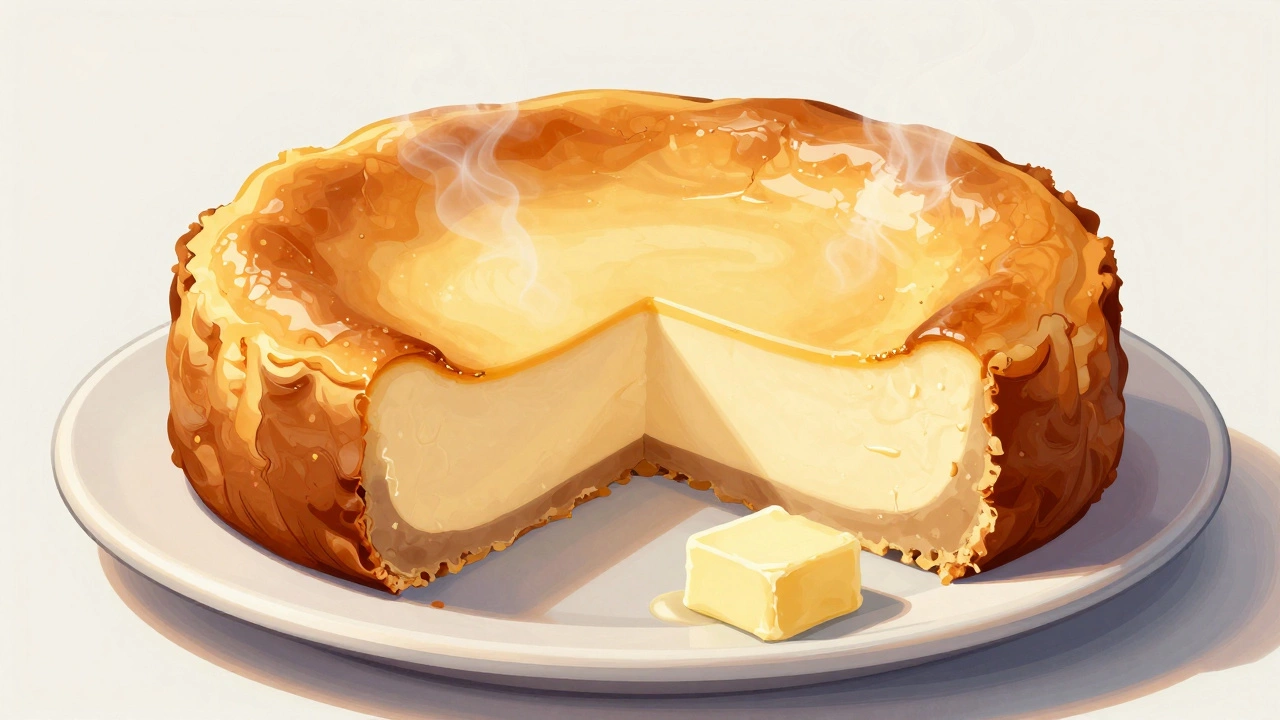
You can - but you shouldn’t. If you only have salted butter on hand, you can adjust. Reduce the salt in the recipe by half or skip it entirely. But even then, you’re still dealing with higher water content. Your crust might turn out soggy. Your filling might not set as firmly. And you’ll lose that deep, clean butter flavor.
One baker in Wellington tried making a New York-style cheesecake with salted butter and noticed her filling stayed slightly runny even after 8 hours in the fridge. She switched to unsalted European butter the next time - and the difference was night and day. "It set like a brick," she told me. "And the taste? Like buttery heaven."
Butter Temperature Matters Too
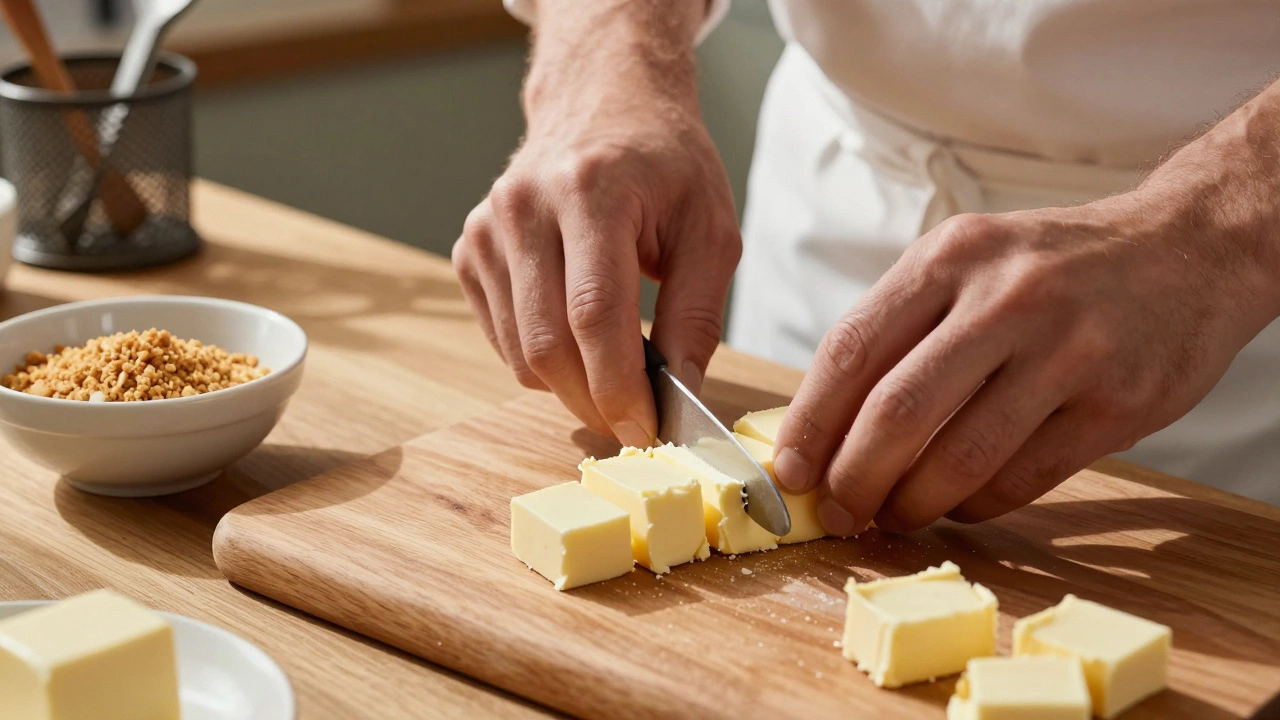
Even the best butter won’t help if you use it at the wrong temperature. For the crust, you want cold butter cut into small pieces. This helps create a flaky, crumbly texture - not greasy paste. Mix it with graham cracker crumbs until it looks like wet sand. Press it into the pan, then chill it for 30 minutes before baking.
For the filling, your butter must be at room temperature - soft enough to press a finger into easily, but not melted. If it’s too cold, it won’t blend smoothly with the cream cheese, leaving lumps. If it’s too warm, it turns the batter into soup. The ideal temp is around 65°F (18°C). Take it out of the fridge 45 minutes before you start baking.
Pro tip: Don’t microwave it to soften. Microwaving melts the butter unevenly. Instead, cut it into cubes and leave it on the counter. If you’re in a hurry, place the butter in a sealed zip-top bag and submerge it in warm (not hot) water for 5 minutes.
What About Margarine or Plant-Based Butter?
Don’t use margarine. It’s full of water, emulsifiers, and artificial flavors. It won’t give you the structure or flavor you need. The crust will be greasy. The filling will be flat and rubbery.
Plant-based butters? Same issue. Most are designed for spreading, not baking. They lack the fat structure needed for proper emulsification. Some high-fat vegan butters (like Miyoko’s or Earth Balance’s baking sticks) can work in a pinch - but they still alter the texture. You’ll get a denser, less airy cheesecake. And the flavor? Often too coconutty or off-putting.
If you’re vegan, skip traditional cheesecake. Try a cashew-based version instead. It’s a different dessert - and better suited to plant-based ingredients.
Real-World Testing: What Happens With the Wrong Butter?
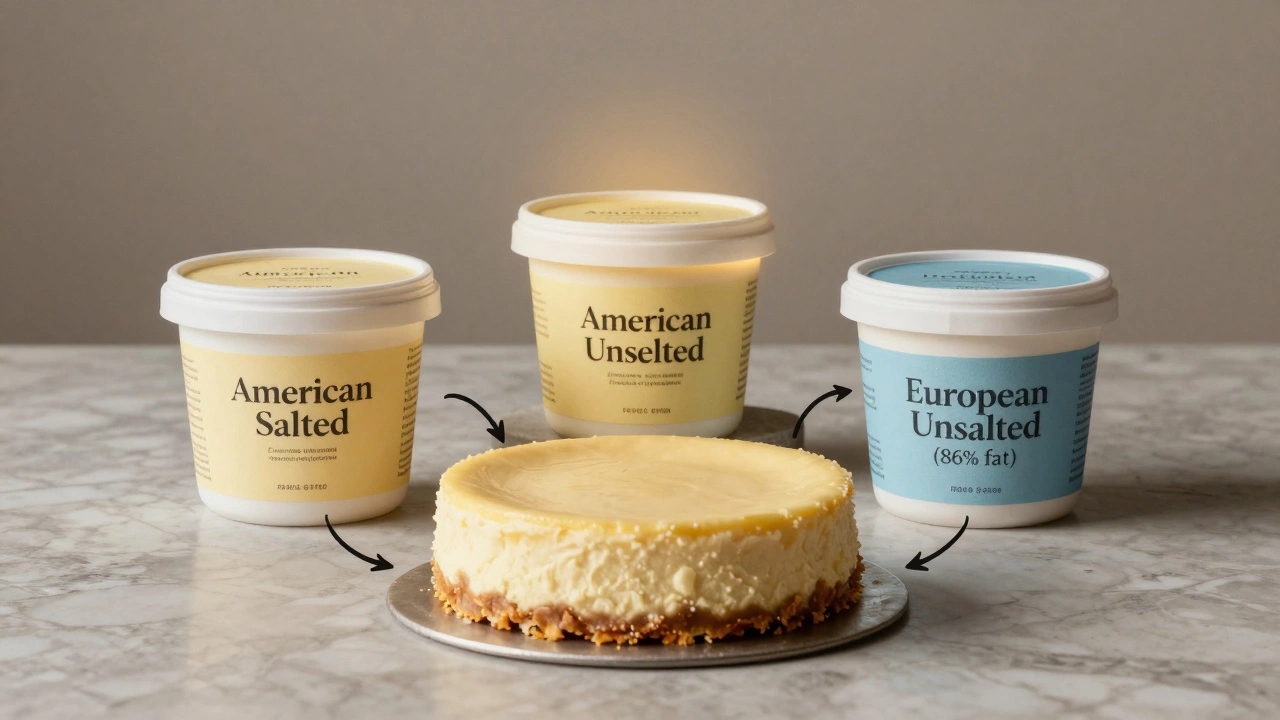
I tested three versions of a classic New York cheesecake:
- Standard American salted butter: Cracked badly. Filling was dense and slightly greasy. Tasted flat.
- Unsalted American butter: Better. Set well. No cracks. But flavor was mild - almost bland.
- Unsalted European-style butter: Smooth, glossy, no cracks. Rich, deep buttery flavor. Set like a firm custard. The difference was unmistakable.
The European butter version didn’t just taste better - it looked better. It held its shape when sliced. The crust stayed crisp. The filling didn’t weep. That’s the power of the right butter.
How to Choose the Right Butter
Here’s your simple checklist:
- Always unsalted - gives you control over salt levels.
- Look for 82%+ fat - check the nutrition label. If it says "80%" or less, skip it.
- Choose cultured - if it says "cultured cream" on the label, it’s ideal.
- Keep it cold for crust, room temp for filling - temperature is just as important as type.
- Avoid margarine, spreads, and plant-based butter - they’ll ruin the texture.
Final Thought: It’s Not Just Butter - It’s the Foundation
Cheesecake is a simple dessert, but it’s also a precision bake. Every ingredient has a job. Cream cheese gives structure. Eggs bind. Sugar sweetens. Butter? It’s the silent hero. It makes the crust come alive. It lets the filling glide, not slump. It turns a good cheesecake into a great one.
Don’t treat it like an afterthought. Use the right butter - and your cheesecake will thank you.



Write a comment