

Macaron Freshness & Storage Calculator
1. Select Filling Type
2. Where are you storing them?
Freshness Report
Choose a filling type and date to see results.
Expert Advice:
Waiting for input...
There is nothing quite like the first bite of a perfect macaron, with its crisp shell giving way to a chewy interior and rich filling. But we have all been there. You order a box for a party, or maybe you bake them yourself, and suddenly they are sitting on the counter three days later. Are they still good? Have they gone bad? Or are they just sad and stale?
The answer depends entirely on what is inside those delicate almond shells. Unlike cookies that can sit in a tin for weeks, macarons are perishable confections. Their lifespan ranges from a few days to several months, but only if you treat them right. Getting this wrong means wasting money and ruining your palate with soggy or rancid treats. Let’s break down exactly how long these French favorites last and how to keep them tasting fresh.
The Short Answer: How Long Do Macarons Last?
If you want the quick facts without the science lesson, here is the breakdown based on where you keep them:
- Room Temperature: 1 to 3 days (depending on the filling).
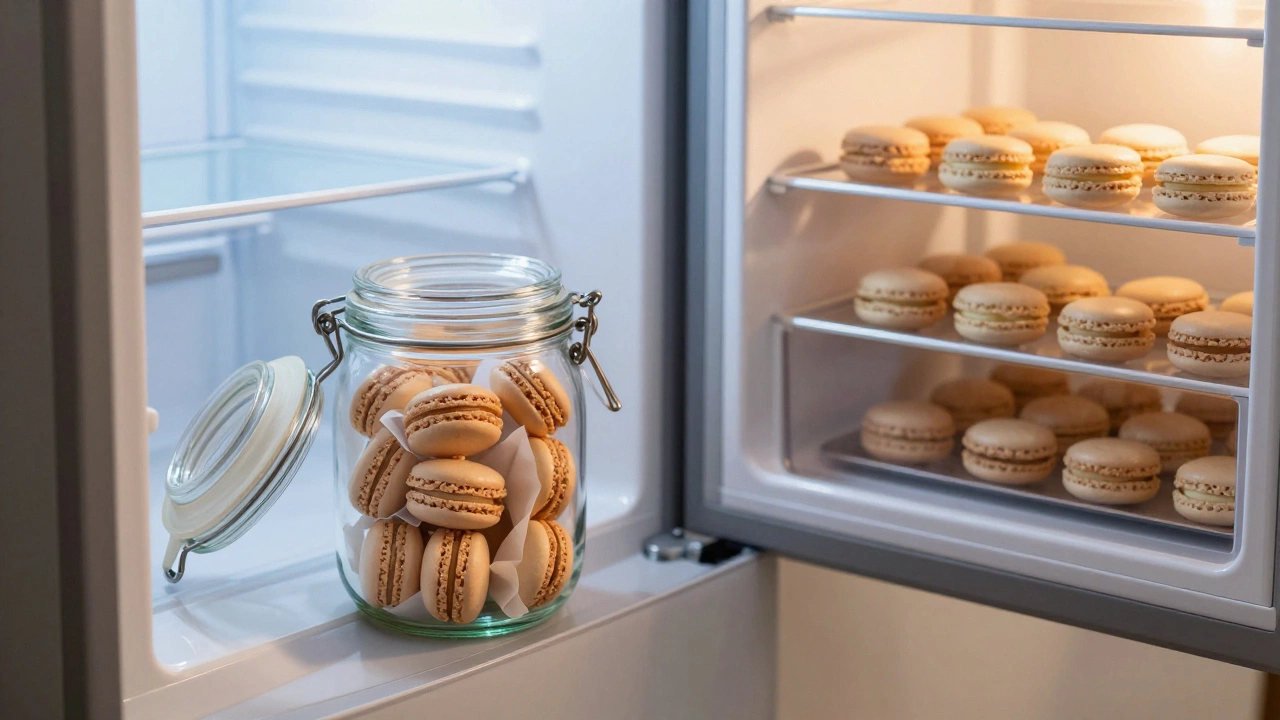
- Refrigerator: 5 to 7 days.
- Freezer: Up to 3 months.
These numbers assume the macarons were stored properly in an airtight container. If you left them out on a plate uncovered, their window of freshness shrinks significantly. The key variable here is the filling. A ganache-filled macaron will behave differently than one filled with fruit jam or buttercream.
Why Fillings Determine Freshness
You cannot judge a macaron’s shelf life by its shell alone. The filling acts as both the flavor center and the primary spoilage risk. Think of the shell as a protective casing, but the filling is the clock ticking down.
Dairy-based fillings like buttercream, cream cheese, or whipped cream are highly perishable. These contain moisture and proteins that bacteria love. If you leave a macaron with a heavy cream filling at room temperature for more than 24 hours, you are risking food safety issues, not just texture problems. These must go straight into the fridge after purchase or baking.
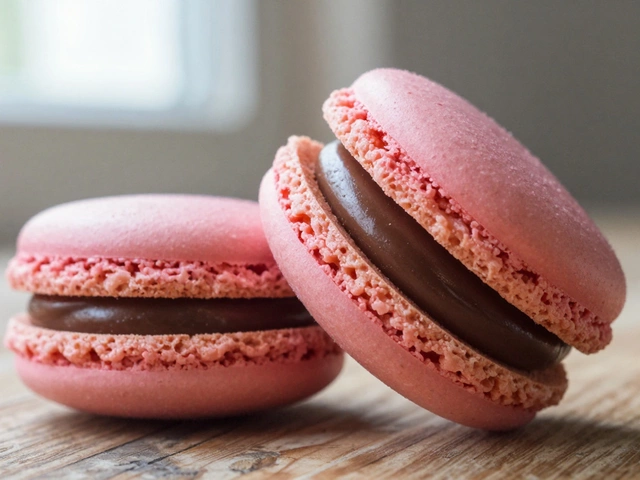
Ganache fillings (chocolate and cream) are slightly more stable due to the high sugar and fat content, which act as preservatives. They can often survive at room temperature for up to 3 days, provided the environment isn’t excessively hot or humid. However, once the chocolate starts to bloom or the texture becomes grainy, it is time to toss them.
Fruit-based fillings present a different challenge. Fresh fruit purees introduce high water content. This moisture migrates into the almond shell, causing it to become soft and lose its signature crunch within hours. Jam-filled macarons last longer because the pectin and sugar in jams create a barrier against moisture migration, allowing them to stay fresh for about 3 days at room temperature.
Storage Methods That Actually Work
Storing macarons is not just about throwing them in a box. It is about controlling humidity and temperature. Here is how to do it correctly for each scenario.
Room Temperature Storage
This method is best for short-term enjoyment, usually within 24 to 48 hours. Place your macarons in an airtight container. Do not stack them directly on top of each other if you can avoid it; use parchment paper between layers to prevent sticking and crushing. Keep the container away from direct sunlight and heat sources. If your kitchen is above 25°C (77°F), skip this method and go straight to the fridge.
Refrigeration: The Standard Approach
For most macarons, especially those with dairy or fruit fillings, the refrigerator is your best friend. Here is the trick: condensation is the enemy. When you take cold macarons out of the fridge, warm air hits the cold surface, creating tiny water droplets. This ruins the shell instantly.
To avoid this, let the sealed container sit on the counter for 15 to 20 minutes before opening it. This allows the macarons to come closer to room temperature while still protected from the ambient humidity. Once opened, eat them within an hour. Do not put them back in the fridge after taking them out, as repeated temperature cycling accelerates staling.
Freezing: The Secret to Long-Term Freshness
Believe it or not, freezing is the best way to preserve the quality of macarons for extended periods. In fact, many professional patisseries freeze their finished products to ensure consistency. To freeze macarons:
- Place them in a single layer on a baking sheet lined with parchment paper.
- Flash-freeze them for 1-2 hours until solid. This prevents them from sticking together.
- Transfer them to an airtight freezer-safe container or heavy-duty zip-lock bag. Squeeze out as much air as possible.
- Label with the date. They will maintain peak quality for up to 3 months.
When ready to eat, move the container to the refrigerator overnight, then follow the thawing process mentioned above (letting them sit in the sealed container at room temperature for 20 minutes before opening).
Signs Your Macarons Have Gone Bad
Sometimes, despite our best efforts, things go wrong. How do you know if it is safe to eat? Trust your senses.
Smell: Almond flour contains oils that can turn rancid over time. If your macarons smell sour, metallic, or like old paint, throw them away. This is distinct from the sweet aroma of vanilla or chocolate. Rancidity is a chemical change that cannot be fixed.
Texture: A fresh macaron should have a slight resistance when you bite into the shell, followed by a tender chew. If the shell is rock hard, it has dried out completely. If it is mushy or slimy, moisture has compromised the structure, likely indicating bacterial growth or severe sogginess from improper storage.
Visual Cues: Look for mold. While rare in high-sugar environments, mold can appear on fruit-filled macarons stored too long in the fridge. Any fuzzy spots mean immediate disposal. Also, check for excessive "weeping"-if liquid pooling is visible around the filling, the structural integrity is gone, and the flavor balance is likely off.
Common Mistakes That Ruin Macarons Faster
We often blame the baker, but sometimes we are the problem. Here are three common errors that shorten shelf life dramatically.
Improper Maturation: Freshly baked macarons need to "rest" or mature for 24 to 48 hours in the fridge. During this time, the moisture from the filling migrates into the shell, creating that ideal chewy texture. Eating them immediately after assembly results in a dry, crumbly shell that feels stale even though it is fresh. Patience is part of the preservation process.
Using Weak Containers: Plastic Tupperware that doesn’t seal tightly allows odors from other foods in your fridge to penetrate the macarons. Macarons are porous; they absorb smells like onions or strong cheeses. Use glass containers with rubber gaskets or high-quality plastic designed for freezer storage.
Ignoring Humidity: Living in a humid climate like Auckland, New Zealand, requires extra vigilance. High ambient humidity causes the sugar on the shell to dissolve, making them sticky and prone to collapsing. In humid conditions, always refrigerate, even if the filling technically allows for room temperature storage.
Homemade vs. Store-Bought: Does It Matter?
Yes, it does. Commercial macarons often contain preservatives or stabilizers that extend their shelf life slightly compared to homemade versions. Homemade macarons rely purely on natural ingredients. While this makes them taste better, it also means they are more vulnerable to spoilage.
If you buy macarons from a bakery, ask about the filling. Many bakeries use stabilized creams that last longer. If you make them at home, assume the shortest shelf life for your specific filling type. When in doubt, freeze them. It is the safest bet for preserving that homemade magic.
Can I eat macarons that have been left out overnight?
It depends on the filling. If the macarons are filled with ganache or jam, they are likely safe to eat, though the texture may be slightly softer. If they contain buttercream, cream cheese, or fresh fruit, it is safer to discard them, as dairy and fresh produce can spoil quickly at room temperature, especially in warm climates.
Do I need to refrigerate macarons with chocolate filling?
Not necessarily. Chocolate ganache is relatively stable at room temperature for 2-3 days. However, refrigeration extends their life to about a week. If you live in a hot or humid area, refrigeration is recommended to prevent the chocolate from melting or blooming.
Why did my macarons become soggy in the fridge?
This is usually caused by condensation. When you take cold macarons out of the fridge into warm air, moisture forms on the shell. To prevent this, let the sealed container sit at room temperature for 15-20 minutes before opening it. This equalizes the temperature and prevents water droplets from forming on the shells.
Can I freeze macarons with fresh fruit filling?
It is not recommended. Fresh fruit has high water content, which expands when frozen and can cause the filling to separate or become watery upon thawing. Fruit purees or jams freeze better than whole fresh fruit pieces. For best results, stick to ganache or buttercream fillings for freezing.
How do I know if almond flour in macarons has gone rancid?
Rancid almond flour smells sour, bitter, or like old crayons/paint. Fresh almonds smell nutty and sweet. If your macarons have an off-putting odor, even if they look fine, the oils in the almond flour have oxidized, and they should not be consumed.
Write a comment