

Brownie Freshness Checker
Enter how long you've stored your brownies and their type to check their status.
Analysis Result
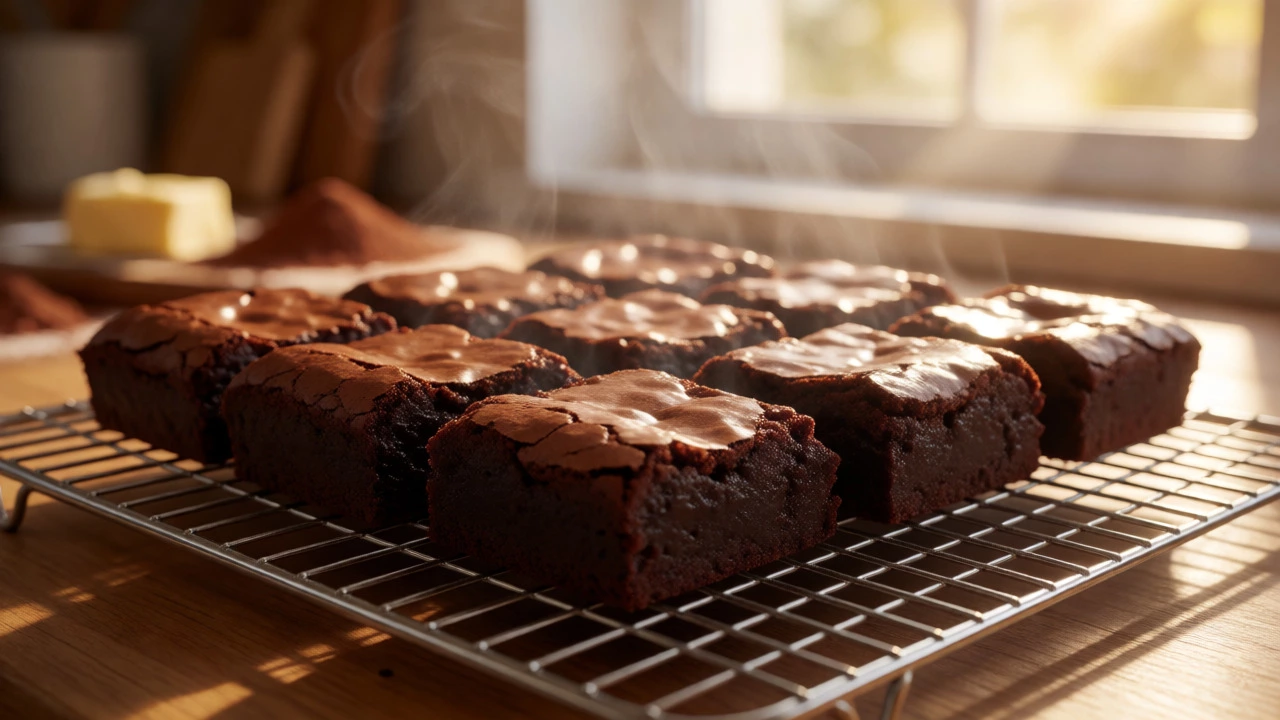
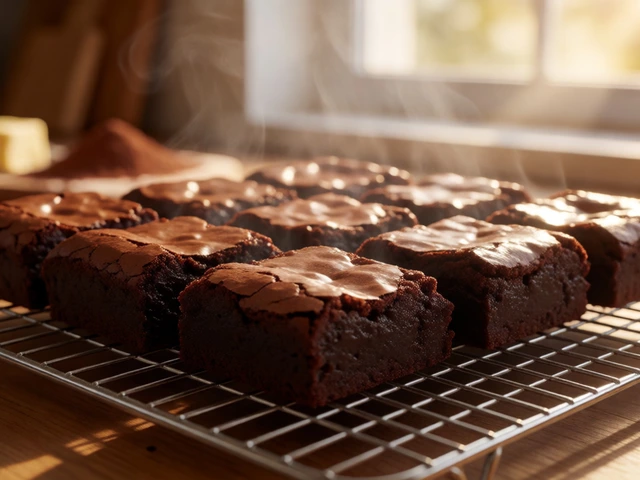
You just baked a batch of brownies that smell like heaven and taste even better. You’re tempted to leave them on the counter for days, maybe weeks, snacking whenever the mood strikes. But then reality hits: you find a forgotten corner piece three days later, and it’s hard as a rock or suspiciously damp. So, what’s the actual truth about brownie shelf life? How long can you keep them before they turn into bricks or mold?
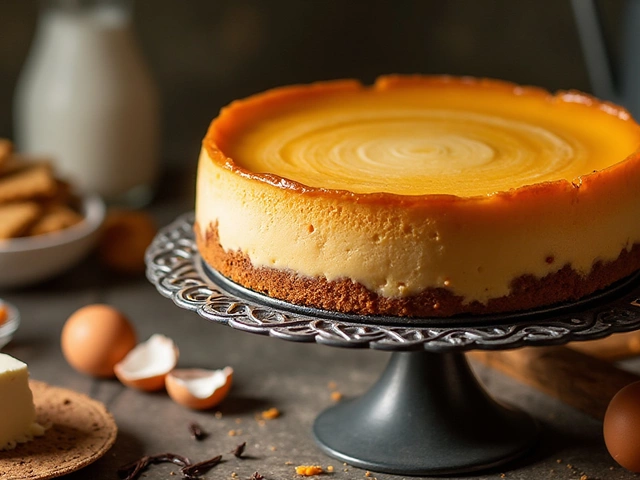
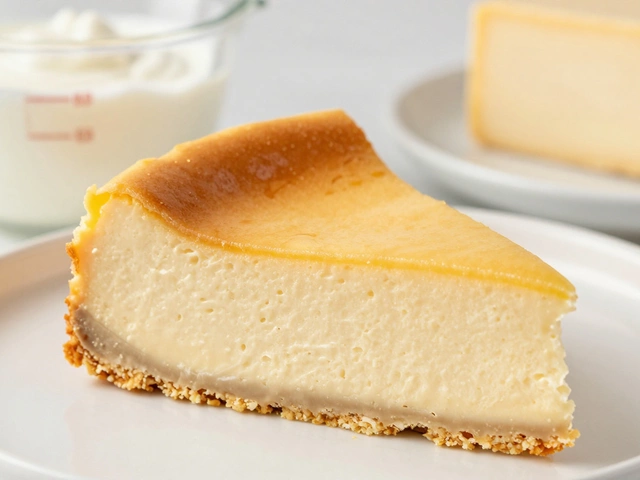
The short answer is: it depends entirely on where you put them and what’s inside them. A fudgy chocolate brownie behaves differently than a cakey vanilla one. A brownie with cream cheese swirls spoils faster than a plain dark chocolate square. Let’s break down exactly how long your treats stay fresh, how to store them properly, and how to spot when they’ve gone bad.
The General Rule of Thumb
Most standard brownies-whether made from a box mix or scratch-last about 3 to 4 days at room temperature if stored correctly. If you toss them in the fridge, you get an extra 1 to 2 weeks. Want to go longer? The freezer is your best friend, extending their life to 3 to 4 months without losing much flavor or texture.
Why the difference? It comes down to moisture control and ingredient stability. Brownies are dense, which helps retain moisture, but they also contain fats (butter or oil) and sugars that can degrade or attract bacteria over time. Leaving them exposed to air dries them out; sealing them too tightly while warm traps steam, making them soggy and prone to mold.
Room Temperature Storage: The Sweet Spot
For most people, the countertop is the easiest place to keep brownies. Here’s how to make sure they don’t dry out in 24 hours:
- Cool completely first: Never cover warm brownies. Trapped heat creates condensation, turning your crisp edges soggy and encouraging mold growth.
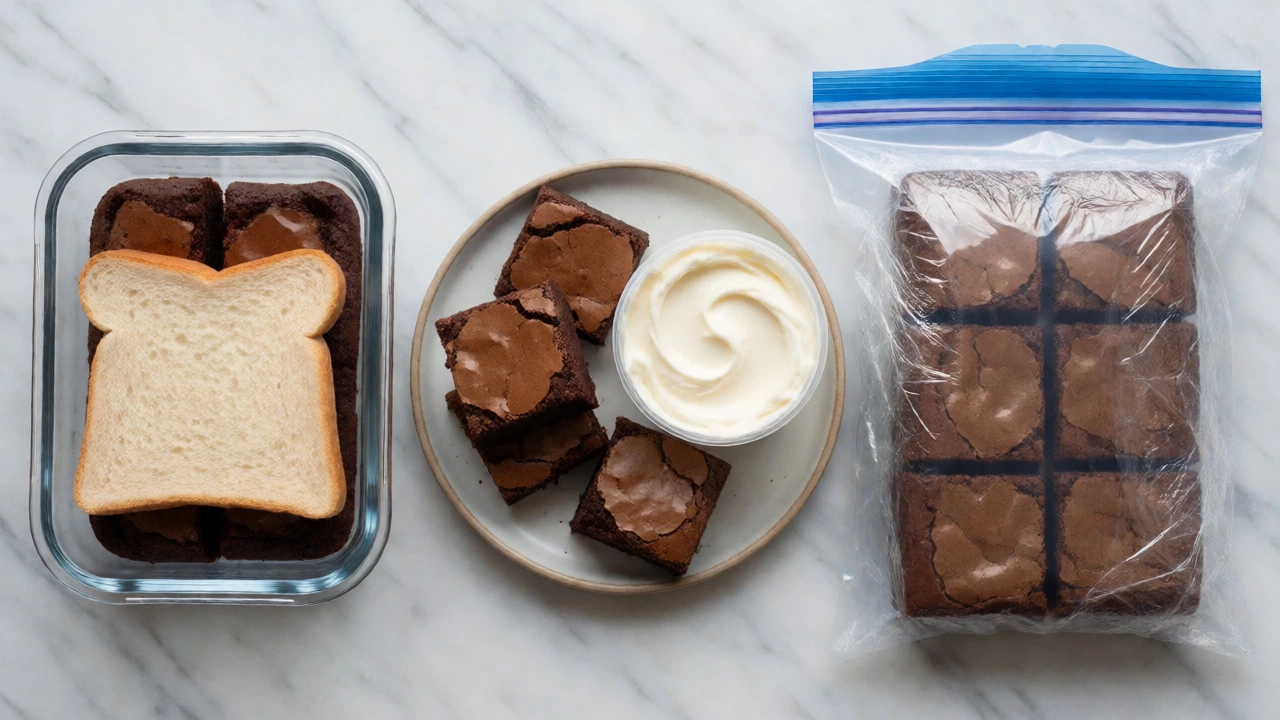
- Airtight container: Use a plastic or glass container with a tight-sealing lid. This blocks air, which is the main enemy of freshness.
- Paper towel trick: Line the bottom of the container with a paper towel. It absorbs excess moisture, preventing the bottom layer from getting sticky or wet.
- Keep away from heat: Store them in a cool, dark spot. Direct sunlight or proximity to the stove will melt the chocolate chips and soften the structure.
If you live in a very humid climate, consider adding a slice of white bread to the container. The brownies will absorb moisture from the bread, keeping themselves soft while the bread turns stale. Yes, it sounds weird, but it works.
Fridge vs. Counter: Which Is Better?
This is a common debate among bakers. Refrigeration slows down bacterial growth, especially for brownies with perishable fillings like cream cheese, fruit, or whipped toppings. However, cold temperatures accelerate starch retrogradation-a fancy term for when starches recrystallize, making baked goods feel dry and crumbly.
| Storage Location | Standard Chocolate Brownies | Cream Cheese/Fruit Brownies | Texture Impact |
|---|---|---|---|
| Countertop | 3-4 Days | 1-2 Days | Softest, risk of drying out |
| Refrigerator | 5-7 Days | 5-7 Days | Denser, firmer, potentially dry |
| Freezer | 3-4 Months | 2-3 Months | Best preservation, needs thawing |
So, should you refrigerate? Only if necessary. If your brownies have dairy-heavy add-ins or you need them to last more than four days, the fridge is safer. For pure chocolate brownies, the counter usually offers a better eating experience. If you do refrigerate them, bring them to room temperature for 30 minutes before serving to restore some softness.
Freezing Brownies for Long-Term Storage
Freezing is surprisingly effective for brownies because their high fat and sugar content protects the structure from ice crystal damage. Unlike cakes, which can become grainy, brownies often emerge from the freezer tasting almost identical to fresh-baked.
Here’s the pro method for freezing:
- Slice first: Cut the brownies into individual portions before freezing. This lets you grab one snack without thawing the whole batch.
- Wrap individually: Wrap each piece tightly in plastic wrap. Press the wrap directly against the surface to eliminate air pockets.
- Double protect: Place the wrapped pieces in a heavy-duty freezer bag or an airtight container. Squeeze out as much air as possible.
- Label and date: Write the date on the bag. While they’re safe indefinitely, quality peaks within 3 months.
To serve, let them sit at room temperature for 1-2 hours. Don’t microwave frozen brownies unless you want a rubbery texture; gradual thawing preserves the fudge-like consistency.
Signs Your Brownies Have Gone Bad
How do you know if that week-old brownie is still edible? Trust your senses. Spoilage isn’t always obvious, but there are clear red flags:
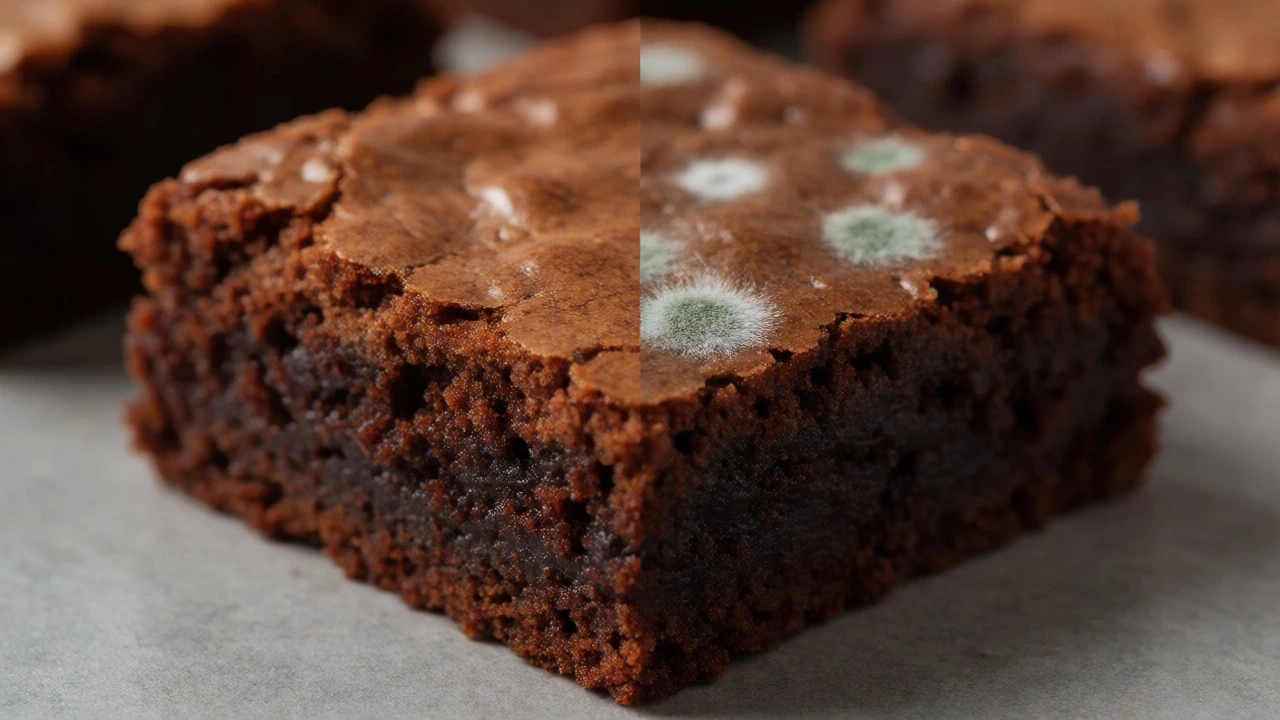
- Mold: Look for fuzzy spots, usually green, white, or black. Even if you cut off the moldy part, discard the whole batch. Mold roots penetrate deeper than visible spots.
- Smell: Fresh brownies smell like chocolate and butter. Rancid ones smell sour, yeasty, or like old oil. If it smells "off," toss it.
- Texture: Extreme hardness indicates staleness (not unsafe, just unpleasant). Sliminess suggests bacterial growth, especially in moist environments. If it feels slimy, throw it away.
- Taste: If it tastes bitter or metallic, the fats may have oxidized. Stop eating immediately.
Note that staleness is different from spoilage. A stale brownie is safe to eat but lacks joy. A spoiled brownie can make you sick. When in doubt, throw it out.
Extending Freshness: Tips and Tricks
You can hack the shelf life with a few simple adjustments during baking and storage:
Add moisture-retaining ingredients: Using sour cream, yogurt, or applesauce in your batter keeps brownies softer for longer. These ingredients hold water better than eggs alone.
Avoid overbaking: Pull brownies out when the center looks slightly underdone. They continue cooking from residual heat. Overbaked brownies start dry, so they hit the "stale" threshold faster.
Use high-quality chocolate: Cheap chocolate chips often contain stabilizers that affect texture. Real cocoa butter melts cleanly and stays smooth, resisting the gritty feeling that develops as fats separate over time.
Store unfrosted: Frosting, especially buttercream, can weep or change texture in the fridge. Add frosting only right before serving to keep both components fresh.
Can I leave brownies out overnight?
Yes, absolutely. Leaving brownies covered on the counter overnight is perfectly fine and actually preferred for texture. Just ensure they are fully cooled before covering to prevent sogginess.
Do brownies go bad in the fridge?
They don't "go bad" quickly in the fridge, but they lose quality. The cold makes them hard and dry. After about a week, they might taste stale even if no mold is present. Always check for smell and texture changes.
How do I revive stale brownies?
Microwave them for 10-15 seconds with a damp paper towel draped over them. The steam rehydrates the crust. Alternatively, use stale brownies in trifles, ice cream sandwiches, or brownie sundaes where texture matters less.
Do vegan brownies last longer?
Not necessarily. Vegan brownies often rely on oils and plant milks, which can behave similarly to dairy versions regarding spoilage. However, without dairy, they might resist bacterial growth slightly better at room temperature, but they can still go rancid due to vegetable oils. Follow the same 3-4 day rule.
Is it safe to eat brownies after 5 days?
If stored in an airtight container at room temperature, yes, they are likely safe but may be stale. If they were left uncovered or in a hot kitchen, inspect closely for mold or sour smells before eating.

Write a comment