

The Macaron History Timeline
Click on a historical event to reveal the details.
Welcome to the Macaron Timeline
The modern macaron is a result of centuries of culinary evolution. Select a year on the left to discover how this delicate treat transformed from a dense Italian cookie into the colorful French icon we know today.
You’re standing in a Parisian bakery, staring at a tower of pastel-colored discs sandwiched with ganache. You pick one up, expecting a delicate crunch that melts into sweetness. But here’s the twist: if you traveled back to the 16th century and asked for this exact treat, the baker would look at you blankly. They might hand you something else entirely-a single, cracked, almond-heavy cookie. So, who invented macarons? The answer isn’t a single person or a single country. It’s a centuries-long game of culinary telephone between Italy, France, and Austria.
Most people assume the macaron is purely French. And while the modern version we know today was indeed perfected in Paris, its DNA comes from somewhere else. To understand why your macaron looks the way it does, you have to trace the journey of an Italian monk, a Florentine princess, and a pastry chef named Pierre Desfontaines. This isn’t just food trivia; it explains why macarons are so finicky to bake and why they command such high prices on menus worldwide.
The Italian Roots: More Than Just Almonds
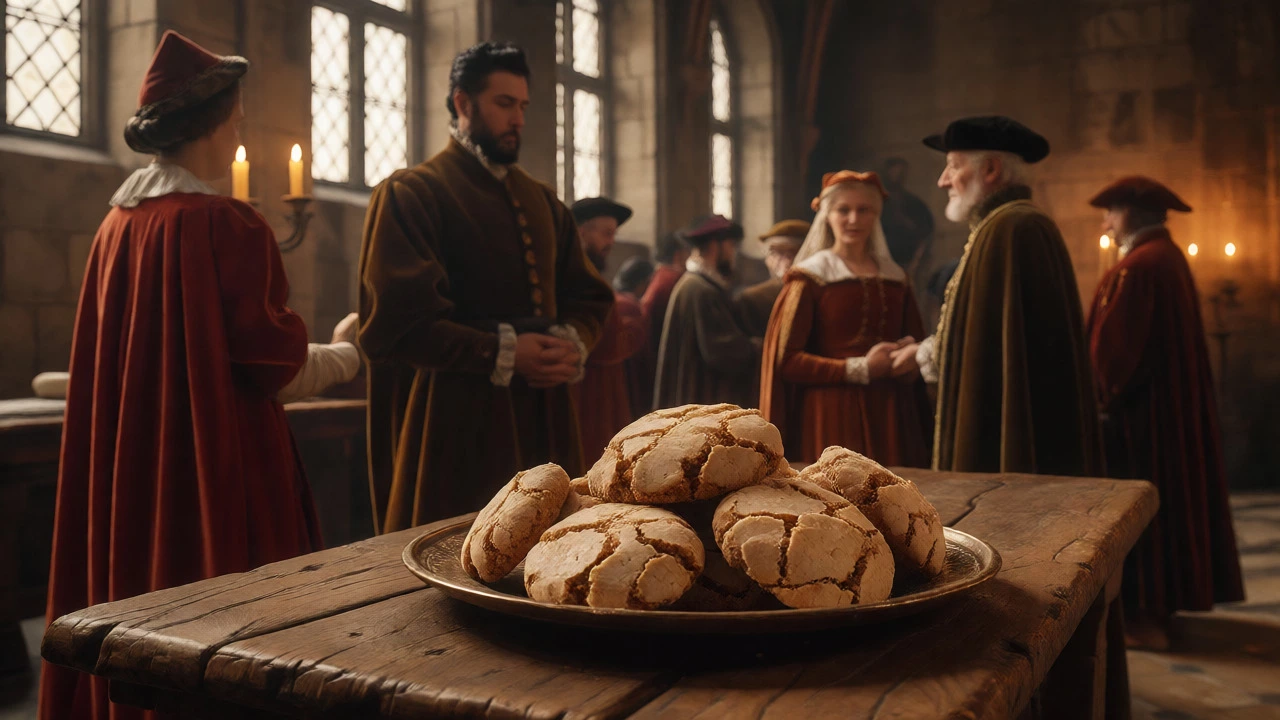
Let’s rewind to the 8th century. Monks in Venice were baking small, round cookies made from ground almonds, sugar, and egg whites. These weren’t the smooth, colorful treats you see now. They were rustic, dense, and often cracked on top. The Italians called them maccherone, which loosely translates to "paste" or "dough," referring to the texture of the almond paste used. These early versions were simple sustenance, not luxury items.
The real turning point came in 1533. Catherine de’ Medici, a powerful Italian noblewoman, married King Henry II of France. She didn’t just bring her wardrobe; she brought her chefs. Among them was a pastry cook who introduced these almond biscuits to the French court. For the next two centuries, these cookies remained a niche Italian import. They were known as "macaroons" (with an 'o') in English-speaking countries later on, but in France, they were simply seen as foreign curiosities. If you baked these original versions today, they’d taste closer to a dense, chewy biscotti than the airy confection we crave.
The French Evolution: From Single Cookie to Sandwich
Fast forward to the 1830s. Two brothers, Louis-Ernest and Jules-Louis Adam, opened a bakery in Nancy, France. Legend has it that during the French Revolution, two Carmelite nuns hid in the city and survived by selling their almond-based cookies to earn money. The Adam brothers saw potential in these plain, single-shell cookies. They refined the recipe, smoothing out the surface and standardizing the size. However, they were still serving them as individual cookies, not sandwiches.
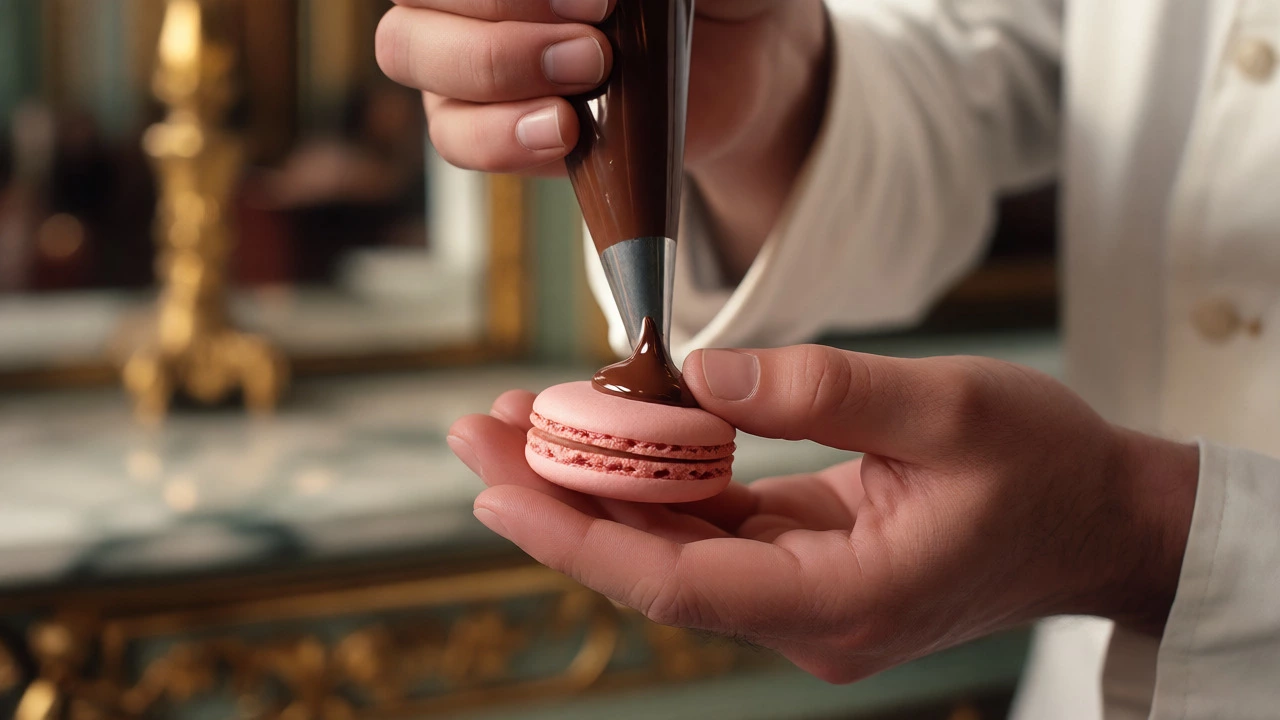
This brings us to the most critical moment in macaron history. In 1930, Pierre Desfontaines, the grandson of the founder of the famous Parisian tea house Ladurée, had a brilliant idea. He decided to pipe ganache onto one shell and sandwich it with another. This created the "macaron parisien." Why did he do this? Probably because the single shells were dry on their own. Adding a creamy filling added moisture, flavor complexity, and visual appeal. It turned a humble cookie into a sophisticated dessert.
| Era | Location | Key Figure | Characteristics |
|---|---|---|---|
| 8th Century | Venice, Italy | Monks | Dense, cracked, single shell, no filling |
| 1533 | Paris, France | Catherine de’ Medici | Introduced Italian recipe to French court |
| 1830s | Nancy, France | Adam Brothers | Refined shape, smoother tops, still single shell |
| 1930 | Paris, France | Pierre Desfontaines | Sandwich structure with ganache filling |
Why Is There Confusion Between Macarons and Macaroons?
If you’ve ever bought a "coconut macaroon" in the US, you’ve likely been confused. Are they the same thing? No. The spelling difference matters. The French macaron uses almond flour and is smooth. The Americanized macaroon typically uses shredded coconut and is rougher. This confusion stems from linguistic drift. When Italian recipes crossed borders, the pronunciation shifted. In the US, the term "macaroon" became associated with coconut cookies because coconut was cheaper and more available than almonds in certain regions. Don’t let a menu fool you: if it says "macaroon" and looks like a hairy brown ball, it’s not a French macaron.
The Austrian Connection: The Vienna Claim
Here’s where it gets messy. Some historians argue that the sandwich concept didn’t start in Paris. Enter Kastner, a Viennese bakery founded in 1848. Records suggest that Kastner was making filled almond cookies decades before Ladurée popularized them. Did Pierre Desfontaines steal the idea? Or did he independently reinvent it? Culinary history rarely gives clear answers. What we do know is that Ladurée marketed the product aggressively across Europe and America, cementing the "French" brand in our minds. Kastner’s version remained largely local until recent years. So, while the technique might have existed elsewhere, the global fame belongs to Paris.
Modern Science: Why Baking Them Is Hard
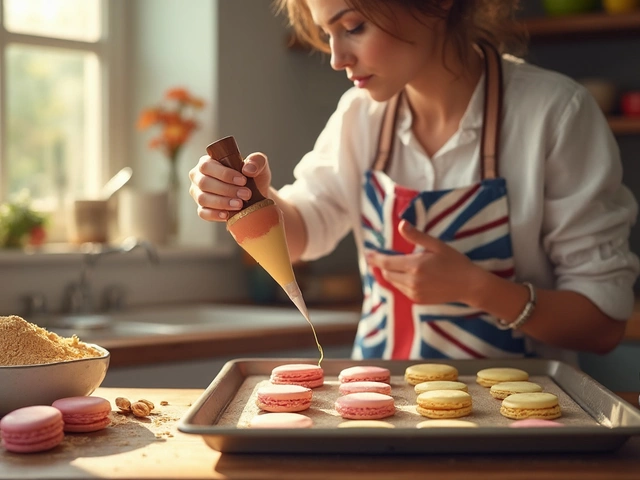
Knowing who invented them doesn’t help you bake them. The reason macarons are notoriously difficult lies in their chemistry. The meringue base relies on precise protein structures in egg whites. Too much heat, and they crack. Too little, and they don’t rise. The "feet"-those ruffled edges at the bottom-are formed by steam escaping from the bottom of the shell. If you skip the resting phase (letting the piped shells dry for 30-60 minutes), you won’t get feet. You’ll get flat, sad disks.
Pierre Desfontaines didn’t need a thermometer or a scale; he had experience. Today, bakers use digital scales and oven thermometers because home ovens vary wildly. A common mistake? Using granulated sugar instead of powdered sugar. Powdered sugar contains cornstarch, which stabilizes the mixture. Swap them, and your batter becomes too wet. Your macarons will spread into pancakes. Stick to the ratio: 1:1:1 by weight for almond flour, powdered sugar, and egg whites (though many pros add extra whites to age them).
How to Spot a High-Quality Macaron
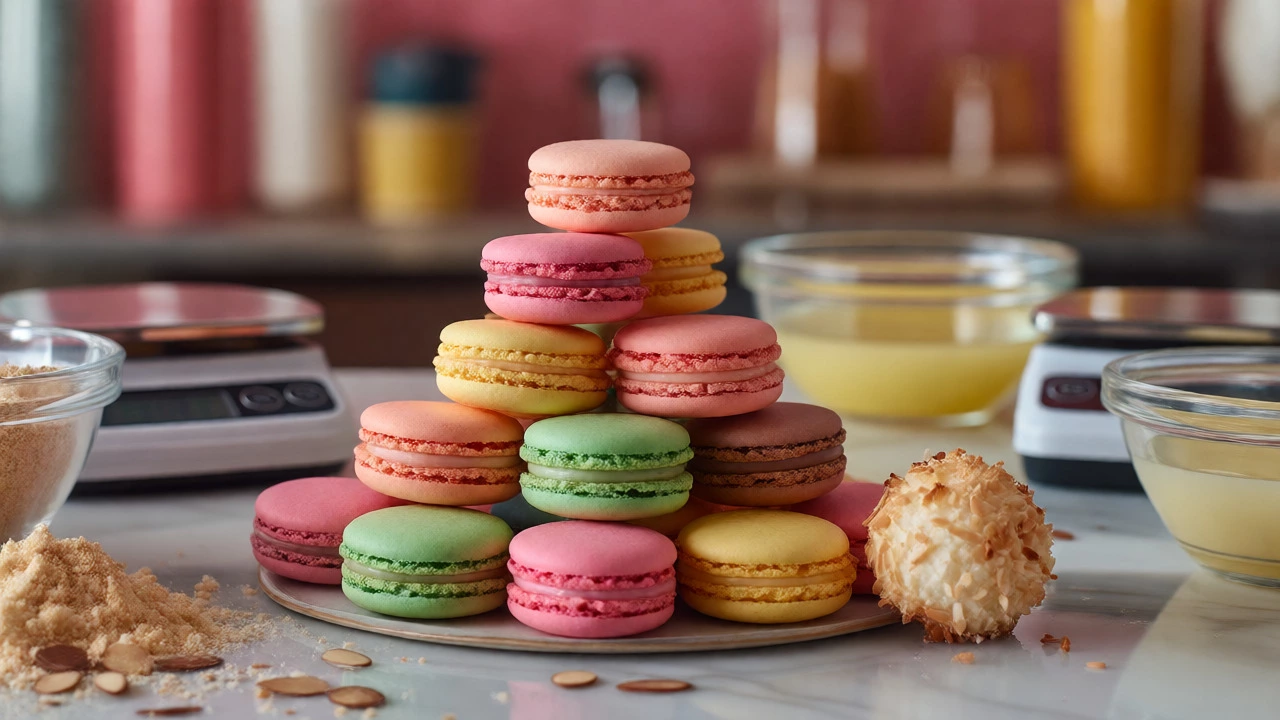
When you buy macarons, how do you know if the shop knows what they’re doing? Look for three things:
- Smooth Tops: The surface should be glossy and free of cracks. Cracks indicate rushed drying or too-high oven temperatures.
- Ruffled Feet: Those little bubbles at the base are essential. No feet means the macaron is undercooked or the batter was overmixed.
- Proper Ratio: The filling shouldn’t overflow. A good macaron has equal parts shell and filling. If the shell is paper-thin and the filling is massive, it’s a gimmick, not a classic.
Taste-wise, a fresh macaron should be crisp on the outside and chewy inside. If it’s hard all the way through, it’s stale. If it’s soggy, it’s been stored improperly. Humidity kills macarons. Keep them in an airtight container in the fridge, but let them come to room temperature for 15 minutes before eating. Cold macarons taste bland because your tongue can’t detect flavors well at low temperatures.
Global Variations: Beyond the Classic Flavors
While vanilla, chocolate, and raspberry remain the gold standards, global tastes have pushed boundaries. In Japan, matcha and black sesame are staples. In South Korea, shops sell giant "fat carons" stuffed with ice cream or fruit chunks. In New Zealand, where I live, we’ve seen manuka honey and feijoa flavors pop up. These innovations prove the macaron is a canvas, not a museum piece. However, purists argue that adding too much moisture (like fresh fruit) ruins the shelf life. A traditional macaron lasts about 3-5 days refrigerated. Fillings with high water content spoil faster.
So, who really invented the macaron? It’s a collaboration. Italy provided the dough. France provided the refinement and marketing. Pierre Desfontaines provided the sandwich structure that defines the modern experience. Next time you bite into one, appreciate the centuries of trial and error packed into that tiny shell.
Did Catherine de’ Medici invent the macaron?
No, she didn’t invent it. She helped popularize it in France by bringing Italian pastry chefs to her wedding in 1533. The cookies already existed in Italy for centuries prior.
What is the difference between a macaron and a macaroon?
A macaron (French) is a smooth, almond-flour sandwich cookie. A macaroon (Americanized) is usually a rough, coconut-based cookie. The spelling and ingredients differ significantly.
Who created the first sandwich macaron?
Pierre Desfontaines, head of pastry at Ladurée in Paris, is widely credited with creating the sandwich-style macaron in 1930 by piping ganache between two shells.
Why do my macarons crack on top?
Cracking usually happens if you didn’t let the shells rest long enough before baking. The skin must form to trap air underneath. It can also happen if your oven is too hot.
Are macarons gluten-free?
Yes, traditionally macarons are gluten-free because they use almond flour instead of wheat flour. However, always check for cross-contamination if you have celiac disease.
Write a comment