

Vegan Nutrition Gap Checker
Daily Habits & Sources
Check the boxes that apply to your daily routine.
Ready to Check?
Select your habits on the left and click analyze to see if you are covering your bases.
You’ve swapped the cheese for cashew cream and the steak for seitan. You feel lighter, maybe even energized. But have you ever looked at your blood test results or just felt a strange fatigue creeping in and wondered, what am I lacking as a vegan? It’s a valid question. While a plant-based diet is incredibly powerful for heart health and longevity, it isn’t automatically a perfect diet. If you’re not strategic about what goes on your plate, you can miss out on critical nutrients that your body simply cannot synthesize on its own.
The good news? You don’t need to eat meat to be healthy. You just need to know where to look. This guide breaks down the specific nutrients vegans often miss, why they matter, and exactly how to get them from plants-or supplements-without feeling like you’re eating cardboard.
Vitamin B12: The Non-Negotiable Supplement
If there is one nutrient that every vegan needs to take seriously, it is Vitamin B12, which is a water-soluble vitamin essential for nerve function and DNA production. Unlike other nutrients we’ll discuss, B12 is not found in reliable amounts in any whole food plant source. Algae and fermented foods like tempeh contain trace amounts, but they are inconsistent and often not in the active form your body can use.
Your body stores B12 in the liver, so you might not feel symptoms immediately. However, long-term deficiency leads to irreversible nerve damage, anemia, and cognitive decline. Since bacteria naturally produce B12, our ancestors got it from unwashed vegetables and raw milk. Modern hygiene and pasteurization have removed these sources. For vegans, supplementation is not optional; it’s mandatory.
- Methylcobalamin: This is the active form of B12. Look for this on supplement labels rather than cyanocobalamin if possible, though both are effective.
- Dosing: Most experts recommend either 250 mcg daily or 2,500 mcg twice weekly.
- Fortified Foods: Many breakfast cereals and nutritional yeasts are fortified with B12. Check the label to see if they provide at least 25% of the Daily Value per serving.
Don’t rely on feeling "fine." Deficiency is silent until it strikes hard. Get your levels checked annually and keep a bottle of sublingual B12 drops in your bathroom cabinet.
Iron: Heme vs. Non-Heme Absorption
Iron is another common concern. Meat contains heme iron, which is easily absorbed by the body. Plants contain non-heme iron, which is harder to absorb. Does this mean you’ll be anemic? Not necessarily, but you do need to play smart with your meals.
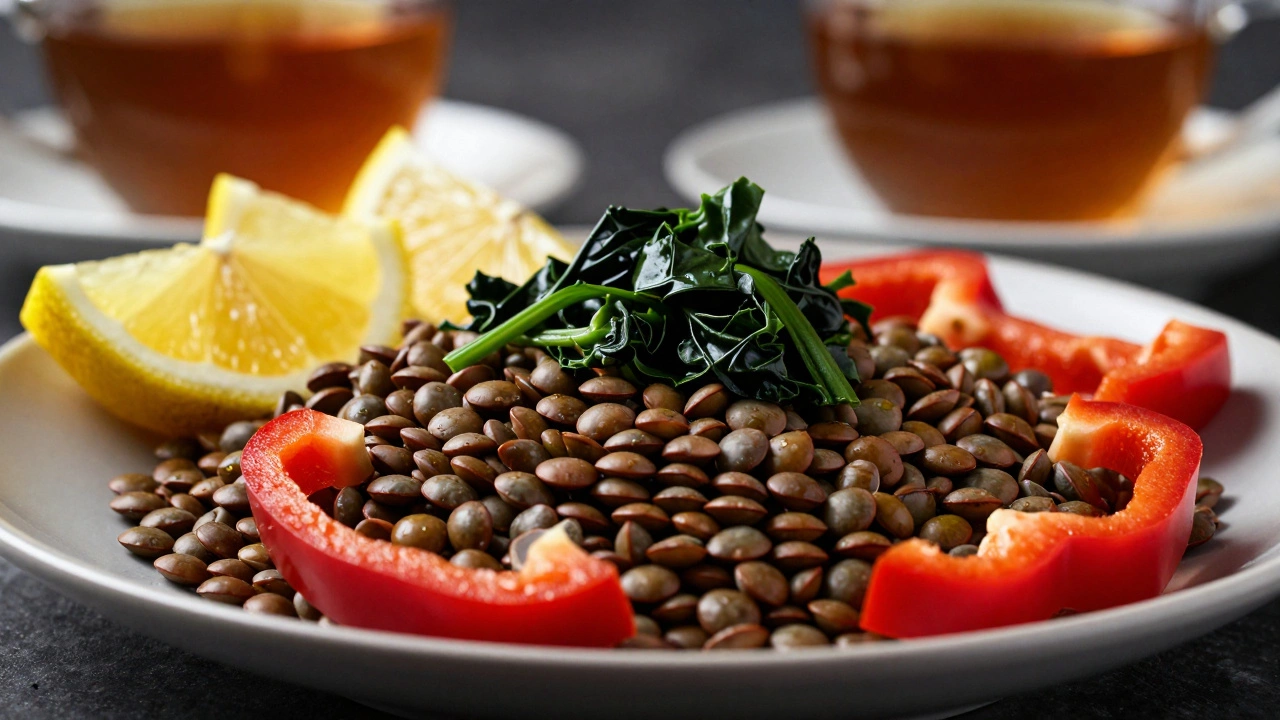
Non-heme iron is the type of iron found in plant foods such as lentils, spinach, and tofu. To boost absorption, you need an acid helper. Vitamin C is the best friend of non-heme iron. Eating a bowl of spinach (high in iron) with lemon juice or bell peppers (high in Vitamin C) can increase iron absorption by up to four times.
On the flip side, avoid drinking coffee, tea, or red wine with your iron-rich meals. The tannins and polyphenols in these beverages bind to iron and block absorption. Wait at least an hour after eating before sipping your morning matcha latte. Good plant sources include lentils, chickpeas, pumpkin seeds, and quinoa.
Omega-3 Fatty Acids: Beyond Flaxseeds
We’ve all heard that flaxseeds are great for Omega-3s. They are, but there’s a catch. Flaxseeds contain ALA (alpha-linolenic acid). Your body must convert ALA into EPA and DHA, the forms that actually reduce inflammation and support brain health. This conversion process is inefficient in humans, with less than 10% of ALA converting to EPA and almost none to DHA.
To bridge this gap, consider algae oil supplements. Algae oil is a direct source of DHA and EPA derived from marine algae. Fish get their Omega-3s from eating algae anyway, so skipping the fish makes the supply chain cleaner and more sustainable. Aim for 250-500 mg of combined EPA and DHA daily. If you prefer food sources, walnuts and chia seeds are excellent additions, but treat them as part of the solution, not the whole solution.
Calcium and Vitamin D: Bone Health Basics
Dairy isn’t the only source of calcium, but it is a convenient one. Without it, you need to be intentional. Many vegans underestimate their calcium intake because they assume leafy greens cover it. While kale and bok choy are high in bioavailable calcium, spinach and Swiss chard contain oxalates that block absorption. Stick to low-oxalate greens.
Tofu set with calcium sulfate is a powerhouse. A half-cup can provide over 20% of your daily requirement. Fortified plant milks and orange juice are also reliable staples. Pair calcium with Vitamin D, which helps your body absorb it. Since few foods naturally contain Vitamin D, and sunlight exposure varies by location (like Auckland’s winter), a Vitamin D3 supplement derived from lichen is crucial for most people, vegan or not.
Protein: Quality Over Quantity
The myth that vegans can’t get enough protein persists, but it’s largely outdated. The real issue isn’t total protein amount; it’s amino acid profile. Animal proteins are "complete," meaning they have all nine essential amino acids. Most plant proteins are "incomplete," lacking one or two.
However, you don’t need to meticulously pair rice and beans at every meal. As long as you eat a varied diet throughout the day, your body pools the amino acids. Focus on high-quality sources:
- Lentils and Legumes: High in fiber and protein.
- Spirulina: One of the few complete plant proteins.
- Hemp Seeds: Contain all essential amino acids.
- Quinoa: A complete grain protein.
If you’re an athlete or elderly, your protein needs are higher. In these cases, a pea protein isolate shake can ensure you hit your targets without feeling stuffed after dinner.
Zinc and Iodine: The Silent Deficiencies
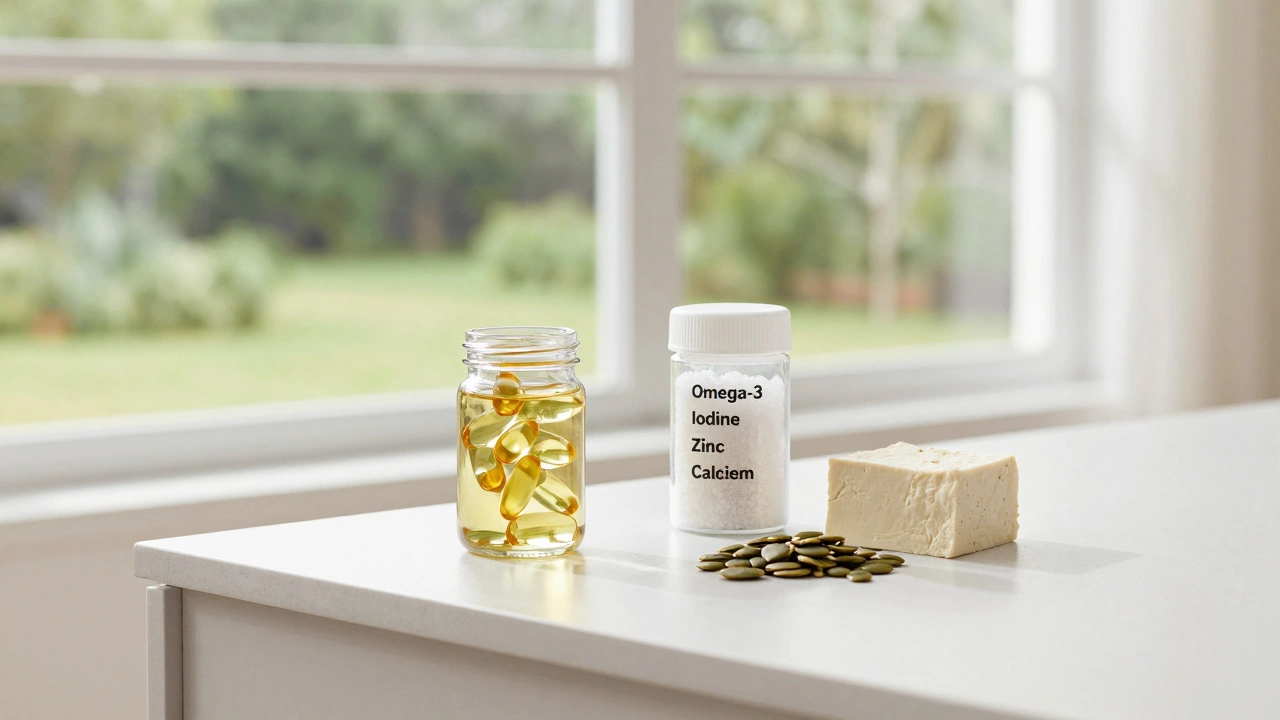
Zinc supports immune function and wound healing. Plant foods contain phytates, which inhibit zinc absorption. Soaking, sprouting, or fermenting grains and legumes reduces phytates and boosts zinc availability. Pumpkin seeds and cashews are top-tier sources.
Iodine is tricky because soil depletion has reduced iodine in many crops. Unless you live near the coast and eat seaweed regularly, you might be deficient. Iodine is vital for thyroid health. Using iodized salt instead of sea salt or Himalayan pink salt is the easiest fix. Just one teaspoon of iodized salt provides your daily requirement. Seaweed like nori is also rich, but kelp can contain dangerously high levels, so moderation is key.
| Nutrient | Best Food Sources | Absorption Tip |
|---|---|---|
| Vitamin B12 | Fortified nutritional yeast, cereals | Supplement daily (Methylcobalamin) |
| Iron | Lentils, spinach, pumpkin seeds | Pair with Vitamin C (lemon, berries) |
| Omega-3 (DHA/EPA) | Walnuts, chia seeds, algae oil | Take algae supplement for direct DHA |
| Calcium | Kale, bok choy, calcium-set tofu | Avoid high-oxalate greens like spinach for calcium |
| Iodine | Iodized salt, nori seaweed | Use iodized salt for cooking |
Practical Steps to Optimize Your Diet
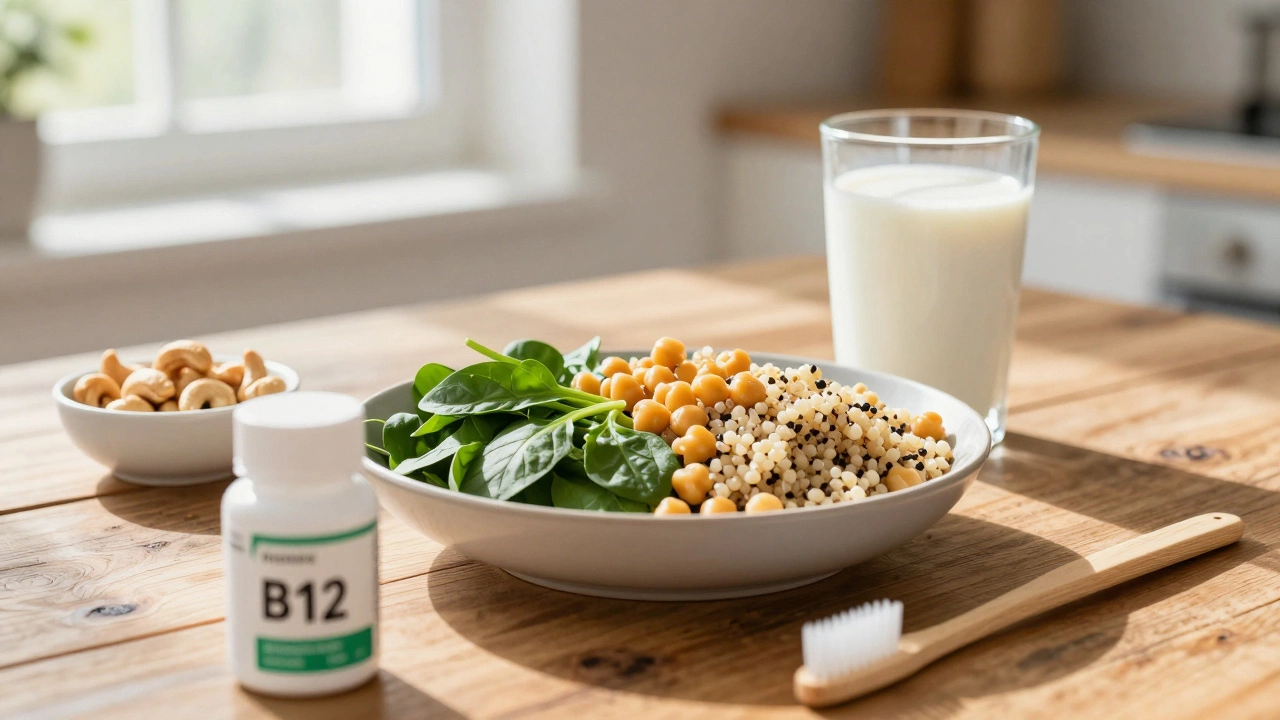
Knowing what you lack is step one. Fixing it requires small, consistent changes. Start by adding a handful of soaked pumpkin seeds to your morning oatmeal. Swap your regular salt for iodized salt. Buy a B12 supplement and put it next to your toothbrush so you never forget. Finally, consider getting a blood panel done once a year. It’s the only way to know for sure if your strategy is working. Being vegan doesn’t mean guessing; it means optimizing.
Do I really need a B12 supplement if I eat a balanced vegan diet?
Yes. There are no reliable, consistent whole-food plant sources of active Vitamin B12. Even if you eat fortified foods, the amounts can vary. Supplementation is the safest way to prevent irreversible nerve damage and anemia.
Can I get enough protein from plants without supplements?
Absolutely. By eating a variety of legumes, grains, nuts, and seeds throughout the day, you will consume all essential amino acids. Protein powder is helpful for convenience or high activity levels, but not strictly necessary for most people.
Why is algae oil better than flaxseed oil for Omega-3s?
Flaxseed oil contains ALA, which your body struggles to convert into EPA and DHA. Algae oil provides pre-formed DHA and EPA, which are directly usable by your brain and heart, making it a much more efficient source.
How can I improve iron absorption from plant foods?
Combine iron-rich plants like lentils or spinach with Vitamin C sources like citrus fruits, strawberries, or bell peppers. Avoid consuming coffee, tea, or calcium supplements during these meals, as they inhibit iron absorption.
Is iodized salt safe for vegans?
Yes. Most commercial iodized salts use synthetic potassium iodate, which is vegan-friendly. Always check the label to ensure no bone char or animal-derived anti-caking agents are used, though this is rare in standard table salt.





Write a comment