

Mascarpone Freshness Checker
Check the attributes of your cheese below. If any "Spoiled" signs are present, the cheese is unsafe.
Quick Safety Check
- Smell: Any sour, yeasty, or ammonia-like scent is a red flag.
- Sight: Look for mold (white, green, or pink) or an unusual yellowish tint.
- Texture: Avoid it if it's excessively slimy, watery, or has hard clumps.
- Taste: If it tastes bitter or sharp, spit it out immediately.
What Exactly Is Mascarpone?
Before we get into the spoilage signs, it helps to know what we're dealing with. Mascarpone is a soft, creamy Italian cheese made from cow's milk and cream, which is acidified with tartaric acid or citric acid during production. Unlike Mascarpone cheese's cousin, ricotta, it isn't whey-based; it's much closer to a very thick double-cream. Because of its high fat content (often around 75% fat), it's a dream for making Tiramisu, but that same richness means it can hide spoilage until it's quite advanced.
The Smell Test: Your First Line of Defense
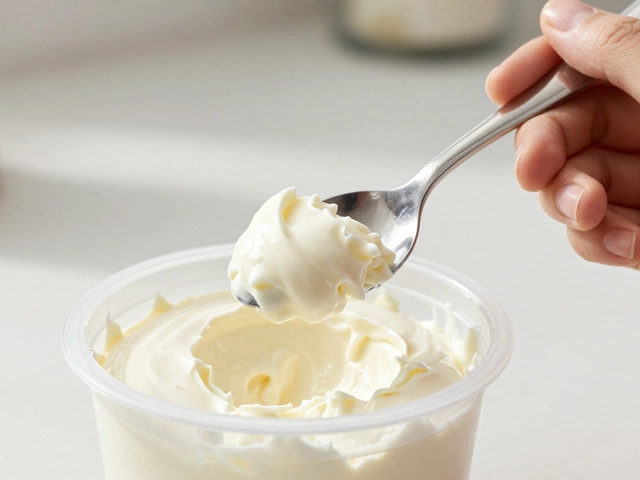
Fresh mascarpone has a very mild, slightly sweet, and milky aroma. It shouldn't be "loud." If you open the container and get hit with a scent that reminds you of old socks, vinegar, or a strong fermented funk, the cheese has shifted. This happens when bacteria begin to break down the fats and proteins in the dairy.
One common mistake is confusing a "tangy" smell with a "spoiled" smell. While some cheeses are naturally tangy, mascarpone should be buttery. If it smells like it's trying to be a sour cream or a Greek yogurt, it's likely past its prime. When in doubt, the "sniff test" is your most reliable tool because your nose is designed to detect the chemical markers of decay before your eyes can see them.
Visual Warning Signs to Look For
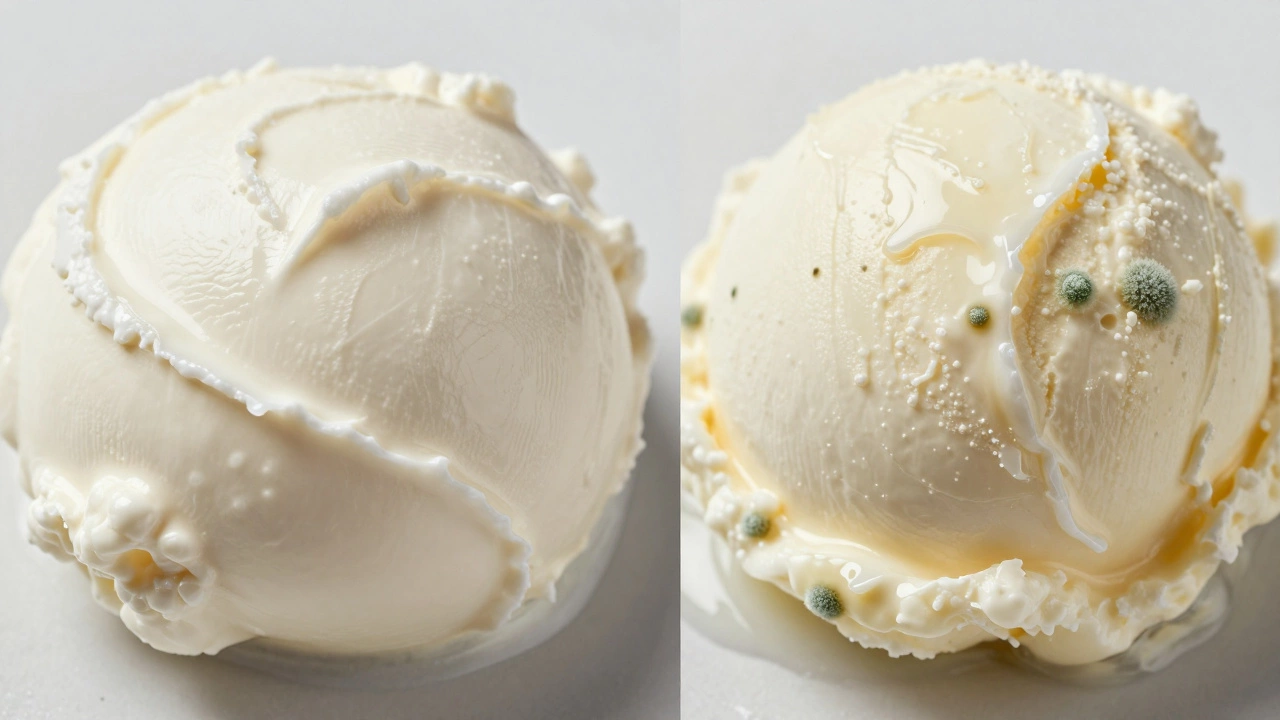
Now, look closer at the surface. Because mascarpone is dense, mold doesn't always stay on the top. You might see small white fuzzy spots, which are common, but if those spots turn green, blue, or pink, the whole tub is compromised. Do not try to scrape the mold off; mold filaments (hyphae) penetrate deep into soft cheeses where you can't see them.
Check the color. Pure mascarpone is a creamy white. If it has started to look yellowish or has developed a translucent, "glassy" look around the edges, the fats are oxidizing. Also, keep an eye out for excessive liquid separation. A little bit of whey (the clear-ish liquid) is normal, but if the cheese looks like it's curdling or has a slimy film over the top, it's time to toss it.
| Attribute | Fresh Mascarpone | Spoiled Mascarpone |
|---|---|---|
| Scent | Mild, milky, sweet | Sour, ammonia, or yeasty |
| Color | Pure creamy white | Yellowish, grey, or spotted |
| Texture | Smooth, spreadable, thick | Slimy, chunky, or watery |
| Taste | Buttery and rich | Bitter, sharp, or acidic |
The Texture and Taste Test
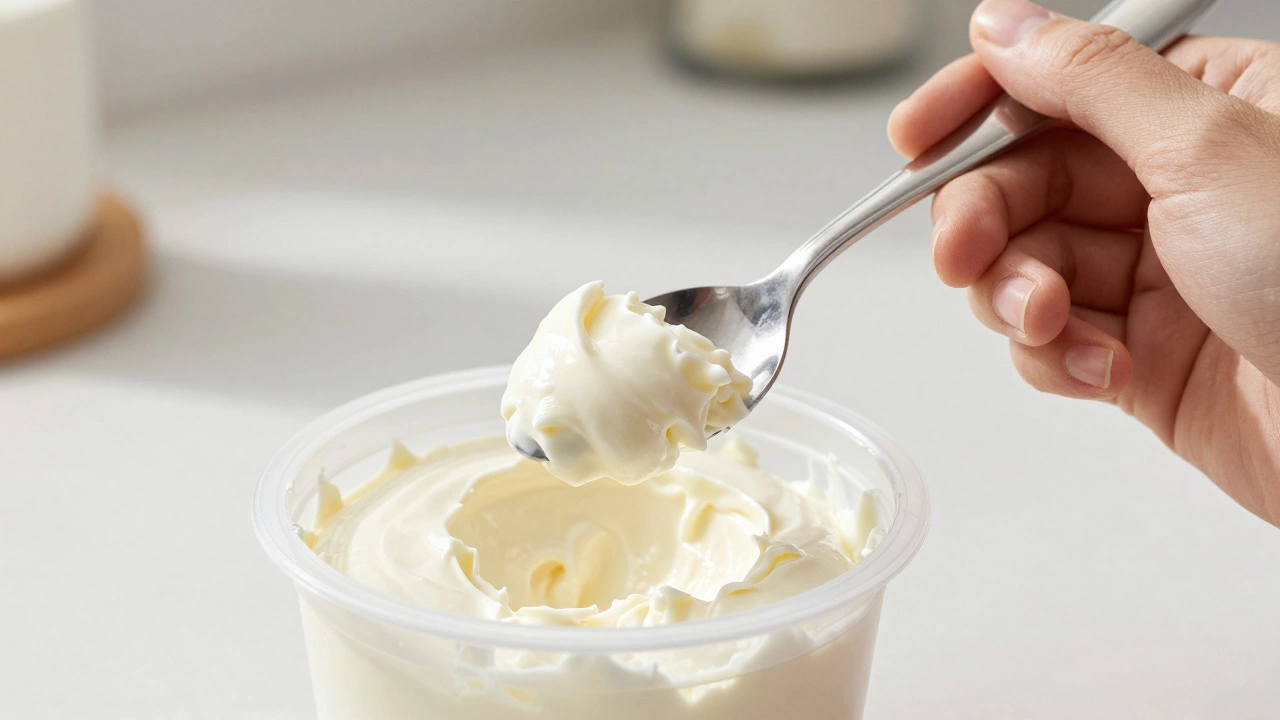
If the smell and look seem okay, you can move to the texture test. Scoop a small amount with a clean spoon. It should feel uniform and hold its shape. If it feels "slippery" or has an oily sheen that separates instantly, the emulsion has broken down. Hard, dry clumps are also a bad sign, as they indicate the cheese has dried out or been exposed to too much air, allowing aerobic bacteria to move in.
As a last resort, a tiny taste is the final verdict. Fresh mascarpone is neutral and rich. If you notice a sharp bitterness or a "fizzy" sensation on your tongue, that's a sign of fermentation. Since we often mix this into sugar and cocoa for Tiramisu, these off-flavors might be hidden initially, but they will leave a lingering, unpleasant aftertaste in the final dessert.
Storage Secrets to Keep It Fresh
To avoid the heartbreak of tossing a fresh tub, you need to handle it correctly. Refrigeration is non-negotiable. Keep your mascarpone in the coldest part of the fridge-usually the back of the main shelf, not in the door where temperatures fluctuate every time you open the fridge.
Avoid "double-dipping." Every time a used spoon touches the cheese, you introduce bacteria and enzymes from your skin or other foods. Always use a clean, dry utensil. If the cheese comes in a plastic tub, make sure the lid is pressed firmly against the rim. Air is the enemy here; it dries out the fat and invites mold. If you've opened the tub, try to use it within 5 to 7 days, regardless of the "best by" date on the package.
The Tiramisu Risk Factor
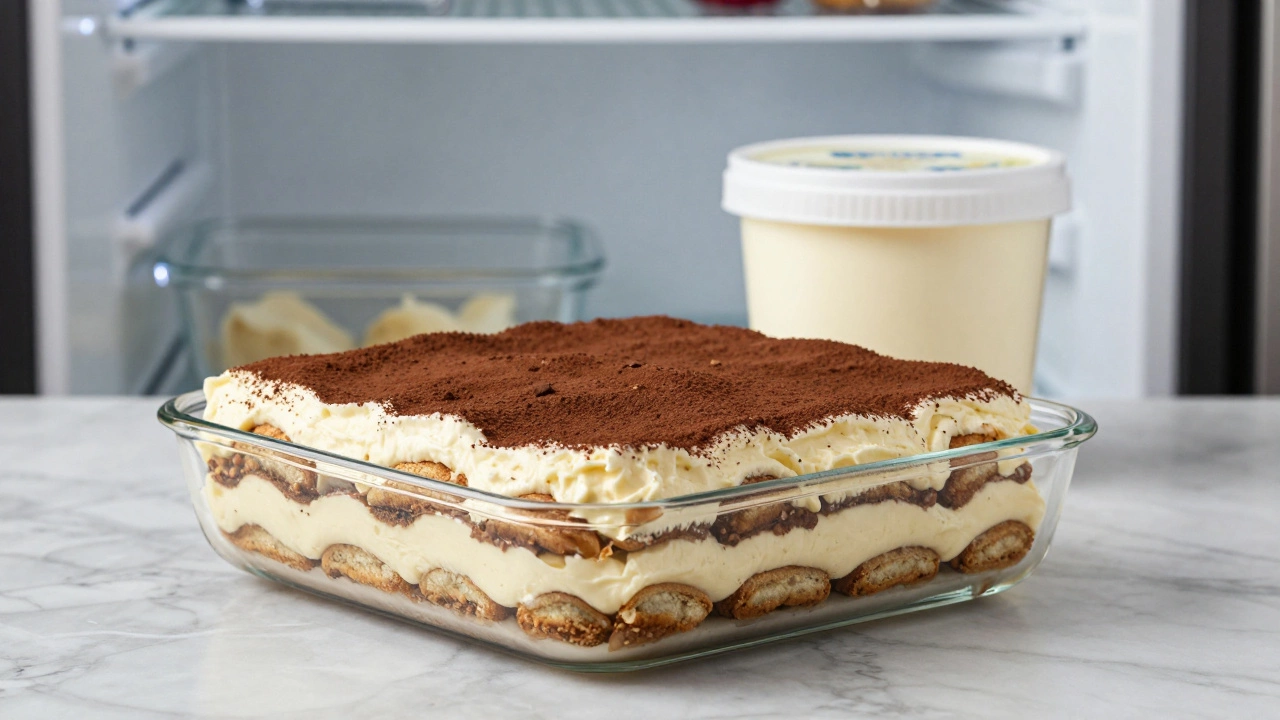
Why is it so important to be strict with mascarpone when making Tiramisu? Because the assembly process involves mixing the cheese with raw or lightly beaten eggs and sugar. This creates a moist, nutrient-rich environment-basically a playground for bacteria if the cheese is already starting to turn. If you use borderline cheese, the refrigeration period (where the cake sets for several hours) actually gives those bacteria more time to multiply.
If you are serving this to guests, the risk increases. Some people are more sensitive to dairy spoilage than others. A slight bitterness in the cream might not bother you, but it could cause digestive distress for someone else. It's simply not worth the risk to save a few dollars on a tub of cheese.
Can I freeze mascarpone to make it last longer?
Generally, no. Mascarpone has a very high fat content and a delicate emulsion. Freezing it often causes the fat to separate from the water, meaning when it thaws, you'll have a grainy, curdled mess that won't whip properly. It's best to keep it fresh in the fridge.
Is the "Best By" date a hard deadline?
The "Best By" date is a quality indicator, not necessarily a safety date. However, because it's a soft cheese, the window of safety after that date is small. If it's one or two days past the date and passes the smell, sight, and texture tests, it's usually fine. If it's a week past, the risk of invisible mold and bacteria is much higher.
What should I do if I see a little bit of white liquid on top?
That's likely just whey, which is a natural byproduct of cheese making. If the cheese smells fine and doesn't have mold, you can simply stir it back in or drain it off. It's not a sign of spoilage unless it's accompanied by a sour smell or sliminess.
Can I use cream cheese as a substitute if my mascarpone is bad?
You can, but the flavor will be different. Cream cheese is much saltier and tangier. To make it work for Tiramisu, you can beat it with a bit of heavy cream and a pinch of extra sugar to mimic the sweetness and richness of mascarpone.
Does mascarpone expire faster than other cheeses?
Yes, compared to hard cheeses like Parmesan or Cheddar, mascarpone is highly perishable. Its high moisture and fat content make it a prime target for mold and bacteria, which is why it must be kept strictly refrigerated and used quickly after opening.
Next Steps for Your Dessert Prep
If your mascarpone passed the test, go ahead and start your Tiramisu. Remember to bring the cheese to room temperature for about 15-30 minutes before whipping; this prevents clumps and ensures a silky smooth texture. If you found your cheese was spoiled, don't try to salvage it by cooking it-bacteria and molds in soft cheeses can produce heat-stable toxins that don't disappear even when heated.
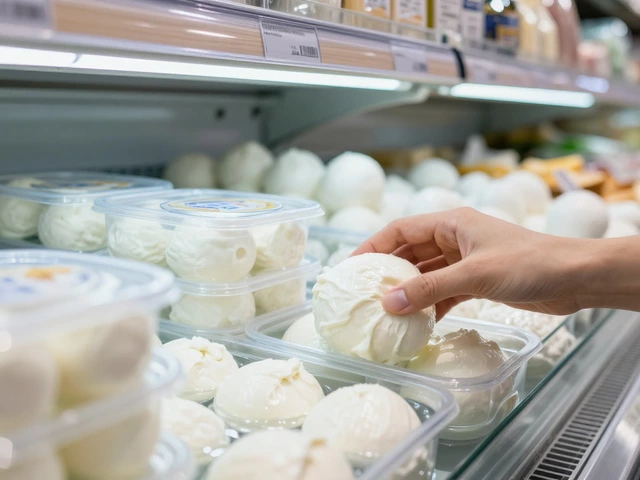
Next time you shop, check the date on the tub and pick the one furthest back on the shelf for the longest possible freshness. If you find yourself buying more than you can use, consider making a quick frosting or a savory dip to use up the cheese within that critical first week after opening.


Write a comment