

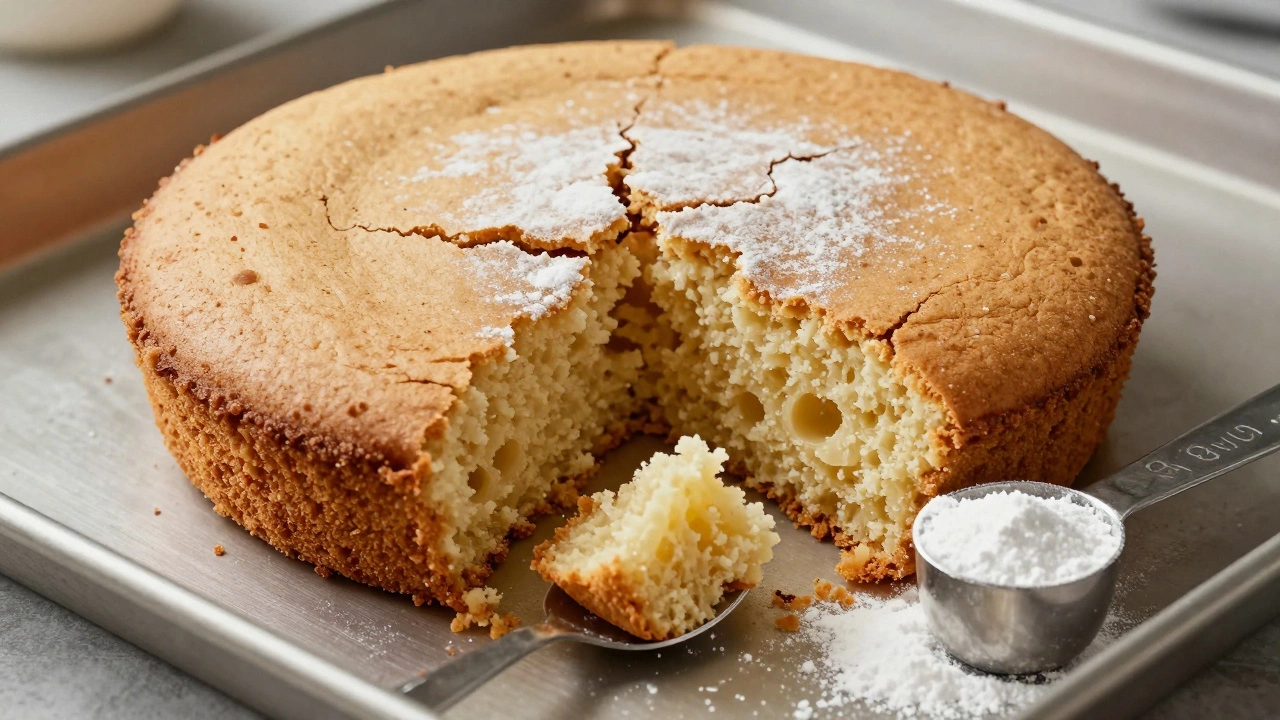
Gluten-Free Cake Baking Powder Calculator
Gluten-Free Cake Calculator
The article explains that gluten-free cakes don't need more baking powder than regular cakes. Too much baking powder causes collapse, bitterness, and dry texture.
Ever pulled a gluten-free cake out of the oven and found it flat, dense, or worse - gummy in the middle? You’re not alone. Most people assume gluten-free cakes need more baking powder to rise like regular cakes. But that’s not just wrong - it’s the exact reason so many gluten-free cakes fail.
Why Gluten-Free Cakes Don’t Rise Like Regular Ones
Regular cakes rely on gluten to trap air bubbles created by baking powder or baking soda. Gluten forms a stretchy network that holds the gas as the cake bakes, letting it rise tall and light. Gluten-free flours - whether almond, rice, oat, or coconut - don’t form that network. So even if you dump in extra baking powder, there’s nothing to hold the bubbles in place. They just escape, and your cake collapses.That’s why simply adding more baking powder doesn’t fix the problem. In fact, too much can make your cake taste bitter, cause it to rise too fast and then sink, or leave behind a chalky aftertaste. One study from the University of Nebraska-Lincoln found that gluten-free cake batters with more than 2 teaspoons of baking powder per cup of flour showed a 37% drop in volume compared to those with 1.5 teaspoons - because the gas escaped before the structure could set.
What Actually Makes Gluten-Free Cakes Rise
The secret isn’t more leavening. It’s better structure. You need ingredients that mimic what gluten does: hold air, stabilize the batter, and give the cake something to cling to as it bakes.- Xanthan gum or guar gum - just 1/2 to 1 teaspoon per cup of gluten-free flour helps bind moisture and create elasticity. This lets the bubbles stay trapped longer.
- Whipped egg whites - folding in stiffly beaten egg whites adds air without relying on chemical leavening. It’s the same trick used in angel food cake.
- Apple cider vinegar or lemon juice - a tablespoon mixed with baking soda creates a controlled, slow-release gas that works better in gluten-free batters.
- Extra moisture - gluten-free flours absorb more liquid. A wetter batter (think thick pancake batter) holds air better and bakes more evenly.
Many professional gluten-free bakers use a blend of 1 teaspoon baking powder and 1/2 teaspoon baking soda per cup of flour - not because they need more lift, but because baking soda reacts with acidic ingredients to create a steadier rise. That’s the real formula: balance, not volume.
The Baking Powder Myth - Where It Came From
The idea that gluten-free cakes need more baking powder started because early gluten-free recipes copied regular cake recipes and just swapped out wheat flour. People saw flat cakes and assumed the problem was weak leavening. So they added more baking powder. And it made things worse.It’s like trying to build a house with bricks but no mortar. You can add more bricks, but without something to hold them together, the structure still falls apart. Gluten-free baking isn’t about replacing one ingredient with more of another. It’s about redesigning the whole system.
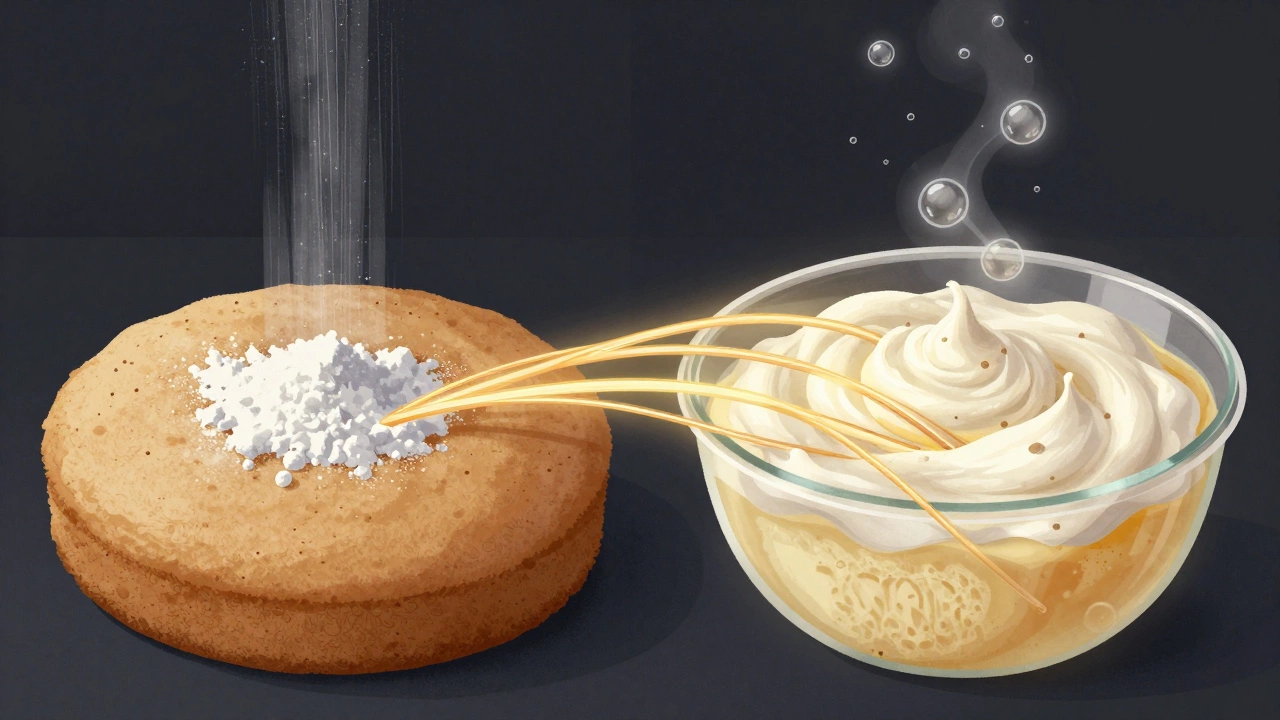
How Much Baking Powder Should You Actually Use?
For most gluten-free cake recipes, stick to:- 1 teaspoon baking powder per cup of gluten-free flour
- Plus 1/4 to 1/2 teaspoon baking soda if your recipe includes an acid (yogurt, buttermilk, honey, citrus, vinegar)
That’s the same amount used in traditional cakes. The difference isn’t the amount - it’s what you pair it with.
Here’s a real example: A gluten-free vanilla cake recipe from a top Auckland bakery uses:
- 2 cups gluten-free flour blend
- 2 teaspoons baking powder
- 1/2 teaspoon baking soda
- 1 tablespoon apple cider vinegar
- 1 teaspoon xanthan gum
- 3 egg whites, whipped to stiff peaks
That’s it. No extra baking powder. No guesswork. And the cake rises evenly, stays moist, and doesn’t taste like chalk.
What Happens If You Add Too Much Baking Powder
Adding more than 1.5 teaspoons per cup of flour can cause:- Large, uneven air pockets - leading to tunneling or holes inside the cake
- A metallic or bitter taste from leftover baking powder residue
- Rapid rise and then collapse - the cake rises in the oven, then sinks as it cools
- Dry, crumbly texture - the batter over-expands and then dries out before the structure sets
I’ve seen cakes that looked perfect coming out of the oven, then sank into a puddle on the counter. That’s not a baking time issue. That’s baking powder overload.
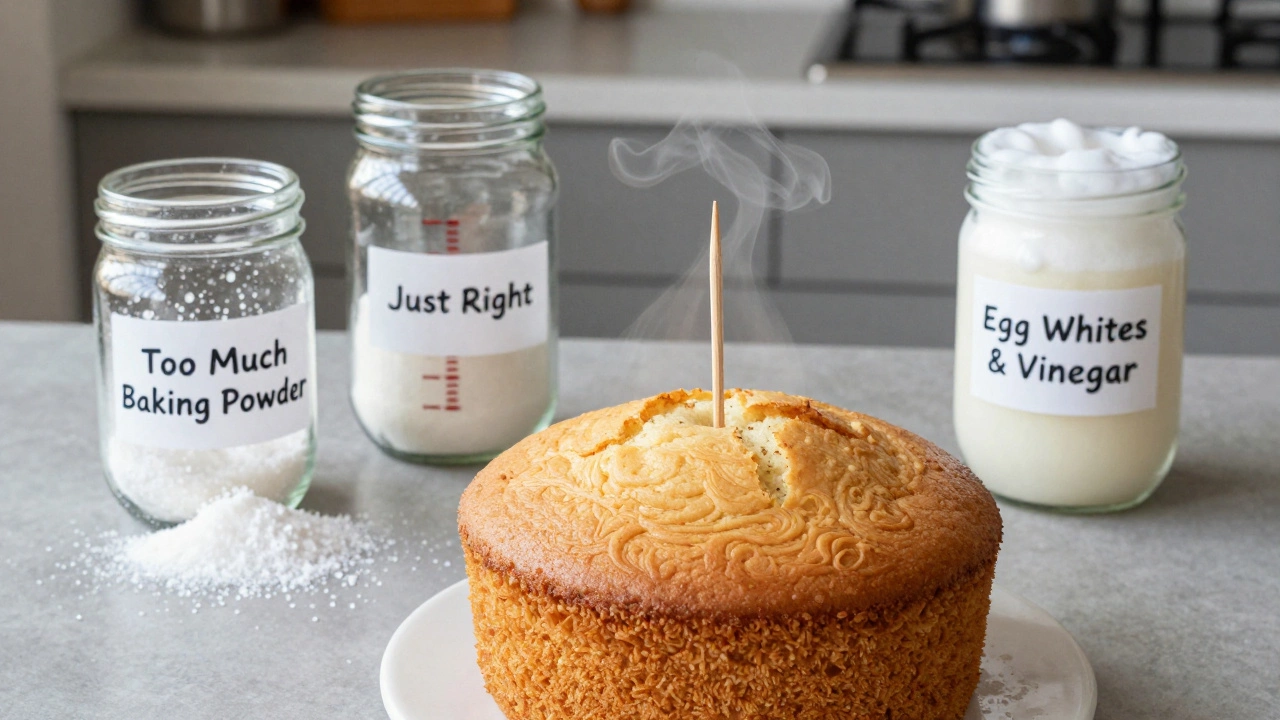
Pro Tips for Perfect Gluten-Free Cakes Every Time
- Use a trusted gluten-free flour blend - not just one flour. Blends with starches (tapioca, potato) and binders (xanthan gum) work best. Brands like Bob’s Red Mill 1-to-1 or King Arthur Measure for Measure are designed for cakes.
- Don’t overmix - gluten-free batters get gummy if stirred too much. Mix just until combined.
- Let the batter rest - 15-20 minutes before baking lets the flours hydrate and the xanthan gum activate. This makes the batter smoother and the cake less gritty.
- Use an oven thermometer - gluten-free cakes are sensitive to temperature. Even 10 degrees too hot can cause the outside to set before the inside rises.
- Test for doneness with a toothpick - gluten-free cakes often look underdone when they’re not. If the toothpick comes out clean, it’s done. Don’t rely on color alone.
Final Answer: No, Gluten-Free Cakes Don’t Need More Baking Powder
You don’t need more baking powder. You need better structure. Focus on binders, moisture, and gentle leavening. Use the right flour blend, add xanthan gum, whip your eggs, and measure your baking powder carefully. That’s how you get a light, fluffy, delicious gluten-free cake - not by dumping in extra powder.The next time your gluten-free cake falls, don’t reach for the baking powder can. Reach for the xanthan gum. Or the egg whites. Or the vinegar. Those are the real magic ingredients.
Can I use baking soda instead of baking powder in gluten-free cakes?
You can, but only if your recipe has an acid like yogurt, buttermilk, lemon juice, or honey. Baking soda needs acid to activate. If there’s no acid, baking soda won’t do anything. Most gluten-free cake recipes use both baking powder and baking soda - baking powder provides the main lift, and baking soda boosts it when acid is present.
Why does my gluten-free cake taste gritty?
Grittiness usually comes from under-hydrated flour. Let your batter rest for 15-20 minutes before baking. This lets the flours absorb moisture fully. Also, make sure you’re using a fine-blend gluten-free flour - coarser flours like brown rice flour can leave a sandy texture.
Does the brand of gluten-free flour matter?
Yes. Not all gluten-free flours are created equal. Some are just ground rice or almond meal with no binders or starches. For cakes, use a blend designed for baking - like Bob’s Red Mill 1-to-1, King Arthur Measure for Measure, or Cup4Cup. These include xanthan gum and starches that mimic wheat flour’s behavior.
Can I make gluten-free cakes without xanthan gum?
You can, but it’s harder. Xanthan gum helps trap air and hold moisture. Without it, cakes are more likely to crumble or dry out. You can substitute guar gum (use 25% more), or try psyllium husk powder (1/2 teaspoon per cup of flour), but results vary. For best results, stick with xanthan gum.
Why does my gluten-free cake sink in the middle?
This usually happens when the cake rises too fast and the structure can’t hold it. Common causes: too much baking powder, oven too hot, or batter too wet. Try reducing baking powder to 1 tsp per cup of flour, lowering oven temp by 10-15°F, and letting the batter rest before baking.
Next Steps: Try This Simple Gluten-Free Cake Recipe
Start with this foolproof base:- 2 cups gluten-free flour blend (with xanthan gum)
- 2 teaspoons baking powder
- 1/2 teaspoon baking soda
- 1 tablespoon apple cider vinegar
- 1 cup sugar
- 3 large eggs, separated
- 1/2 cup milk or dairy-free alternative
- 1/2 cup melted butter or oil
- 1 teaspoon vanilla
Whip the egg whites to stiff peaks. Mix the wet ingredients. Fold in the egg whites gently. Pour into a greased pan. Bake at 350°F (175°C) for 30-35 minutes. Let rest 10 minutes before removing from the pan.
No extra baking powder. No guesswork. Just a cake that rises, stays moist, and tastes like cake - not science.



Write a comment